
The Country Director of the United States Center for Disease Control and Prevention (U.S. CDC), Dr. Danielle Barradas, has reaffirmed the United States’ commitment to identifying priority areas, closing critical gaps, and providing targeted, evidence-based support to advance Ghana’s health security agenda.
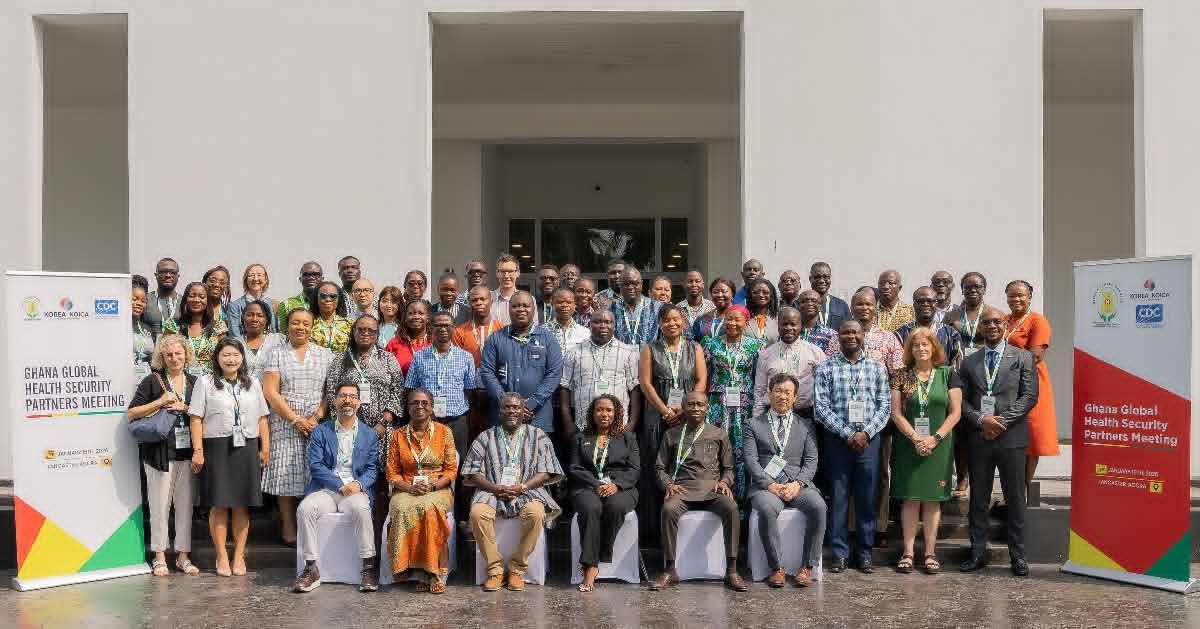
Dr. Barradas made the assurance during the Ghana Global Health Security Partners Meeting, held in Accra on January 16, 2026, which brought together key stakeholders within Ghana’s health security architecture to strengthen coordination and advance sustainable interventions.
The meeting underscored the critical role played by development partners, health organisations, overseas development assistance missions, and government institutions in reinforcing Ghana’s health sector, particularly within the broader context of the Global South, where health systems continue to face challenges related to health sovereignty, financing gaps, and disease vulnerability.
Discussions at the meeting focused on advancing Ghana’s capacity in disease surveillance, laboratory systems, emergency preparedness, and coordinated outbreak response, with an emphasis on practical collaboration and accountability among partners.
Through its technical expertise, leadership, and long-standing partnership, the U.S. CDC has supported Ghana’s efforts to build a sustainable, locally owned health system capable of safeguarding lives while contributing to global health security. Participants also examined ways to maintain strong synergies among partners and leverage shared resources to achieve programme goals more effectively.
The engagement builds on Ghana’s existing health architecture, which continues to receive strategic support from international partners. As part of efforts to deepen cooperation, the Ministry of Health has signed memoranda of understanding with 14 countries to promote mutual support and knowledge exchange in the health sector.
The United States remains a key ally in Ghana’s health development efforts. Recently, a delegation from the Alliance for Health Policy and the Institutional Review Board engaged Ghanaian authorities on a U.S.-led initiative to strengthen bilateral cooperation in pathogen sharing and health sovereignty.
The collaboration is expected to reduce the risks associated with communicable diseases, which currently account for approximately 45 per cent of mortalities in Ghana. In response, the government, through the Ministry of Health, continues to work with partners to address this challenge through initiatives such as a dedicated Non-Communicable Diseases (NCD) Fund and the Free Primary Health Care Programme, both aimed at strengthening community-level health systems and improving access to care.
Related Posts