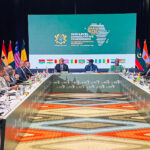

The President of the Republic of Sierra Leone, Julius Maada Bio, has arrived in Accra to participate in the Consultative Conference on Regional Cooperation and Security, convened by President John Dramani Mahama to address the escalating security challenges confronting West Africa and the Sahel.
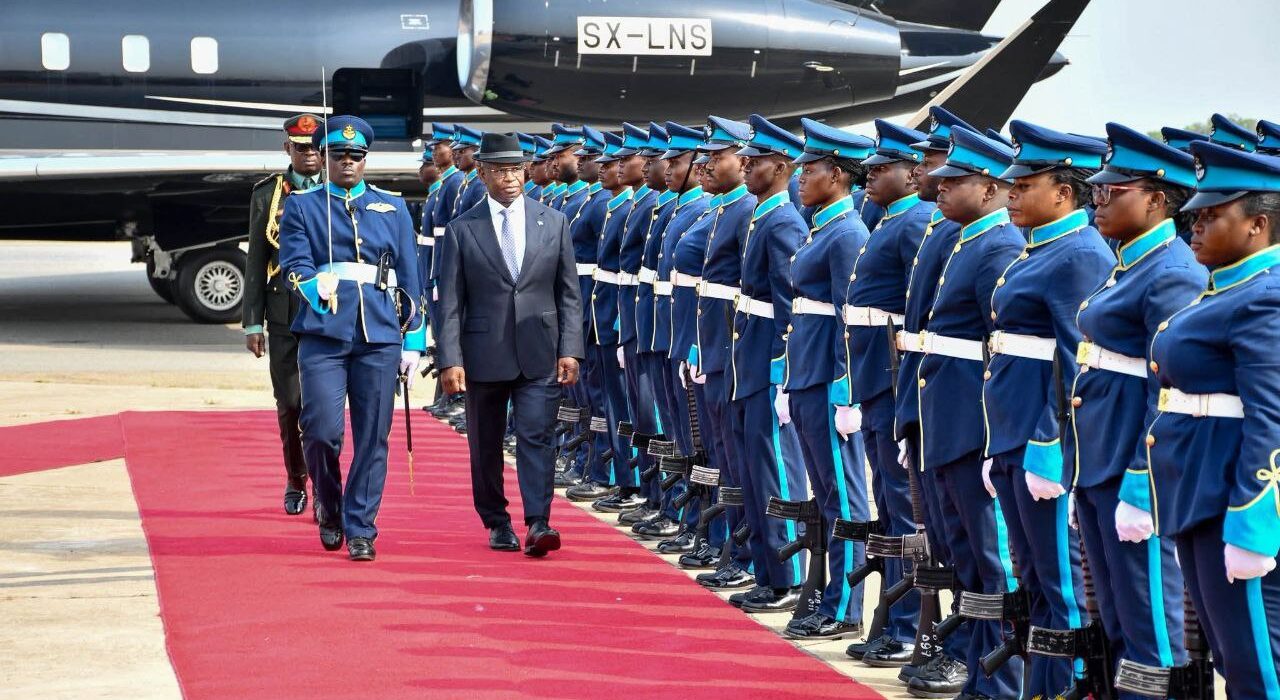
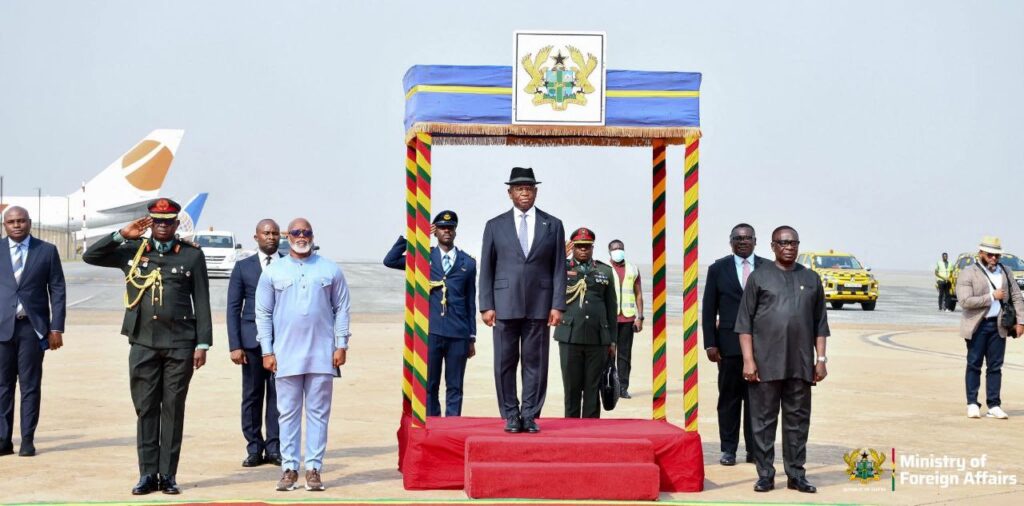
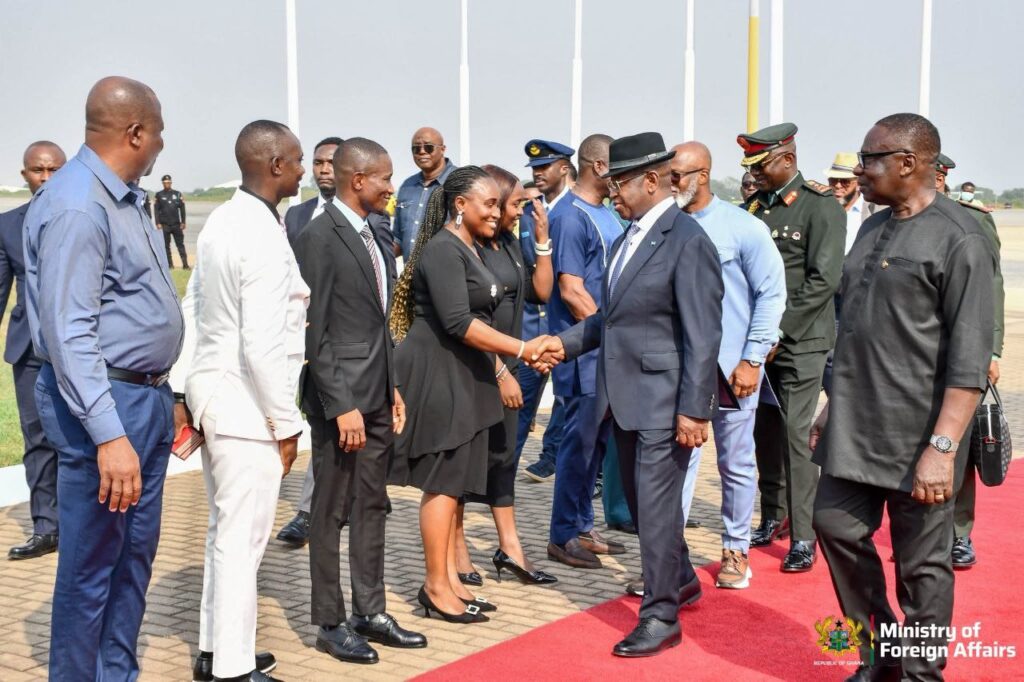
President Maada Bio touched down at the Kotoka International Airport, where he was accorded a state arrival ceremony mounted by a detachment of the Ghana Navy. He was received by the Deputy Minister for Foreign Affairs, Honourable James Gyakye Quayson (MP), alongside other senior government officials and staff of the Sierra Leone High Commission in Ghana.
The Sierra Leonean leader joins a high-level cohort of ministers, security experts, and policymakers from Burkina Faso, Ghana, Guinea, Liberia, Mali, Mauritania, Niger, Nigeria, Senegal, Sierra Leone, and Togo at the crucial regional convening. The conference also brings together key international and multilateral institutions, including the African Union (AU), the United Nations Development Programme (UNDP), the Kofi Annan International Peacekeeping Training Centre (KAIPTC), and the Centre for Democratic Development (CDD).
Sierra Leone has not been insulated from the growing tide of terrorism affecting the sub-region. In response, the country enacted the National Counter-Terrorism Act, 2024, in March 2025, following its introduction by the Deputy Attorney-General and Minister of Justice, Saptiru Elizabeth Saccoh. While aspects of the legislation have attracted public debate, the law establishes a comprehensive framework for addressing terrorism-related offences, including measures to regulate and freeze terrorist funds and assets, and to criminalise all forms of financial support for terrorist activities.
The country’s security concerns were underscored by unprecedented domestic attacks that Sierra Leone formally presented before the Sixth Committee of the United Nations General Assembly. On November 26, 2023, coordinated attacks on military barracks and correctional facilities resulted in the loss of 21 lives, including 14 soldiers, an incident that was later judicially declared an attempted coup d’état. Authorities described the operation as a calculated and well-financed effort to destabilise the state and undermine the democratically elected government.
These developments followed the August 10, 2022, insurrection, after which a Special Investigations Committee confirmed the use of dangerous weapons against security personnel and civilians, leading to multiple fatalities. The Committee further noted, with concern, that conflicting signals from segments of the international community at the time contributed to heightened tensions, which were exploited to justify attempts to unlawfully remove the legitimate government.
Within this broader regional security context, Sierra Leone ranks 57th globally on the Global Peace Index (GPI), with a score of 1.883, positioning it among the relatively more peaceful states in Sub-Saharan Africa. However, the region as a whole has recorded a deterioration in peacefulness, with the average GPI score worsening by 0.17 per cent over the past year. While half of Sub-Saharan African countries registered improvements in overall peacefulness, the remaining half experienced declines.
The Global Peace Index further notes that three of the world’s ten least peaceful countries are located in Sub-Saharan Africa, underscoring the scale of the region’s security challenges. The sub-region continues to grapple with multiple, overlapping crises, most notably the surge in political instability and terrorism in the Central Sahel. Burkina Faso currently records the highest terrorism impact globally, while six of the ten countries most affected by terrorism worldwide are found within Sub-Saharan Africa.
The security situation in parts of West Africa remains fragile. Terrorism and insurgent movements in countries such as Mali, Burkina Faso, and Nigeria continue to cause widespread displacement, disrupt livelihoods, and generate humanitarian crises. Addressing these threats remains a top priority for regional governments and multilateral organizations.
Violent extremism and transnational criminal activities further compound the security challenges. Smuggling, human trafficking, and illicit arms trading have expanded across borders, undermining governance structures and economic development. Regional coordination and joint strategies are essential to mitigate these threats and safeguard citizens.
Also, Maritime security in the Gulf of Guinea has emerged as a critical concern. Piracy, armed robbery at sea, and attacks on shipping and oil infrastructure threaten trade and economic growth. Strengthening regional maritime collaboration is crucial to ensuring safe waters and protecting vital economic interests.
Related Posts