
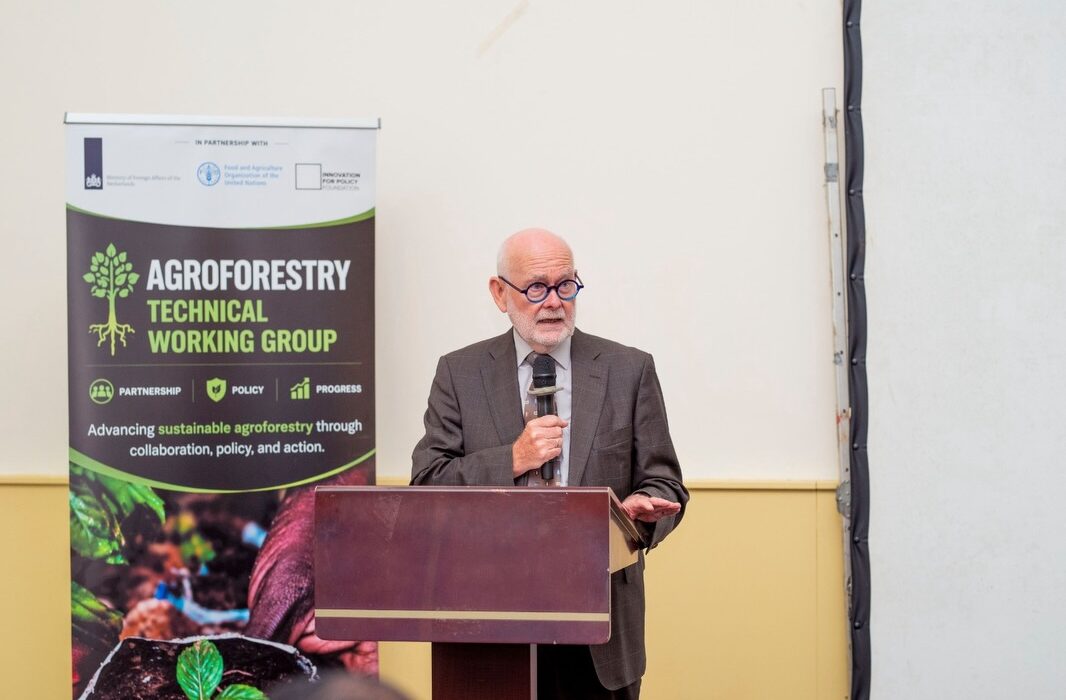
The Embassy of the Kingdom of the Netherlands in Ghana and its partners have renewed their commitment to strengthening collaboration on agroforestry development in Ghana through a two-part stakeholder engagement held in Accra and Tamale.
The Agroforestry Technical Working Group (ATWG), funded by the Netherlands Enterprise Agency (RVO), hosted by the Food and Agriculture Organization, and convened by i4Policy in collaboration with the Dutch Embassy, organised a high-level session in Accra to review and validate priority actions for a national agroforestry policy framework while aligning stakeholders toward a coordinated implementation roadmap.
The Tamale engagement included field visits to agroforestry and land restoration sites, where stakeholders interacted with farmer cooperatives and players within the shea industry, a sector largely driven by women. The visit aimed to provide participants with first-hand insight into the realities, opportunities, and challenges confronting communities engaged in agroforestry and sustainable land management.
According to the Agroforestry Development in Ghana: A Participatory Approach to Progress report commissioned by the Dutch Embassy, Ghana’s agroforestry landscape remains heavily dominated by cocoa farming due to the crop’s economic significance. Cocoa generated approximately $3.9 billion in revenue in 2025, reinforcing Ghana’s position as Africa’s second-largest cocoa exporter.
The report, however, noted that Ghana’s agroforestry framework remains relatively narrow, with limited integration of other key crops such as cashew, shea, and oil palm, while ecological zones including the Savannah and transition belts remain underrepresented in national agroforestry strategies.
The Embassy of the Netherlands, i4Policy, and the Food and Agriculture Organization were recognised for providing critical funding, technical expertise, and policy support aimed at integrating agroforestry into broader climate resilience and sustainable development strategies.
Despite growing interest in the sector, the report identified several systemic challenges hampering agroforestry expansion. These include the high cost of establishing agroforestry systems, with expenses related to seedlings, fertilisers, equipment, and labour discouraging many farmers, particularly given the delayed financial returns associated with long-term agroforestry investments.
The report further highlighted disincentives linked to unclear land and tree tenure systems, noting that aspects of the current legal framework complicate ownership rights and limit farmers’ ability to fully benefit from timber and forest-related resources generated on their lands.
The engagements brought together government officials including Deputy Minister for Food and Agriculture, John Dumelo, alongside representatives from the Forestry Commission Ghana, Environmental Protection Authority Ghana, and the Tree Crops Development Authority, as well as development partners, private sector actors, civil society organisations, and members of the Agroforestry Technical Working Group.
Related Posts