
Minority Leader Alexander Afenyo-Markin has called for strengthened security cooperation between the United States and Ghana to prevent the spillover of violent extremism from the Sahel.
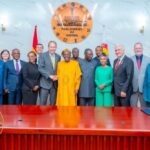
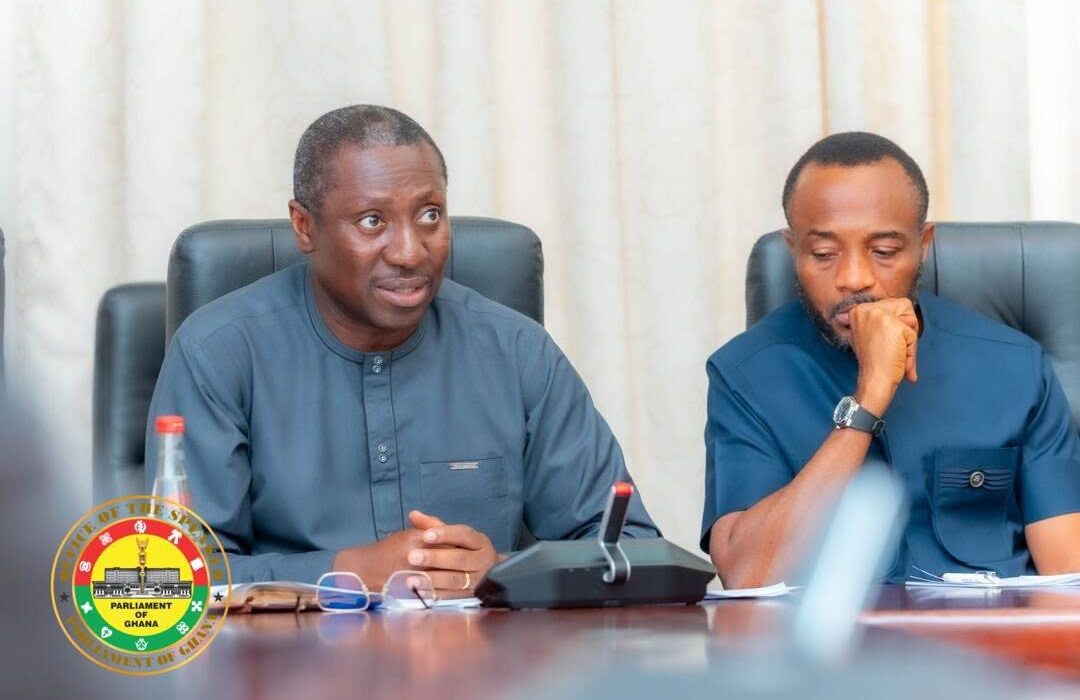
He made the appeal during a courtesy call by a United States Congressional delegation to the Parliament of Ghana. The delegation was led by Congressman Vern Buchanan of Florida and included Congresswoman Ilhan Omar of Minnesota, among other members.
Addressing the delegation, Afenyo-Markin highlighted the evolving security landscape in West Africa and the challenges posed by political and security developments in the Sahel region, calling for strengthened security cooperation.
“Recently, some member states left the bloc to form their own alliance comprising Mali, Niger and Burkina Faso. Looking at the prevailing insecurity across the Sahel, Ghana cannot be fully insulated from these threats. I am looking forward to broader collaboration in the area of security between the United States and ECOWAS,” he said.
Beyond his role as Minority Leader in Ghana’s Parliament, Afenyo-Markin also serves as Deputy Speaker of the ECOWAS Parliament, a regional body that continues to grapple with the implications of the withdrawal of Mali, Burkina Faso and Niger from the sub-regional bloc.
The departure of the three Sahelian states dealt a significant blow to ECOWAS, following prolonged disagreements over governance and constitutional order after military coups brought new governments to power in the three countries. ECOWAS has consistently maintained that only democratically elected governments are consistent with the principles and protocols governing the regional organisation.
Security concerns in the Sahel remain acute, with terrorist groups continuing to expand their operations across the region. Mali, in particular, has witnessed escalating attacks on military installations in Bamako and the killing of Dfense Minister Sadio Camara.
Following the series of coordinated offensives in April 2026 by jihadist groups and Tuareg separatists, Malian government forces and Russian-linked Africa Corps units were forced to withdraw from several positions in northern Mali, including the strategic city of Kidal. This underscores the fragility of the security environment and raising concerns about potential spillover effects into neighbouring coastal states.
As one of the countries on the frontline of this emerging threat, Ghana has intensified collaboration with international partners, including the United States and the European Union, through intelligence sharing, joint military exercises, border security initiatives, defence cooperation agreements and regional frameworks such as the Coastal States Stability Mechanism.
The United States remains one of Ghana’s key security partners. Bilateral defence cooperation has expanded significantly over the years, particularly following the signing of a Defence Cooperation Agreement in 2018. The partnership has supported capacity-building efforts, military training, intelligence cooperation and logistical assistance aimed at strengthening Ghana’s ability to respond to emerging security threats.
As part of this cooperation, the United States has provided protective equipment, body armour and specialised military assets to the Ghana Armed Forces. In 2025, the U.S. Government donated 14 Mine-Resistant Ambush-Protected (MRAP) Armoured Personnel Carriers valued at more than US$6 million to support Ghana’s counter-terrorism and border security operations.
The partnership is as a testament to the growing strategic partnership between Ghana and the United States. The equipment is expected to enhance the operational readiness of the Ghana Armed Forces as the country continues to strengthen its preparedness against the threat of violent extremism and transnational insecurity.
Related Posts