
The World Bank Group and African Development Bank have connected a total of 64 million people to electricity, accelerating progress toward delivering power to 300 million Africans by 2030.
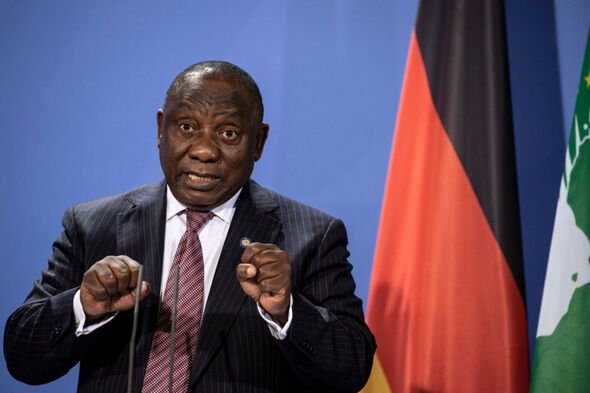
This is being achieved through their Mission 300 initiative, Ajay Banga, President of the World Bank Group said at a Civil Society Townhall forum, on the sidelines of the 81st International Monetary Fund (IMF)/World Bank Group (WBG) annual meetings in Bangkok, Thailand, on Monday.
“Through Mission 300, which is the effort to reach 300m people in Africa with the African Development Bank, we have reached 59 million people already,” he stated. “The African Development Bank has just announced that they have also crossed five million people.”
The joint WBG-AfDB initiative is backed by the Rockefeller Foundation, the Global Energy Alliance for People and Planet (GEAPP), and Sustainable Energy for All (SEforALL), with a coalition of governments, development partners, and private investors.
The initiative, launched in 2024 and politically endorsed at the Mission 300 Africa Energy Summit in 2025, aims to reduce Africa’s electricity-access deficit in half by 2030.
They are delivering household electricity connections through grid expansion, mini-grids, and standalone systems.
The institutions launched the mission because nearly 600m people in the region lacked electricity access.
This represented 83 per cent of the global deficit, although electricity remained essential for hospitals, schools, agriculture, connectivity and jobs.
“It’s a journey (and) we have a few years to go. We’re running as hard as we can to get to as much close as we can to the 300m,” the World Bank President said, pledging accelerated efforts by the two institutions to reach the goal.
On other areas, he said, the Bank’s health work had reached more than 600m people, while working towards reaching 1.5 billion people by 2030 with improved access to primary healthcare.
He mentioned that the Bank’s Agriconnect initiative had also reached 26m farmers with an effort to connect them to scale, while its water forward platform, launched in April 2026, would be bringing countries together to improve water security at scale.
He noted that the Bretton Woods institution had expanded economic opportunity for 17m women and women-led businesses with capital and financial services and 74m women with broadband access.
“These are not isolated efforts. They are about the foundations that people need to be productive – what I call the first pillar of the job creation strategy,” the World Bank President said.
He, however, said there was the need for infrastructure – both physical and human, including bridges, roads, water, electrification digitisation, healthcare, skilling and the right education.
The Bank, he said, was pursuing more private capital, saying, “in the poorest and most fragile countries, where private capital is harder to attract, concessional finance remains indispensable.”
“What we do need is your help for the strong International Development Association, IDA 22 (a replenishment fund that provides highly concessional finance and grants to the world’s 78 poorest countries),” the President said.
He called for more private sector and philanthropic support.
On climate, the Bank delivered US$96 billion in finance in 2025, with half mobilised from private capital.
Climate co-benefits stands at 44 per cent of financing against a 45 per cent commitment.
He said the Bank mobilised US$112 billion in 2025, more than triple the level four years ago.
However, the flow has stayed flat in the lowest-income countries, with a new strategy launched this week targeting Micro, Small and Medium Enterprises (MSMEs).
“Development delayed is development denied,” he said, urging the world to spend less time debating labels and more time delivering results that created greater opportunity everywhere.
Source: GNA
Related Posts