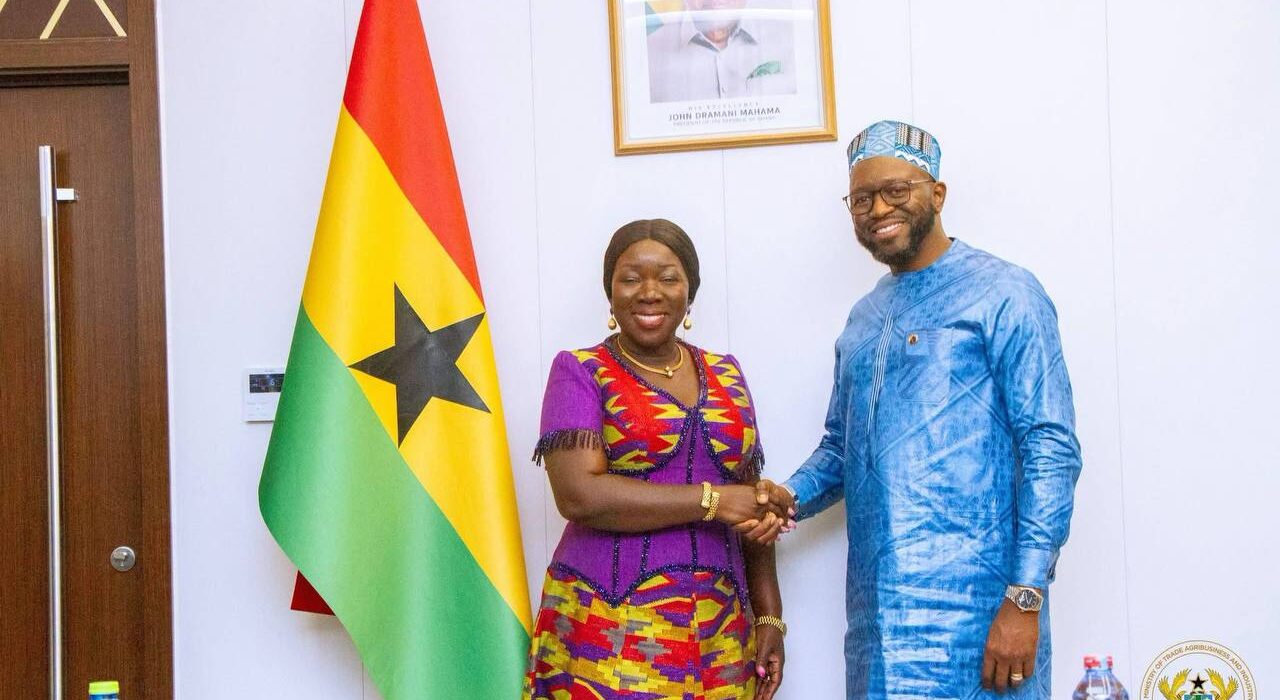
Ghana’s Trade Minister, Elizabeth Ofosu-Adjare has called for a joint initiative between Ghana and Guinea to renovate and preserve the Conakry residence where Ghana’s first President, Dr Kwame Nkrumah, spent his final years in exile, as part of efforts to protect his legacy and promote Pan-African heritage.
She made the proposal during an engagement with Guinea’s Trade Minister, Aboubacar Kourocuma, on the sidelines of the signing ceremony for the Accra Convention on Negotiable Cargo Documents and a symposium marking 60 years of the United Nations Commission on International Trade Law (UNCITRAL), held at the Ministry of Foreign Affairs in Accra on October 26.
The convention establishes a common legal framework for negotiable cargo documents in paper and electronic formats across road, rail, air and sea transport, with the aim of facilitating trade and improving the efficiency of international supply chains.
During the meeting, Ofosu-Adjare called for stronger economic cooperation between Ghana and Guinea to promote trade, industrial development and tourism.
She also pledged to facilitate collaboration between the Ghana Standards Authority and Guinea’s standards and metrology institution to harmonise standards, reduce technical barriers to trade and support the effective implementation of the African Continental Free Trade Area (AfCFTA).
Kourocuma welcomed the proposed collaboration, which is expected to make it easier for businesses in both countries to meet applicable standards and trade across their borders, while strengthening bilateral commercial ties.
The proposal to preserve Nkrumah’s former residence comes months after Vice-President Professor Jane Naana Opoku-Agyemang visited the property in Conakry in January 2026 during a trip to Guinea for the inauguration of President Mamadi Doumbouya. She also called for renewed cooperation between the two countries, drawing on their shared Pan-African history.
Nkrumah lived in Guinea after he was overthrown in a military coup in Ghana in 1966. Guinea’s first President, Ahmed Sékou Touré, welcomed him into exile and appointed him co-president of the country, cementing a historic political relationship between the two leaders and their nations. Nkrumah remained in Guinea until his death in 1972.
Following the Vice-President’s visit, Foreign Affairs Minister Samuel Okudzeto Ablakwa announced that the government was negotiating with the Sékou Touré family over the terms under which Ghana could take responsibility for the residence. The government also said it was engaging preservation experts to guide the proposed renovation and conservation work.
Related Posts