
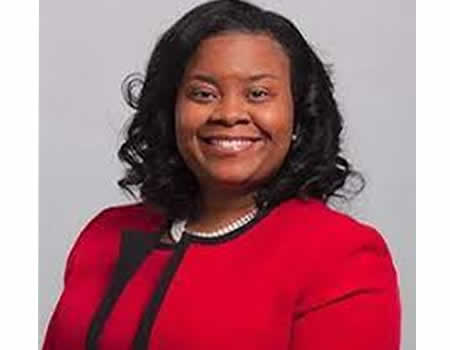
Prof Candice Moore of the University of Maryland (UMB) in the United States has made a compelling case for African universities to prioritise, protect and advance African indigeneity in global partnerships.
She said African institutions of higher learning must seek global partnerships on their own terms and not be compelled to jettison African knowledge, practice, and values to please their Western partners.
Prof Moore, who is with the university’s Department of Counselling, Higher Education, and Special Education, was delivering a lecture at the University of Cape Coast (UCC) on the theme: “Leveraging African Indigenous Approaches to Cultivating Sustainable Global Partnerships.”
She observed that African indigenous knowledge had existed for centuries, but Africans heavily leaned on western knowledge as if it were the origin of information.
She further said by focusing more directly on African indigeneity, Africans would be more powerful together with a common goal and respect for one another.
Prof Moore further bemoaned the incidence of brain drain in Africa due to inadequate jobs.
Among other things, she said the structure of global partnerships must change to ensure that there were enough opportunities for the educated and skilled people to enable them to return to their local communities to offer their support after gaining exposure.
For his part, Prof George Sefa Dei of the University of Toronto, observed that global partnership today signified unfair power relations and dynamics that most often served the interest of richer nations, a situation he said needed to be disrupted.
He stressed the need to learn from indigenous African communities to build sustainable partnerships based on trust, respect, acknowledge in respective strengths and contributions, reciprocity and knowledge sharing.
He said African education should not make learners products of Western Knowledge and practice but products of their own “decolonisation and resistance”.
“How do such partnerships ensure genuine African human capacity building and not brain mining.
“How do we maintain the integrity and authenticity of our African indigenous knowledge as we bring such knowledge into global partnerships?
“What is the role of African elders as cultural custodians in our institutions of higher learning?” he queried.
Source: GNA
Related Posts