
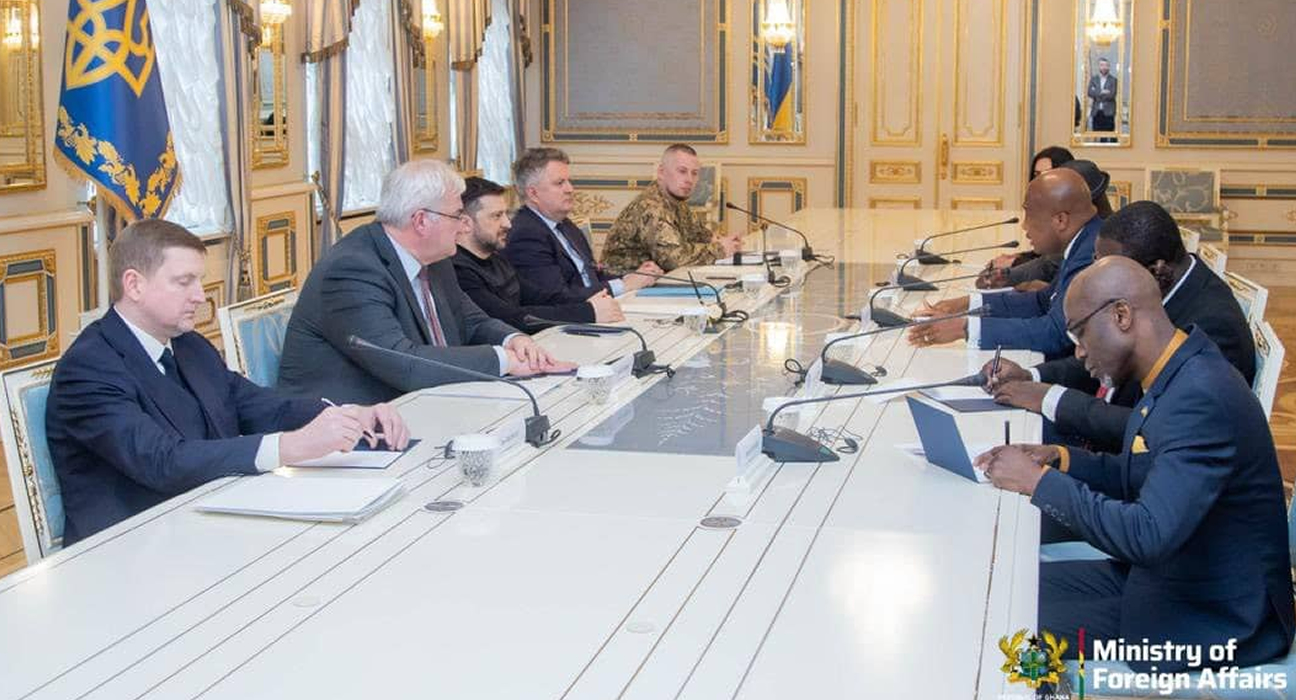
Ghana’s Minister of Foreign Affairs, Samuel Okudzeto Ablakwa, on Wednesday paid a rare diplomatic visit to Ukraine, where he formally appealed to President Volodymyr Zelenskyy for the release of two Ghanaian nationals currently being held as prisoners of war.
The visit comes amid the ongoing Russia-Ukraine conflict, which began with Russia’s full-scale invasion in 2022 and has since evolved into a prolonged and complex war marked by heavy casualties, territorial contestations, and international diplomatic maneuvering.
At the heart of the discussions was Ghana’s humanitarian appeal for the safe transfer and release of the two detainees, who were reportedly captured while fighting for Russian forces. Ablakwa stressed that the Mahama Administration considers every Ghanaian life a priority, regardless of the circumstances under which they became involved in the conflict.
Ukrainian authorities disclosed that more than 1,780 citizens from 36 African countries, including Ghana, have been identified among Russian forces since the war began. Some of these individuals have been captured on the battlefield and are currently being held as prisoners of war.
Speaking at a joint press conference with Ukraine’s Foreign Minister, Andriy Sybiga, Ablakwa expressed optimism about a humanitarian breakthrough. He appealed for compassion and magnanimity, emphasizing that the two Ghanaians were victims of criminal trafficking networks, misinformation, and manipulation.
“We are quite optimistic that this visit will be very successful and that in my later discussions with President Zelensky, he will be magnanimous and compassionate and on humanitarian grounds release these two Ghanaians to us,” he said.
According to the minister, vulnerable African youth are being targeted by recruitment and trafficking syndicates that lure them with false promises, only for them to end up in active war zones. Ghana and Ukraine discussed strengthening cooperation to dismantle such networks and prevent further exploitation.
Ablakwa commended Ukraine for adhering to international humanitarian law in its treatment of the detainees. He noted that reports received by Ghana indicate the two citizens are in good health and have not been subjected to torture or inhumane treatment since their capture.
For his part, Sybiga confirmed that both sides held frank and constructive discussions regarding the possible return of the prisoners to Ghana. He also urged Accra to intensify preventive measures to stop recruitment operations targeting African nationals, warning that Russia was drawing foreign fighters into a deadly conflict.
Beyond the immediate humanitarian concerns, the bilateral talks explored opportunities to deepen cooperation in agriculture, defence, education, and trade. President Zelenskyy also extended a formal invitation to President John Mahama, signaling Kyiv’s interest in elevating diplomatic ties with Accra.
As the Russia-Ukraine war enters another challenging phase with continued frontline engagements and diplomatic efforts around prisoner exchanges, Ghana’s intervention underscores a growing African dimension to the conflict — and a clear message from Accra that the protection and safe return of its citizens remains paramount.
Related Posts