
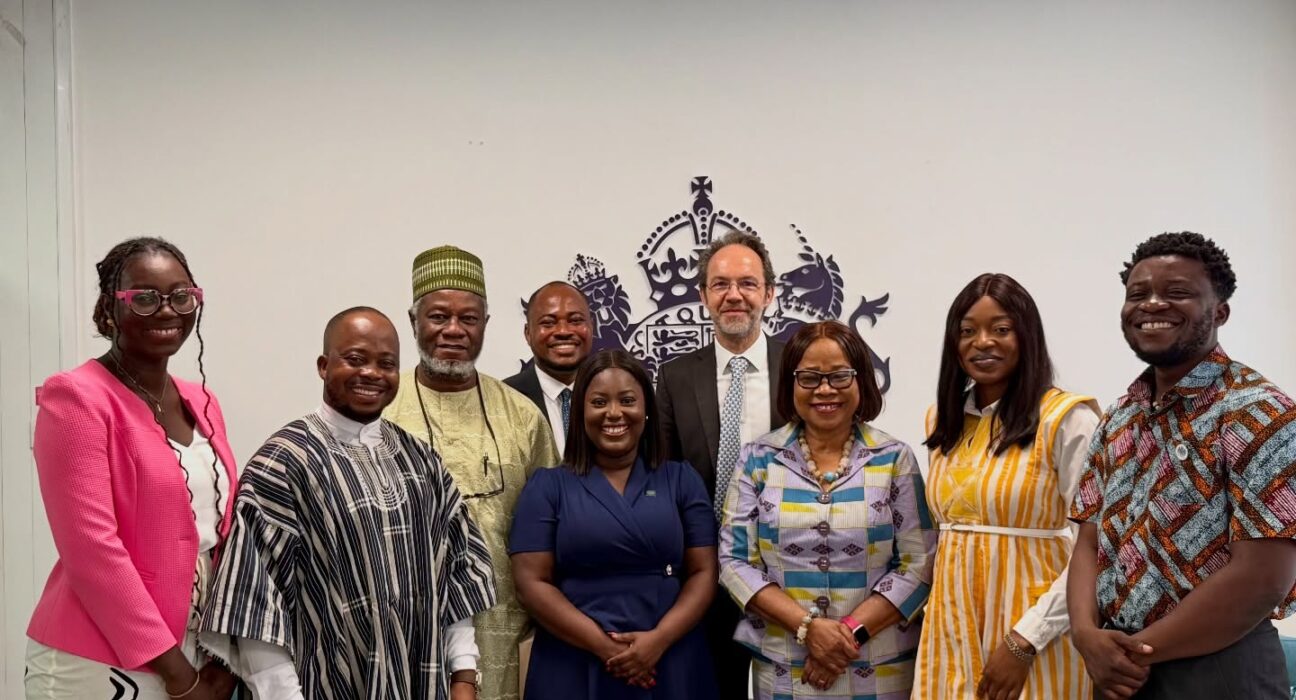
The British High Commissioner to Ghana and Togo, Christian Rogg, has reaffirmed his support for the Chevening Alumni Association Ghana following a courtesy call by the association’s Executive Council at the British High Commission in Accra.
The delegation, made up of the President, Secretary, Deputy Secretary and Organiser of the Association, was accompanied by Patrons, members of its Advisory Board, and the Chevening Officer at the High Commission. The meeting sought to formally brief the High Commissioner on the current status, activities and strategic direction of the alumni body in Ghana.
During the engagement, Rogg shared insights into his professional background and outlined his diplomatic priorities for strengthening United Kingdom–Ghana relations. The Executive Council, in turn, updated him on the Association’s ongoing initiatives, operational challenges and forward-looking plans aimed at enhancing alumni impact nationwide.
The Executive Council emphasised efforts to reinforce the visibility and prestige of the Chevening Programme in Ghana. Beyond being a scholarship scheme, the Association is positioning Chevening as a leadership brand by amplifying the voices and contributions of alumni across governance, academia, business, civil society and technology.
Through public lectures, policy dialogues, strategic media engagement and participation in national development conversations, the alumni body is working to ensure that Cheveners are recognised not only as beneficiaries of a UK education but as active contributors to Ghana’s policy and institutional landscape.
The Council further highlighted its commitment to knowledge-sharing and policy engagement. Regular thematic forums and roundtable discussions are being convened to harness the diverse expertise of alumni in addressing national priorities.
These platforms create opportunities for cross-sector collaboration while simultaneously strengthening the intellectual and professional bridge between Ghana and the United Kingdom. By facilitating structured exchanges among policymakers, private sector actors and returning scholars, the Association is nurturing a community that translates academic exposure into practical national impact.
Recognising the geographical spread of Cheveners across the country, the Association is also expanding its regional outreach to ensure inclusivity and sustained engagement beyond Accra. Plans are underway to align the High Commissioner’s regional visits with alumni activities, enabling structured interactions with Cheveners in other parts of Ghana. This approach is expected to deepen regional participation, strengthen professional networks outside the capital and reinforce the programme’s national footprint.
Institutionally, the Association is prioritising digital transformation through the development of a centralised alumni database. This initiative is designed to improve coordination, map alumni expertise, facilitate professional collaboration and enable rapid mobilisation of Cheveners for strategic interventions. By leveraging technology, the body aims to build a more connected, responsive and data-driven alumni network capable of contributing effectively to both national development and bilateral initiatives.
Mentorship and leadership continuity also featured prominently in the discussions. The Association is strengthening mentorship structures that link senior Cheveners with newly returned scholars and prospective applicants. This not only sustains the Chevening legacy in Ghana but also ensures that knowledge, networks and leadership values are transmitted across generations of schola
Dr. Rogg reiterated the High Commission’s commitment to supporting the Alumni Association and encouraged the exploration of informal platforms for continued collaboration and engagement. He emphasised the importance of sustaining the Chevening legacy in Ghana as a vehicle for leadership development and deeper bilateral cooperation.
The meeting concluded with a shared commitment to advancing mutually beneficial UK–Ghana relations through strategic alumni engagement, reinforcing Chevening’s role as a bridge between both countries’ professional, academic and policy communities.
Related Posts