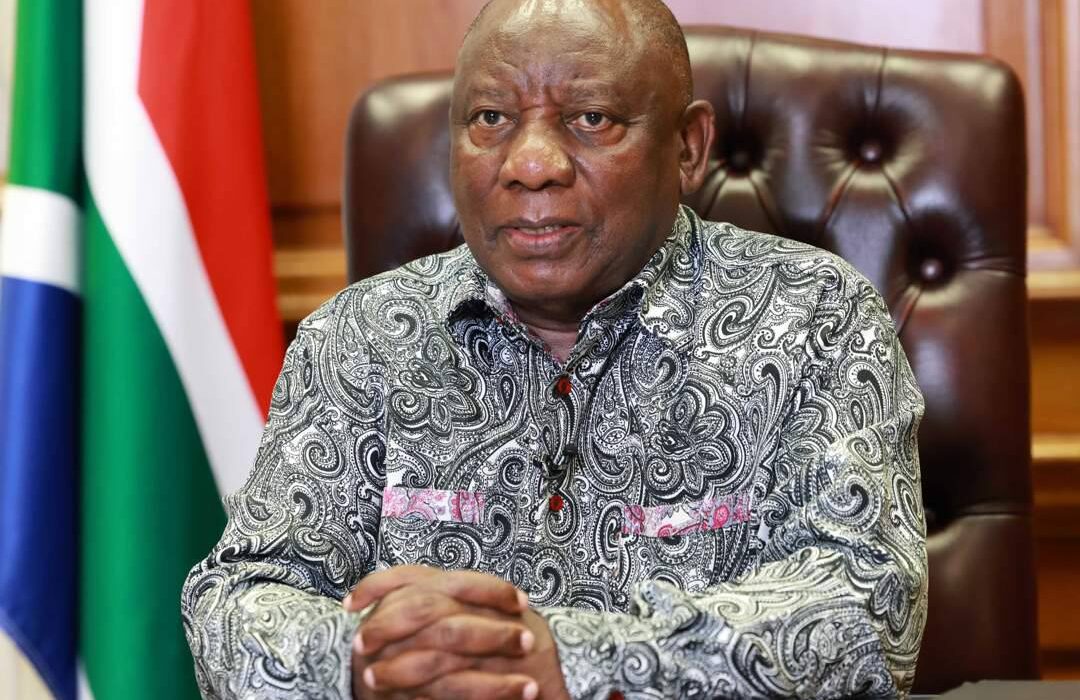
South African President Cyril Ramaphosa has dismissed the reasons given by the United States for not participating in the G20 Summit, describing them as baseless and founded on false allegations that South Africa is perpetrating “white genocide” against Afrikaners and confiscating their land.
In an address to the nation following the summit, Ramaphosa expressed deep regret over the absence of the United States, one of the G20’s founding members and the country set to assume the G20 presidency in 2026.
“It is regrettable that the United States of America, which is a founding member of the G20 and which takes over the Presidency of the G20 from South Africa in 2026, chose not to participate in the G20 Leaders’ Summit and the final meetings leading up to it. It is even more unfortunate that the reasons the US gave for its non-participation were based on baseless and false allegations that South Africa is perpetrating genocide against Afrikaners and confiscating land from white people,” he said.
Trump’s Claims and Threats
U.S. President Donald Trump had earlier justified the United States’ non-attendance by accusing the South African government of ignoring what he described as “horrific human rights abuses” against Afrikaners and descendants of Dutch, French, and German settlers.
Repeating claims he previously made during Ramaphosa’s visit to the Oval Office, Trump alleged that white people were being killed and their farms seized—statements he coupled with attacks on U.S. media outlets, including the New York Times, which he accused of refusing to report on the alleged abuses.
Trump went on to threaten South Africa with exclusion from the 2026 G20 Summit in Miami, further directing an immediate halt to all payments and subsidies to the country. He claimed South Africa had disrespected the U.S. by not handing over the G20 presidency to a senior American representative during the closing ceremony.
Ramaphosa’s Response
Ramaphosa strongly rejected Trump’s claims and his attempt to bar South Africa from the 2026 summit, asserting that South Africa is a founding member of the G20 and will participate “as a full, active and constructive member.”
He dismissed the allegations of white genocide and land confiscation as “untrue,” noting that they form part of a broader disinformation campaign targeting South Africa.
“The stance taken by the United States is fuelled by blatant misinformation and a sustained disinformation campaign that is undermining our national interest, destroying jobs and weakening our relations with the United States, one of our most important partners,” Ramaphosa said.
Despite the tensions, Ramaphosa reaffirmed South Africa’s commitment to resolving the dispute peacefully and diplomatically, emphasizing the long-standing relationship between the two countries.
“Despite the challenges and misunderstandings that have arisen, South Africa remains a firm and unwavering friend of the American people. We recall the great solidarity movement in the United States that stood by our side in our struggle for democracy and freedom.”
He added that South Africa offers the United States “nothing but goodwill and friendship,” underscoring shared values, common interests, and a mutual desire for prosperity.
Ramaphosa stressed that South Africa remains a constitutional democracy with a strong Bill of Rights, an independent judiciary, and institutions capable of protecting the rights of all citizens.
“We must remind these people that South Africa is a constitutional democracy, with a Bill of Rights that guarantees equality under the law. We have an independent judiciary able to uphold our Constitution and defend the rights of all South Africans.”
He highlighted South Africa’s commitment to resolving internal challenges through inclusive engagement, referencing the newly launched National Dialogue. “We have now embarked upon a National Dialogue, where all South Africans—from all walks of life, of all races and creeds—are invited to forge a new future for our country. In the tradition of Nelson Mandela, no one must be excluded. Every voice and every perspective must be heard.”
Ramaphosa asserted that South Africa’s problems must be solved by South Africans themselves, guided by unity, dialogue, and democratic values.
Related Posts