

The Government of Ghana has formally initiated discussions with the family of Guinea’s first President, Ahmed Sékou Touré, to take possession of, renovate, and preserve the former residence of Osagyefo Dr. Kwame Nkrumah in Conakry, which has fallen into a state of disrepair.
The move follows the Vice President’s official visit to Guinea for the investiture of President Mamady Doumbouya, who won a decisive victory in the December 28 presidential election, marking the country’s transition from military rule to constitutional governance.
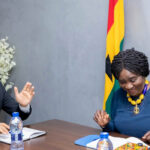
On the margins of the ceremony, Ghana’s delegation, led by Vice President Prof. Jane Naana Opoku-Agyemang and accompanied by Minister for Foreign Affairs Samuel Okudzeto Ablakwa, paid a visit to the historic residence where Ghana’s first President lived during his years in exile.
Addressing the visit, Mr. Ablakwa said the initiative was undertaken on the direct instructions of President John Dramani Mahama, noting that although the property remains the lawful possession of the Sékou Touré family, Ghana seeks their consent to restore and preserve it as a site of historical and Pan-African significance. He explained that the Ministry of Foreign Affairs has begun negotiations and is engaging preservation experts, assuring that the Ghanaian public will be kept fully informed throughout the process.
Kwame Nkrumah went into exile following his overthrow in February 1966, when a joint military-police coup led by Colonel E.K. Kotoka and Major A.A. Afrifa toppled his government while he was on a peace mission to Asia. The coup abruptly ended his presidency and dismantled the revolutionary political project he had championed since leading Ghana to independence in 1957.
In exile, Nkrumah found refuge in Guinea under the protection of President Sékou Touré, who declared him Co-President of Guinea, a rare gesture that symbolised deep Pan-African solidarity. From Conakry, Nkrumah continued to write, reflect, and advocate for African unity, producing influential works that critiqued neo-colonialism and warned against foreign domination of the continent.
Nkrumah lived in Guinea until he fell seriously ill and died of cancer in Bucharest, Romania, on April 27, 1972. He was first buried in Guinea before his remains were later transferred to Ghana. In 1992, he was reinterred at his final resting place at the Kwame Nkrumah Memorial Park in Accra, where he is honoured as a towering figure of African liberation and Pan-Africanism.
The Mahama Administration has initiated this step to preserve Nkrumah’s Conakry residence, honour his legacy, and also create a transnational historical trail for tourists and scholars, allowing future generations to follow the final chapters of the life of one of Africa’s most influential leaders.
Related Posts