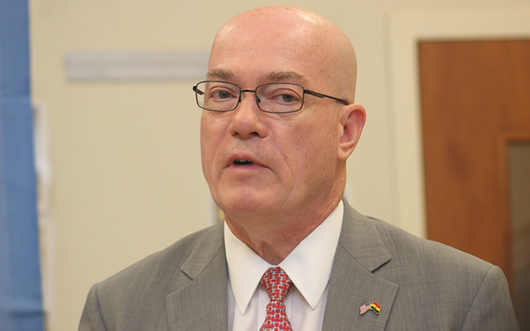


The Ghana Health Service, with technical and strategic support from the U.S. Centers for Disease Control and Prevention (CDC), has led a multi-stakeholder exercise to validate two key national preparedness instruments aimed at strengthening Ghana’s response to public health emergencies.
The validation exercise brought together the World Health Organization (WHO) Ghana Office, the African Field Epidemiology Network (AFENET) – Ghana, and other development and health sector partners. The process focused on the Public Health Emergency Operations Centre (PHEOC) Manual and the Workforce Surge Strategic Plan.
The development marks a significant milestone in Ghana’s public health preparedness agenda while underscoring the growing role of health diplomacy in relations between Ghana and the United States and within the broader global health architecture.
The collaboration reflects continued United States support for strengthening Ghana’s public health systems, particularly in emergency preparedness, disease surveillance and rapid response capacity.
Through the CDC’s global health security agenda, the U.S. has provided technical expertise to help Ghana align its emergency response architecture with international best practices, reinforcing long-term institutional capacity rather than short-term crisis intervention.
The inclusion of the WHO Ghana Office further anchors the initiative within global health governance frameworks, ensuring alignment with international norms, standards and the International Health Regulations (IHR).
Public health experts say the validation of the two instruments demonstrates how health cooperation has evolved into a central pillar of bilateral and multilateral diplomacy, moving beyond traditional aid toward sustainable systems strengthening.
The validated PHEOC Manual provides a standardised operational framework for managing public health emergencies, outlining command structures, coordination mechanisms, information flow and decision-making protocols at national and sub-national levels.
Complementing this, the Workforce Surge Strategic Plan establishes mechanisms for the rapid mobilisation and deployment of trained public health professionals during emergencies.
The plan defines activation thresholds, deployment procedures and the roles of critical response personnel, including epidemiologists, logisticians, data managers and risk communication officers.
Together, the two instruments are expected to significantly enhance Ghana’s ability to respond swiftly and in a coordinated manner to outbreaks and other public health threats.
the initiative reinforces Ghana’s standing as a reliable regional partner in global health security and positions the country as an emerging hub for emergency preparedness in West Africa.
By working closely with U.S. institutions, the WHO and continental partners such as AFENET, Ghana strengthens its diplomatic footprint within global health governance structures while deepening multilateral cooperation.
The collaboration also reflects a broader international approach to public health diplomacy, where technical cooperation and capacity building are increasingly seen as central to sustainable development and global health security.
Following the validation, the documents are expected to be fully operationalised across Ghana’s health system, supported by continued technical assistance, training programmes and simulation exercises to ensure effectiveness during real-world emergencies.
For Ghana, the initiative signals a shift toward stronger institutional resilience, while for its international partners it reinforces a shared commitment to collective preparedness against transboundary health threats.
Related Posts