
Ghana’s economy is showing signs of stabilisation nearly a month into the implementation of the country’s $3 billion loan-support programme with the International Monetary Fund (IMF).
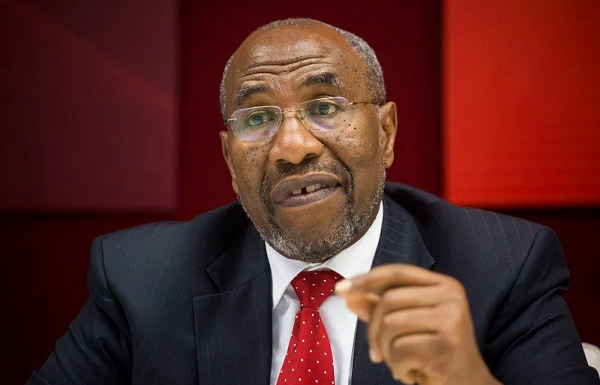
That was the preliminary findings of the IMF Mission team led by Stéphane Roudet, during their weeklong observation of Ghana’s ongoing Extended Credit Facility (EFC) programme with the Fund.
“Against a complex global economic backdrop, the Ghanaian economy is showing signs of stabilisation, with softening inflation, an increase in international reserves, and a less volatile exchange rate,” Mr Roudet said at the end of the mission.
He said the team took stock of the Ghanaian authorities’ progress in meeting key commitments under the ECF, which would be formally assessed during its first review, expected to be done between September and November, 2023.
The Chief of Mission reiterated the need for Ghana to timely restructure agreements with its creditors, noting that doing so was essential in securing the expected benefits of the Fund-supported programme.
The IMF staff team led by Mr Roudet visited Ghana from June 8 to 15 as part of its regular engagement with the Ghanaian authorities and other stakeholders.
Meetings were held with the President Akufo Addo, Vice President Bawumia, Finance Minister, Ken Ofori-Atta, and Bank of Ghana Governor, Dr Ernest Addison and the Fund’s Mission team.
Other meetings were held with representatives from various government agencies, Parliament’s Finance Committee, the private sector, as well as Civil Society Organisations.
Mr Roudet expressed the IMF team’s gratitude to the Ghanaian authorities and other stakeholders for their “constructive engagement and support during this mission.”
Ghana’s inflation, which stood at 53.6 per cent at the beginning of 2023, eased to 41.2 per cent in April (before the approval of the IMF loan-support programme in May), but saw a marginal increase to 42.2 per cent when the Statistical Service released the last inflation figures.
On international reserves, BoG indicated that the first tranche of $600 million from IMF had boosted Ghana’s reserve from $5.1 billion to $5.7bn and strengthened the balance of payment position.
Although there has been some exchange rate since the beginning of the year, there have been less volatility, with the past few weeks seeing the rate being US$1 against GHS10.97.
Ghana’s three-year Post COVID-19 Programme for Economic Growth (PC-PEG) programme is to provide balance of payment support as part of a broader effort to quicken the country’s recovery from an economic crisis induced by a pandemic, Russia-Ukraine war and internal structural problems.
It is to also help create the conditions for inclusive and sustainable growth and job creation, help to alleviate the exchange rate pressures and depreciating currency, and provide a catalytic effect on additional sources of financing.
Source: GNA
Related Posts