
The African Union, in partnership with ECOWAS and the German Development Agency (GIZ), has embarked on an urban resilience project aimed at strengthening the capacity of cities across West Africa to integrate climate and disaster risk considerations into their development planning.
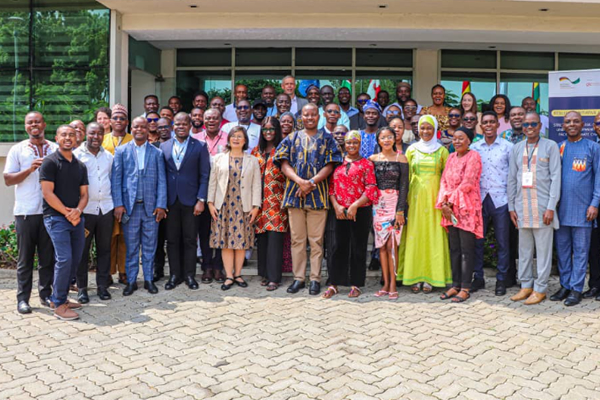
The initiative, dubbed: “Resilience Initiative Africa” was unveiled during a regional workshop in Accra, where urban leaders and municipal executives from 10 West African countries gathered to receive technical training and share experiences on building climate-resilient cities.
Speaking at the three-day workshop series, which is the second edition, Professor Emmanuel Osuteye, Urban Resilience Technical Advisor at the African Union Commission, explained that the project sought to reverse the current trend of haphazard urban development by embedding risk analysis into urban planning processes.
“Our cities and urban centres are increasingly vulnerable to the impacts of climate change, such as flooding, extreme heat, and other environmental hazards,” he said.
“This initiative brings together city leaders across the sub-region to identify common risks and develop localised solutions with regional impact,” he added.
He said the programme was focused on capacity building as a core component, which starts by equipping city authorities with knowledge, tools, and planning techniques, supported by peer-to-peer learning and idea exchange.
He added that the African Union recognized the importance of addressing urban resilience not just through policies but also through implementation at the grassroots level, involving municipal authorities who are directly responsible for planning and service delivery.
He expressed hope that the programme would significantly contribute to making cities safer, more sustainable, and better prepared for the risks associated with climate change and unplanned urban growth.
The Ministry of Climate Change and Sustainability reiterated its commitment to mainstreaming climate action across all levels of governance in Ghana.
Mr. Cedric Dzelu, a Technical Director at the Ministry, who Represented the Sector Minister, Mr Seidu Issifu Baba, emphasized the government’s resolve to place climate change at the forefront of national development, citing the growing economic toll of climate-related disasters on the country.
He explained that the establishment of the Office itself signalled a renewed presidential focus on addressing the impact of the climate crisis and the need for coordinated national responses.
Mr Dzelu said the establishment of the Climate change and sustainability unit and training would be replicated among various Ministries, Departments, Agencies, and the Metropolitan, Municipal, and District Assemblies (MMDAs).
“This is necessary because climate change affects every sector and discipline, we need to move beyond centralised responses and ensure that grassroots institutions are just as prepared to deal with climate challenges.”
He said a draft proposal was being developed to legally establish these units and ensure that they were backed by technical capacity, training, and resources.
Mr. Cedric expressed optimism that the ongoing workshop would contribute significantly to the national agenda and pledged the ministry’s full participation throughout the duration of the programme.
Dr. Sintiki Ugbe, ECOWAS – Director of the Humanitarian and Social Affairs Directorate, indicated that the workshop was necessary and timely and offered the opportunity to strengthen capacity and leverage on climate-related issues to make an impact.
She urged African Leaders not to dwell on the negativity of climate change, adding that leveraging on climate-related issues as a resource was necessary.
“Let’s not only look at the negative, we should also look at the climate as a resource. So if we manage this negative impact, we are able to leverage on the positive growth that the climate plays in our region,” She said.
Source: GNA
Related Posts