

India’s High Commissioner to Ghana, Manish Gupta, has reaffirmed the depth and strategic significance of relations between India and Ghana, describing the partnership as one anchored in shared democratic values, historical solidarity and expanding economic cooperation.
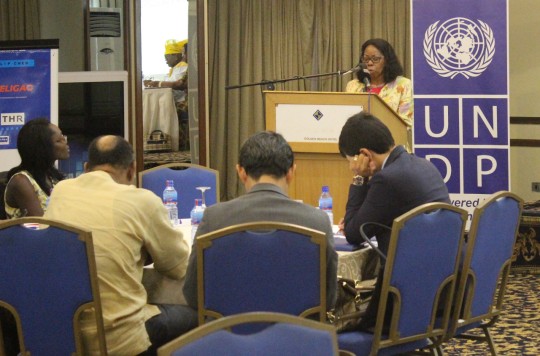
Speaking in Accra during celebrations marking India’s 77th Republic Anniversary, Gupta said the relationship between the two countries has evolved beyond symbolism into a forward-looking alliance that reflects the aspirations of the Global South. The event, held at the High Commissioner’s residence, brought together members of the Indian diaspora, diplomats and invited guests to commemorate India’s democratic journey since gaining independence from British colonial rule.
“As we celebrate our democracy here in Ghana, we also celebrate the enduring bonds of friendship between our two great nations. The landmark state visit of Founder Prime Minister Modi to Ghana last July imparted a new dynamism, a new momentum to our relations.”
“We elevated our ties to a comprehensive partnership that opens up new vistas for economic cooperation and diversifying this partnership. “ he said
Gupta noted that India’s strength has always been rooted in its people, pointing to its workforce, culture and democratic ideals as the pillars sustaining its rise and global relevance. He described India’s constitution, drafted under the leadership of Dr. B. R. Ambedkar, as the living foundation of the world’s most populous democracy and the moral compass guiding its socio-economic transformation.
The High Commissioner paid tribute to India’s freedom fighters, whose sacrifices, he said, transformed the dream of a sovereign republic into a resilient democratic reality. He urged members of the Indian community in Ghana to continue serving as ambassadors of those values while strengthening people-to-people ties between both nations.
“Today, we also recall our freedom fighters who gave up everything so that we could stand tall. Their sacrifices turned the dreams of sovereign republic into a reality. We all, as members of Indian diaspora here in Ghana, we are the torchbearers of that proud identity. So on this occasion, I wish once again each one of you a very happy Republic Day.” he stated.
The celebrations in Accra reflected a partnership that has matured from shared liberation ideals into a strategic relationship shaped by democracy, development and mutual ambition. Cultural performances showcasing the rich heritage of India and its history from colonial rule was depicted in creative performances from students of the Alpha Genius International School and DPS international School.
A central highlight of his address was the three-day state visit of Prime Minister Narendra Modi to Ghana last year, which he described as a turning point in bilateral relations. According to Gupta, the visit injected renewed momentum into cooperation and led to the elevation of ties to a Comprehensive Partnership, opening new pathways for economic engagement and diversification.
India and Ghana formally established diplomatic relations in 1957, bonded by shared anti-colonial struggles and a common vision for post-independence development. In the early years of Ghana’s nationhood, India provided advisory support in building key institutions, laying the groundwork for a relationship that has steadily deepened over the decades.
Economic cooperation has since become a defining feature of the partnership. Bilateral trade currently stands at about US$3 billion, with both countries targeting an increase to US$6 billion within the next five years. Ghana presently enjoys a trade surplus with India, largely driven by gold exports, alongside cocoa, cashew nuts and timber. India, in turn, exports pharmaceuticals, machinery, vehicles and industrial goods to Ghana.
India’s role in Africa’s pharmaceutical supply chain featured prominently, with Gupta noting that more than a quarter of Africa’s generic medicines are sourced from India. Indian pharmaceutical firms dominate Ghana’s Food and Drugs Authority listings of approved foreign manufacturers, reinforcing India’s position as a critical health partner on the continent.
Beyond trade, India has invested over US$2 billion in Ghana through private capital, concessional financing and grants spanning more than 900 projects. Indian companies and state-backed institutions are involved in major infrastructure initiatives, including the Tema–Mpakadan Standard Gauge Railway Line and the Ghana–India Kofi Annan Centre of Excellence in ICT, which has become a regional hub for innovation and digital skills development.
Related Posts