
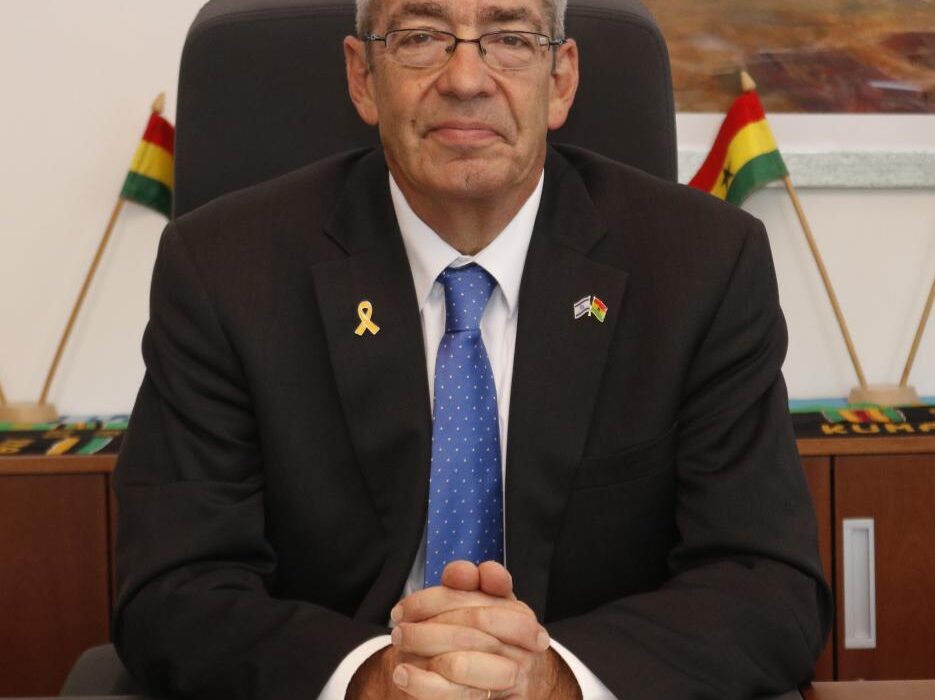
Israel’s Ambassador to Ghana, Roey Gilad, has called on Christians, Muslims and Jews in Ghana to unite in prayer for peace in Israel and across the Middle East, as the war between Israel and Hamas enters what he described as a fragile and uncertain stage.
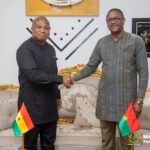
Speaking at a meeting with members of the Ghana-Israel Parliamentary Friendship Association, Ambassador Gilad appealed for interfaith prayer for peace in Israel and the Middle East, noting that it will not only serve the interest of Israel but the globe.
“The situation is fragile, and I really appeal to the friends here to pray. We all pray for the Lord, whether we are Christians, Muslims, if there are any Muslims here I would like to congratulate them in Ramadan Kareem, or Jews, and we should all need to pray for peace and tranquility and stability in Israel and in the Middle East, because I think it will serve not only the people of Israel, but all over humanity.”
He also acknowledged the complexity of securing lasting peace in Gaza, particularly regarding the question of Hamas’ disarmament.
“The question is, assuming that Hamas is not going to give up their weapon from their own good will, they’re not going to volunteer to do it, and there will be a need for military intervention to force them to disarm themselves, I doubt if the international community will be doing so.” he said
The ambassador drew a sharp distinction between peacekeeping and peace enforcement, noting that while several countries are now committing troops to a proposed international stabilisation force for Gaza, those deployments are primarily intended for monitoring, humanitarian support and post-conflict security, not active combat operations.
“But there is a huge difference between peacekeeping and peace enforcing. So I really hope that eventually, miraculously, something will happen, and there will not be a need for the Israeli army to do the peace enforcing. So I try to be optimistic, but I don’t want to bluff anybody.” he said
Recent diplomatic discussions under a proposed international stabilisation framework have seen countries such as Indonesia, Morocco, Kazakhstan, Kosovo and Albania signal willingness to contribute troops to a Gaza security force once conditions permit.
Egypt and Jordan have pledged to train police personnel as part of longer-term governance and security restructuring efforts in the enclave. The initiative is aimed at supporting reconstruction and preventing a security vacuum in the aftermath of large-scale military operations.
Indonesia’s potential contribution has drawn particular attention, with reports indicating preparations for a significant troop commitment pending final political and international approvals. However, these forces would operate under a peacekeeping mandate, a key distinction Ambassador Gilad emphasised in his remarks.
The war began on October 7, 2023, when Hamas launched coordinated attacks on southern Israel, killing more than 1,200 people and taking hostages. Israel responded with a sustained military campaign in Gaza aimed at dismantling Hamas’ military infrastructure and securing the release of captives. The conflict has since resulted in extensive casualties and severe destruction across Gaza, triggering a deep humanitarian crisis and global diplomatic engagement.
Despite intermittent ceasefire efforts mediated by the United States, Egypt and Qatar, fighting and tensions have continued in various forms. International actors are now increasingly focused on reconstruction, governance arrangements and the future security architecture of Gaza, including whether an international stabilisation presence can effectively operate without becoming entangled in active hostilities.
The ambassador’s appeal in Ghana reflects the global resonance of the Gaza conflict and underscores the intersection of diplomacy, security and faith communities in shaping conversations about one of the world’s most enduring and complex conflicts.
Related Posts