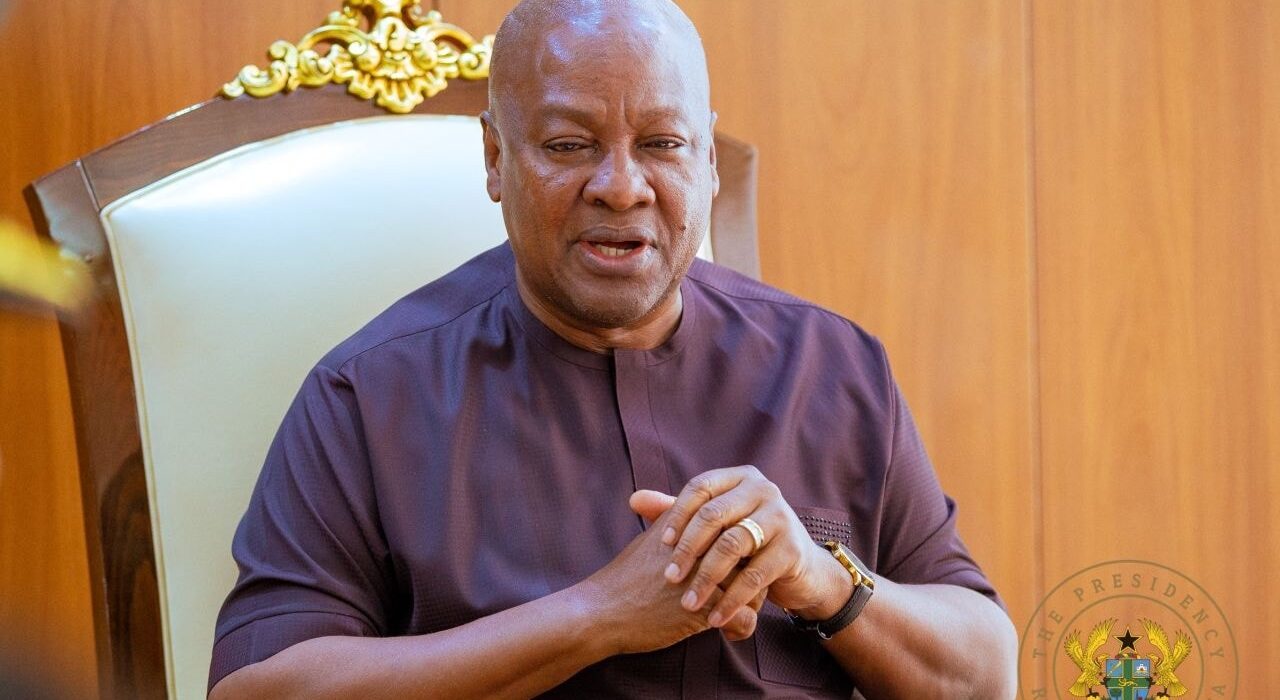
President John Dramani Mahama has stated that justice could have been delivered against racial apartheid regimes, colonial injustices, and oppressive dictatorships if the African Court on Human and Peoples’ Rights had existed during some of Africa’s darkest historical moments.
Speaking at the opening of the Court’s 20th anniversary commemorative events in Arusha, Tanzania, Mahama said many historic injustices against African liberation figures and dissenting voices might have been adjudicated under such a continental judicial body.
He cited prominent Pan-African figures including Patrice Lumumba of DR Congo, Yaa Asantewaa of the Asante Empire, Thomas Sankara of Burkina Faso, and Nelson Mandela of South Africa as examples of individuals who faced repression while challenging colonial and apartheid systems.
“Had the African Court on Human and Peoples’ Rights existed earlier in our past, these grave instances of human rights abuses and injustices would have been very important cases for you to adjudicate. You would have secured justice against racist apartheid criminals, colonialists, and even our own oppressive African dictators who tortured and sent many of their countrymen and women to death.” Mahama said.
Mahama also used his personal history to underscore the broader impact of political injustice on families and societies. He recounted how, as a teenager, he suffered recurrent nightmares of his father standing trial after his arrest and detention following the 1966 military coup in Ghana.
His father, Emmanuel Adama Mahama, a former Minister in the Nkrumah government, was detained for about a year after the 1966 coup that overthrew President Kwame Nkrumah. He was later arrested again in 1972 under the regime of General Ignatius Kutu Acheampong, reportedly over unsolicited advice, though he was subsequently released after not being found guilty of subversion.
Drawing from these experiences, Mahama described the African Court as an institution capable of recalibrating Africa’s moral compass through independent oversight and accountability.
“The African Court on Human and Peoples’ Rights has proven time and again that it has the fortitude and courage to recalibrate our moral compass. We need that kind of oversight so that we remain observant and respectful of the rights and duties enumerated in the Articles of the Banjul Charter,” he said.
He urged African states to empower the Court to stand guard over the continent’s founding ideals, protecting and preserving human rights and democratic governance.
Mahama further highlighted Ghana’s contribution to the Court’s development, noting that former Chief Justice Sophia Akuffo served on the Court from 2006 to 2014 and rose to become its President. She later served as Ghana’s Chief Justice from 2017 until her retirement in 2019. He also mentioned Justice Dennis Adjei, who is currently serving a six-year term on the Court following his election in 2022.
The African Court on Human and Peoples’ Rights was established in 2004 and became operational in 2006 to complement the protective mandate of the African Commission on Human and Peoples’ Rights. It was created to strengthen the enforcement of the African Charter on Human and Peoples’ Rights, commonly known as the Banjul Charter.
The Court has jurisdiction over cases involving human rights violations brought by member states, the African Commission, and, in certain circumstances, individuals and non-governmental organisations from countries that have made special declarations accepting such access.
Over the past two decades, the Court has delivered landmark judgments on electoral justice, freedom of expression, fair trial rights, and political participation. Its rulings have shaped constitutional reforms, strengthened democratic accountability, and reinforced the rule of law across several African states, positioning it as a key pillar in the continent’s human rights architecture.
Related Posts