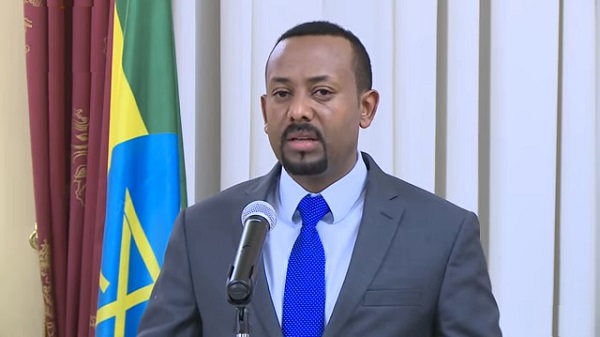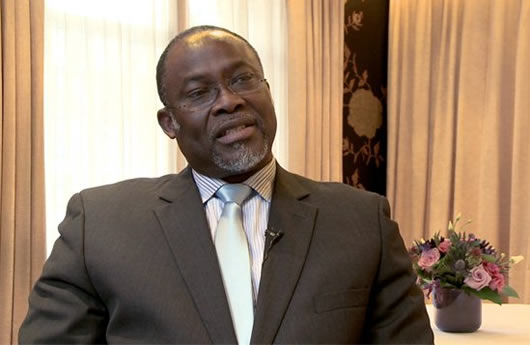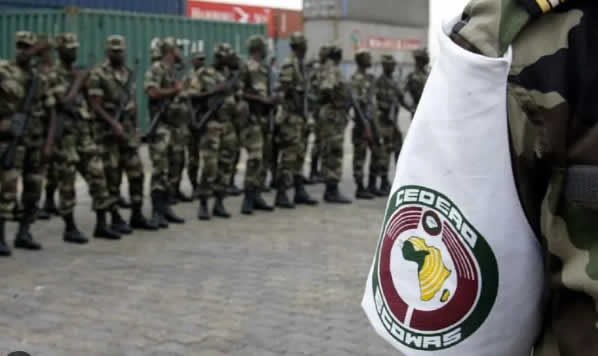

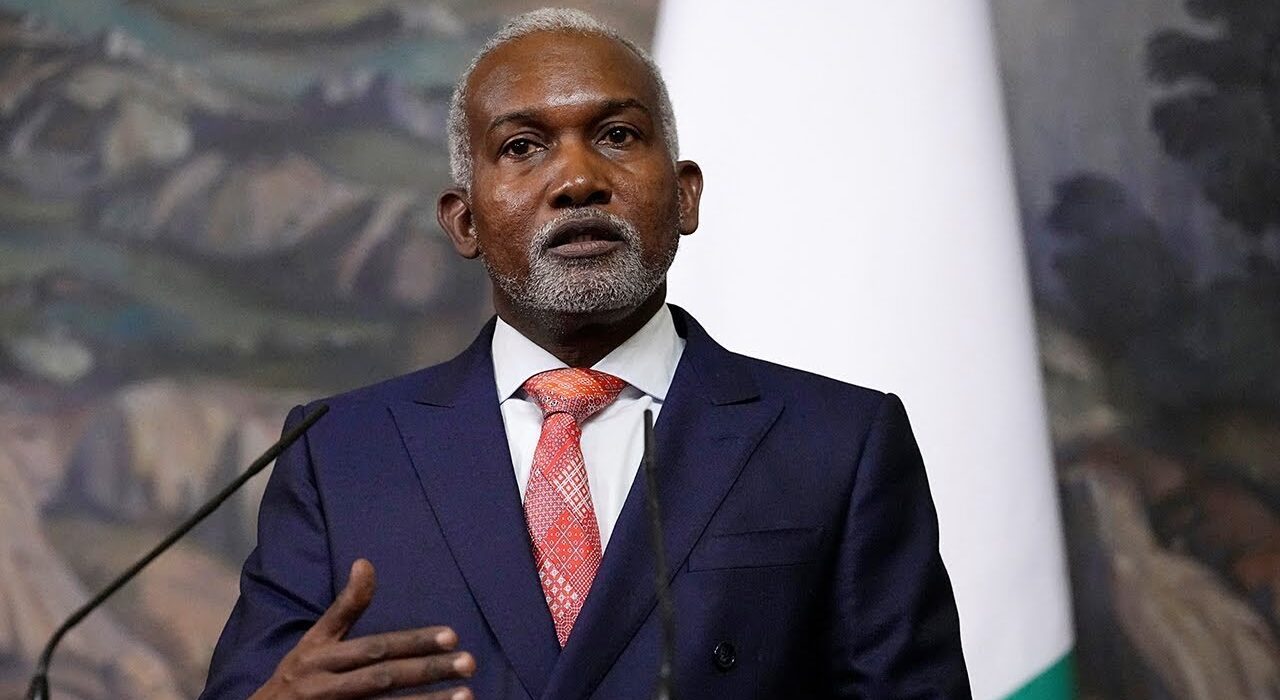
Nigeria’s Minister for Foreign Affairs has confirmed that Abuja not only approved the strikes but also played a central role in their execution, including the provision of intelligence and final political clearance from President Bola Ahmed Tinubu.
According to the minister, the operation was part of an ongoing counterterrorism partnership aimed at stopping the killing of innocent Nigerians, regardless of religion, identity, or geography.
“Nigeria has remained consistent in its approach, working with all partners committed to the fight against terrorism, irrespective of whether the victims are Muslims or Christians, and irrespective of the form terrorism takes,” the minister said.
He stressed that the operation should not be interpreted through a religious lens, describing it instead as a continuation of joint efforts to dismantle violent extremist networks and end the deaths of civilians.
The foreign minister disclosed that the United States sought Nigerian approval before the strikes, revealing that he held a 19-minute phone conversation with U.S. Secretary of State Marco Rubio prior to the operation, followed by another call shortly before the strikes were carried out.
He said the discussions focused on intelligence sharing, target validation, and agreement on public messaging that would clearly present the action as a counterterrorism operation rather than a religiously motivated attack.
“It was agreed that statements following the strike would make it clear that this was about terrorism, nothing to do with religion, and about protecting innocent lives, Nigerian or non-Nigerian,” he stated, adding that the operation represented a vindication of the Tinubu administration’s commitment to combating insecurity.
However, both countries are facing growing scrutiny over the framing, targeting, and broader implications as official statements from both governments reveal a striking divergence in narrative, despite confirmation of close coordination at the highest levels statements from Washington tell a markedly different story.
In a post issued shortly after the strikes, the U.S. Secretary of War, Pete Hegseth framed the operation as a direct response to the killing of Christians in Nigeria, declaring that “the killing of innocent Christians in Nigeria (and elsewhere) must end.” The statement added that the Department of War was “always ready,” noting that ISIS “found out tonight, on Christmas,” and warning pointedly: “More to come.”
U.S. President Donald Trump, who identified himself as directing the strikes as Commander-in-Chief, went even further. In a highly charged statement, Trump said the United States had launched “powerful and deadly” strikes against ISIS targets in northwest Nigeria, accusing the group of “viciously killing, primarily, innocent Christians” at unprecedented levels.
He framed the operation as part of a broader campaign against what he described as “Radical Islamic Terrorism,” warning that further attacks would follow if the killing of Christians continued.
The contrasting narratives, Nigeria’s insistence on a religion-neutral counterterrorism operation versus the U.S. portrayal of the strikes as a defense of persecuted Christians, have sparked debate among analysts and security experts, particularly over the choice of targets.
Mahmud Jega, an analyst with Arise News, questioned both the strategic value and geographic focus of the strikes, noting that the areas reportedly hit in Sokoto State are widely regarded as among the relatively safer parts of northern Nigeria. He argued that Nigeria’s most entrenched terrorist threats remain concentrated in the northeast, where ISWAP, an ISIS-affiliated group, and Boko Haram continue to operate across Sambisa Forest, the Mandara Mountains, border regions adjoining Cameroon and Chad, and around Lake Chad.
Jega suggesting that the operation raises unanswered questions about intelligence prioritisation and operational intent.
The strikes also appear to fit into a broader trajectory of U.S. political focus on alleged religious persecution in Nigeria. Earlier this month, the U.S. House Appropriations Committee convened a joint congressional roundtable with the U.S. Commission on International Religious Freedom (USCIRF) to examine claims of escalating violence against Christians in Nigeria.
The session, chaired by National Security Subcommittee Chairman Mario Diaz-Balart, featured testimony from advocacy groups who described what they called “severe persecution” and worsening religious freedom conditions.
That congressional hearing was widely seen as a key step in advancing Trump’s long-standing claims about targeted violence against Christians in Nigeria, claims the Nigerian government has repeatedly resisted, arguing that insecurity in the country is driven by terrorism, banditry, and criminal violence rather than a state-tolerated religious agenda.
The divergence in messaging has now placed Abuja in a delicate diplomatic position: publicly aligned with Washington on joint military operations, yet clearly uncomfortable with the religious framing adopted by U.S. officials.
While Nigerian authorities maintain that the strikes underscore their willingness to work with international partners to defeat terrorism, critics warn that inconsistent narratives risk inflaming religious tensions at home and obscuring the complex, multi-layered nature of Nigeria’s security crisis.
As both governments signal that further operations may follow, the key question remains whether future actions will reflect Nigeria’s stated emphasis on nationwide counterterrorism priorities, or continue to be shaped by Washington’s increasingly explicit focus on religious persecution
Related Posts