
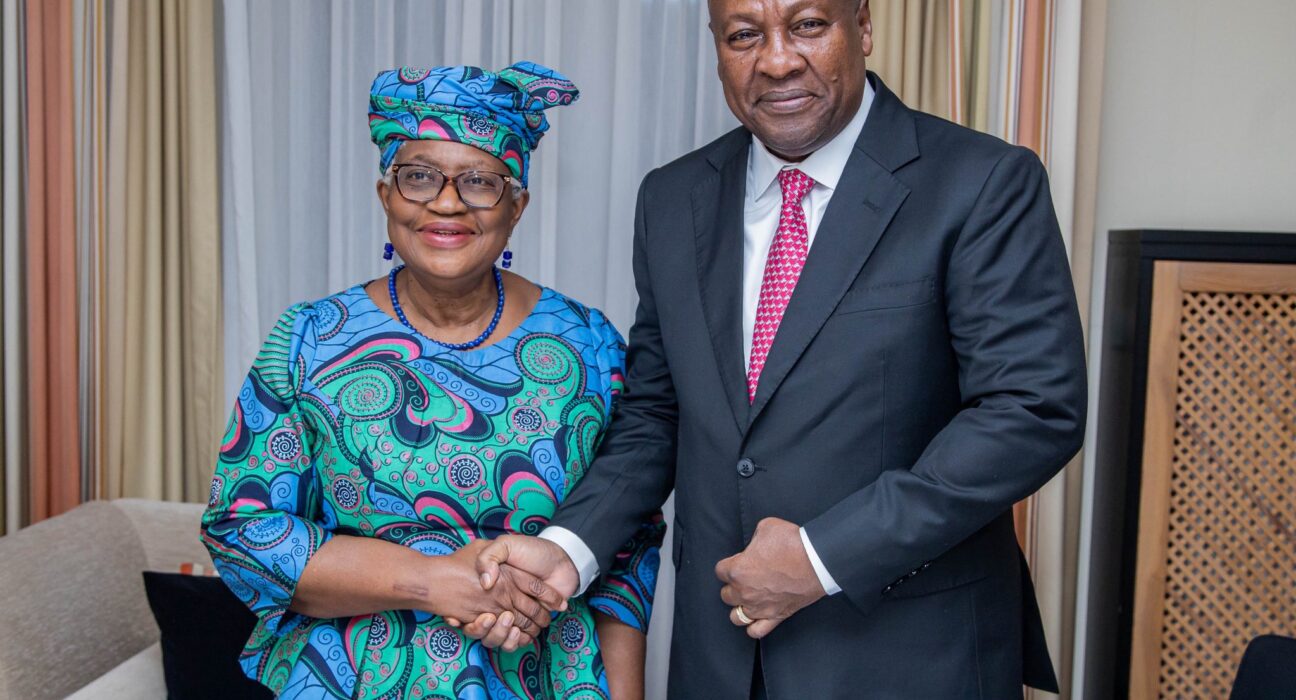
President John Dramani Mahama has announced the admission of nine countries into the Presidential Council of the Accra Reset Initiative, a flagship framework aimed at advancing African health sovereignty and reshaping global development cooperation. The announcement was made on the sidelines of the World Economic Forum in Davos, where President Mahama unveiled the expanded leadership structure of the initiative.
Launched on the sidelines of the 80th United Nations General Assembly, the Accra Reset Initiative seeks to move global development beyond outdated aid models toward resilient coalitions, innovative financing, and agile delivery platforms, with health as the entry point for broader systemic reform.
President Mahama assured that Ghana would continue to offer principled global leadership by “co-creating solutions with willing partners” to address shared global challenges, as the country’s stature in the international community continues to rise
The newly constituted Presidential Council now includes the current Presidents and Prime Ministers of South Africa, Kenya, India, Brazil, Egypt, Barbados, the Democratic Republic of Congo (DRC), Indonesia, and Nigeria. The inclusion of both African and non-African leaders underscores the Accra Reset’s ambition to foster cross-regional collaboration and position Africa as a co-architect of global solutions rather than a passive recipient of aid.
President Mahama also unveiled a Circle of Guardians made up of distinguished former leaders tasked with providing strategic guidance and moral authority to the initiative. The group includes former Nigerian President Olusegun Obasanjo, former Liberian President Ellen Johnson Sirleaf, former Malawian President Joyce Banda, former Ghanaian President John Agyekum Kufuor, former Tanzanian President Jakaya Kikwete, and former Mauritian President Ameenah Gurib-Fakim.
A parallel circle of former Prime Ministers was also announced, featuring Gro Harlem Brundtland of Norway, Hailemariam Desalegn Boshe of Ethiopia, Gordon Brown of the United Kingdom, Helen Clark of New Zealand, P.J. Patterson of Jamaica, and Romano Prodi of Italy. Former African Union Chairperson Dr. Nkosazana Dlamini-Zuma also joins the distinguished body.
The Accra Reset Agenda is a strategic framework aimed at advancing African health sovereignty within a reimagined global health architecture, grounded in the recognition that the traditional aid-dependent development model is no longer fit for purpose.
Echoing remarks by President John Dramani Mahama at the Africa Health Sovereignty Summit, the agenda responds to stark global realities, including the COVID-19 pandemic, which erased nearly two decades of development gains in under two years, and escalating climate shocks that now place more than 735 million people at risk of hunger. These challenges, proponents argue, underscore the urgent need for a new governance and financing paradigm capable of addressing contemporary global crises.
While the MDGs and SDGs have driven significant gains and unprecedented international cooperation, a 2023 UN review revealed that fewer than half of the 169 SDG targets are currently on track, with global health, inequality, and fiscal resilience among the most threatened. As the 2030 deadline approaches, the Accra Reset argues that incremental reforms and renewed pledges are insufficient.
Instead, the initiative asserts that the era of “development-as-usual” has ended and calls for a fundamental reset in how global cooperation is structured and delivered. Building on outcomes from the August 2025 Africa Health Sovereignty Summit in Accra, the framework promotes a new operating logic centred on resilient coalitions, innovative financing syndicates, and agile platforms capable of delivering results amid overlapping global crises. T
The health sector, deeply exposed to systemic shocks and aid dependency , serves as the entry point for demonstrating this new model, with the aim of catalysing broader, cross-sectoral transformation across the global development landscape.
.
Related Posts