
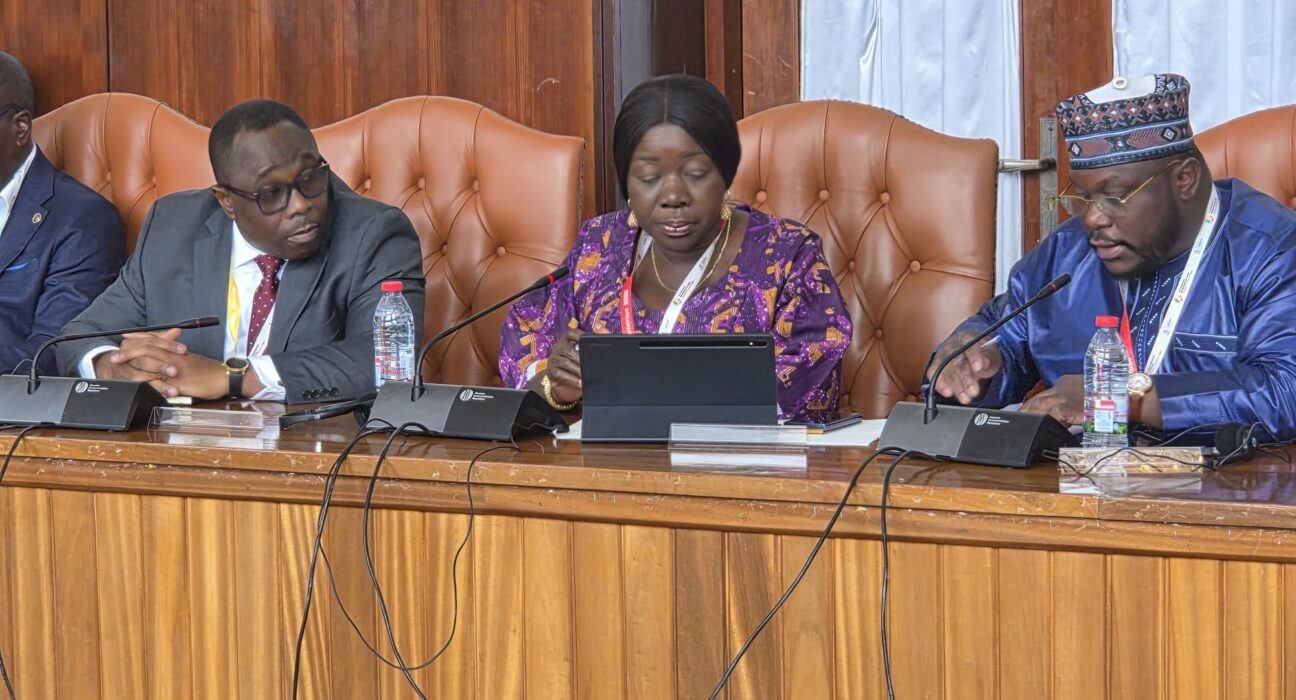
Minister for Trade and Agribusiness, Elizabeth Ofosu-Adjare has held high-level talks with Burkina Faso Ambassador to Ghana, David Kabré to explore a mutually beneficial resolution to the ban on tomato exports, amid concerns over potential disruptions to the Ghana market and supply chain.
The Minister engaged the Burkinabè Head of Mission on the sidelines of the 14th WTO Ministerial Conference held in Yaoundé, Cameroon, where discussions focused on easing trade tensions and safeguarding regional food security.
During the engagement, the Minister highlighted the potential consequences of the export ban, noting that between 70% and 80% of tomatoes on the Ghanaian market are sourced from neighbouring Burkina Faso. She further indicated that the tomato trade generates approximately $400 million in revenue for the Burkinabè economy, underscoring the importance of the commodity to both countries.
The discussions were aimed at identifying a pathway to relax the ‘no-tomato-export’ policy introduced by the Burkinabè government, while also exploring opportunities to expand the broader trade portfolio between the two neighbouring countries.
Ghana remains a strong trading partner to Burkina Faso, with Ghana’s export earnings to the country reaching $573 million in 2024. Major exports included Refined Petroleum ($211 million), Electricity ($146 million), and Petroleum Gas ($50.5 million). Ghanaian exports to Burkina Faso have grown at an annual rate of 5.91%, rising from $430 million in 2019 to $573 million in 2024.
Burkina Faso, on the other hand, exported commodities worth $84.3 million to Ghana in 2024, with tomatoes, oily seeds, and livestock dominating the export basket. However, the trend has seen a downward trajectory, declining by 9.72% from $141 million in 2019 to $84 million in 2024, according to data from the Observatory of Economic Complexity.
The data suggests that a full operationalization of the tomato export ban, one of Burkina Faso’s top export commodities to Ghana, could further reduce export volumes and intensify supply constraints within the Ghanaian market.
The Burkinabè delegation explained that the policy aims to retain sufficient tomato produce for newly established tomato processing factories valued at €11.4 million. The facilities are capable of processing 100 tonnes of tomatoes per day and are projected to generate 8 billion CFA francs in annual sales within the first five years.
The initiative is also expected to create 180 direct jobs and approximately 3,000 indirect jobs, supporting Burkina Faso’s industrialization and value-addition agenda.
Despite these developments, Minister Ofosu-Adjare adopted a forward-looking approach, inviting the Burkinabè delegation to provide a list of their top ten imports, with the aim of identifying opportunities for Ghanaian businesses to competitively supply those products. She also called for strategic collaboration in the agricultural sector to promote knowledge sharing, strengthen value chains, and support mutual economic growth.
The Minister further announced plans to invite between 20 and 50 Burkinabè traders and business operators to Ghana in the coming months to explore trade and investment opportunities across key sectors. The initiative is expected to deepen private-sector engagement, diversify trade flows, and enhance commercial partnerships between businesses in both countries.
The proposed engagement is also expected to strengthen bilateral relations between Ghana and Burkina Faso by fostering sustained dialogue, improving cross-border trade cooperation, and reinforcing long-standing economic ties. Analysts note that enhanced business-to-business collaboration could help mitigate supply disruptions, expand regional trade integration, and promote shared economic prosperity between the two neighbouring countries.
Related Posts