
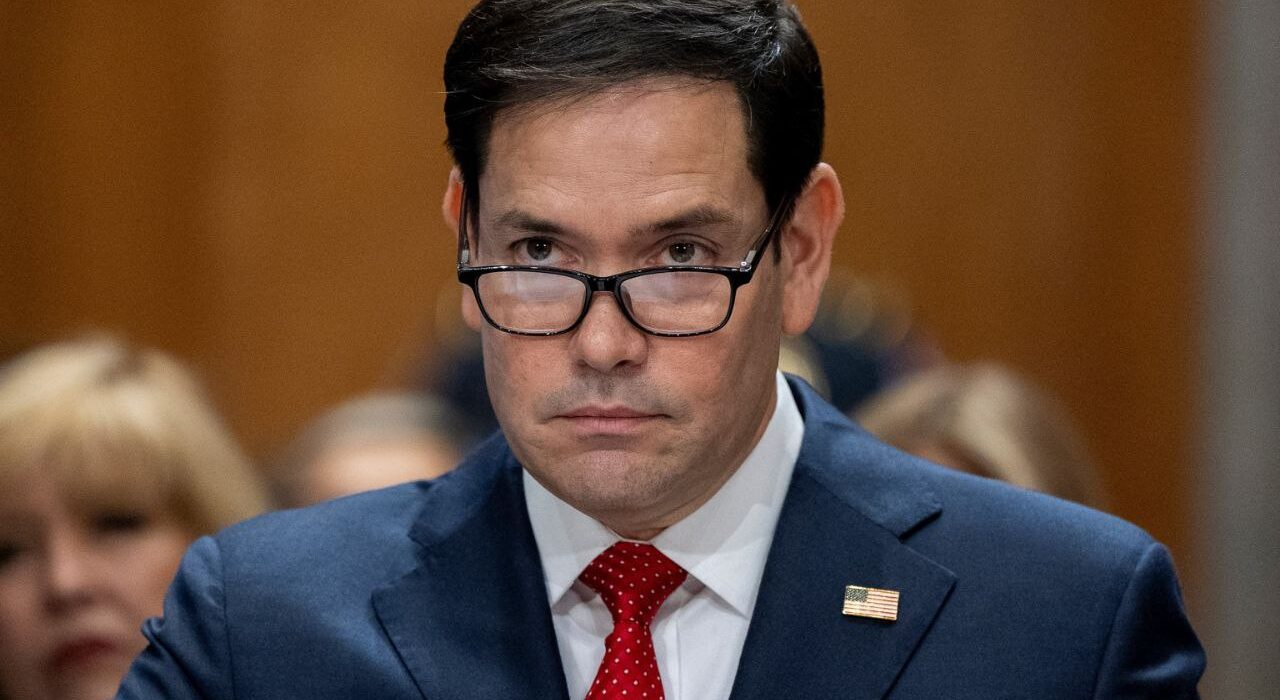
U.S. Secretary of State Marco Rubio has firmly rejected claims that Washington’s recent military operation in Venezuela was aimed at securing access to the country’s vast oil reserves, dismissing such assertions as misleading and unfounded.
Rubio’s remarks come amid growing criticism of Operation Absolute Resolve, which has faced intense scrutiny from analysts and international observers who argue that the operation violated Venezuela’s sovereignty and breached international law. Critics have also suggested that the U.S. intervention was economically motivated, pointing to Venezuela’s position as the country with the world’s largest proven oil reserves.
Speaking during a media interaction, Rubio pushed back against these projections, insisting that the United States has no need for Venezuelan oil. Instead, he framed the operation within a broader geopolitical strategy aimed at preventing U.S. adversaries, particularly China and Russia, from gaining control over Venezuela’s oil industry and expanding their influence in the Western Hemisphere.
“We don’t need Venezuela’s oil. We have plenty of oil in the United States,” Rubio said. “What we are not going to allow is the Venezuelan oil industry being controlled by adversaries of the United States. You have to ask why China needs the oil, why Russia needs the oil. This is not their continent.”
The United States has been the world’s largest crude oil producer since 2013, surpassing traditional oil giants such as Saudi Arabia and Russia. In 2023, U.S. crude oil and condensate production averaged approximately 12.9 million barrels per day, exceeding its previous record of 12.3 million barrels per day set in 2019.
Despite this, Venezuela remains the country with the largest proven oil reserves globally, holding an estimated 303 billion barrels, about 17% of the world’s total reserves, followed by Saudi Arabia with 267 billion barrels and Iran with 209 billion barrels. Analysts note that Venezuela’s heavy crude oil is particularly valuable, as it can be refined into diesel, asphalt, and industrial fuels, products less abundant in U.S. oil output. This reality has fueled speculation that economic considerations may have influenced Washington’s actions beyond the stated narco-terrorism charges against former President Nicolás Maduro.
Rubio, however, maintained that U.S. policy is guided by strategic security interests rather than resource acquisition. He emphasized Washington’s determination to prevent non-hemispheric powers from establishing control over critical assets in the Caribbean and broader Latin American region.
“This is the Western Hemisphere, this is where we live. We are not going to allow it to become a base of operations for adversaries or competitors of the United States. We want to see Venezuela’s oil proceeds benefit the Venezuelan people, not foreign powers.” Rubio stated.
Venezuela’s oil industry has sharply declined over the years, with production falling to approximately 1.1 million barrels per day last year, down from about 3.1 million barrels per day in the 1990s. The downturn has been attributed to years of sanctions, underinvestment, mismanagement, and institutional decay.
Rubio also highlighted the humanitarian dimension of Venezuela’s crisis, pointing to the mass exodus of Venezuelan nationals since 2014. According to international estimates, more than eight million people have fled the country amid allegations of human rights abuses, food shortages, widespread violence, and the collapse of public services.
“Eight million people, probably the largest mass migration event in modern history, left Venezuela because the wealth of that country was stolen by Maduro and his cronies,” Rubio said. “It was never used for the benefit of the Venezuelan people.”
He warned that regional neighbours, particularly Brazil and Colombia, fear a renewed wave of migration that could further destabilise the region.
“The number one fear of Brazil and Colombia is another mass migration event,” Rubio added. “This is deeply destabilising, and it will not continue. They are not going to destabilise our region in our own backyard and have us pay the price for it, not under President Trump.”
Rubio concluded by reaffirming that the United States would not allow a repeat of what he described as the systematic plundering of Venezuela’s national resources, stressing that Washington remains committed to protecting its strategic interests while preventing further regional instability under the Trump administration.
Related Posts