
Professor Sandow Mark Yidana, Provost, College of Basic and Applied Sciences, University of Ghana (UG), Legon, is advocating joint research and cross-continental projects to strengthen Africa’s status in planetary and space science.
“I see a bright horizon for planetary and space science in Africa,” he said, and drew attention to the growing collaboration among African universities – one that could lead innovative research and advancement of the global scientific agenda.
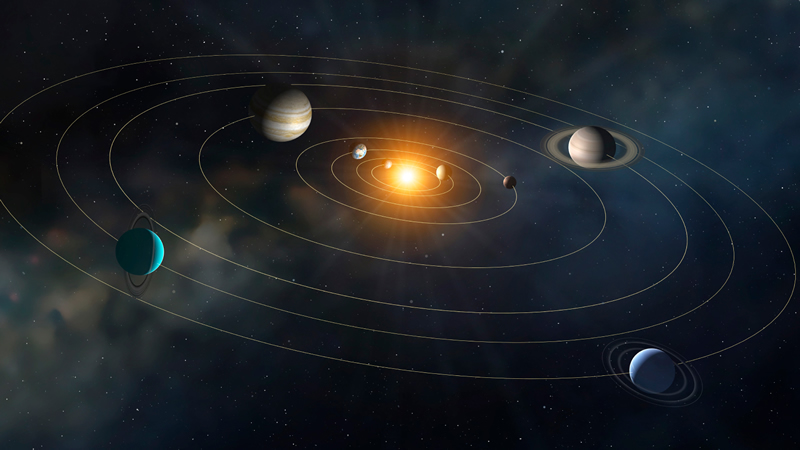
Understanding the planet’s place in the solar system was critical to mankind’s future, Prof Yidana noted in a speech read on his behalf at the Fifth Arab and Africa Impact Cratering and Astrogeology Conference (AICAC V-2025), in Accra.
The week-long Conference is being held under the auspices of the UG’s Department of Earth Science, in partnership with the African Initiative for Planetary and Space Science (AFIPS).
It has brought together the international community of professionals, researchers, scientists, students and science communicators in the fields of planetary and space sciences.
The participants will be holding sessions on themes related to impact cratering as an astronomical and geological phenomenon, impact cratering in the solar system, characterisation of impact processes from atomic to crustal scales (geochemistry of impactites, impact metamorphism, and structural features of impact structures).
Others are modeling of impact processes, meteorites, tektites, asteroids, economic geology and impact structures, effects of impacts on planetary evolution, including atmosphere, climate, environment and biosphere (mass extinctions), as well as ecotourism and heritage conservation related to impact crater.
Advancing scientific understanding of the solar system’s origin and evolution in extraordinary ways is pushing the limits of space science and technological breakthroughs in recent times, according to the Planetary Society.
The Society says the development has led to new discoveries, innovations and major improvements across many fields of human endeavours such as spacecraft and robotic engineering, design and operation, communication, navigation, medicine, and monitoring the environment.
Prof. Yidana said the University of Ghana was ensuring the academic programmes of units such as the Department of Earth Science, Department of Physics, and the Centre for Climate Change and Sustainable Studies (CCCSS), all included courses related to astrogeology.
“In particular, these academic programmes draw on astrology/astrophysics to provide the scientific foundation for addressing real-world challenges on our planet,” he explained.
The initiative also aligned with the UG Strategic Plan (2024-2025) – transformative student experience, impactful research, engagement and partnerships, the Provost added.
He said the University was committed to training a new generation of researchers who would not only interpret data from other worlds but also apply that knowledge to address challenges in areas such as climate change, resource management, and environmental protection.
Dr Joseph Tandoh, Director of the Ghana Space Science and Technology Institute (GSSTI), stated that the country had launched its National Space Policy, marking a significant milestone in the growing space sector.
The policy, he said, had the objective to harness the power of space technology and leverage it to propel economic growth, enhance national security, and ensure sustainable development.
With space technology already being used across various sectors such as agriculture, health, transportation, energy, and security, the policy sought to strengthen coordination between governmental agencies and the private sector, and to also optimise space-related activities for the country’s development, he noted.
Dr Marian Selorm Sapah, Chair of the AICAC V-2025 Local Organising Committee, earlier in a welcoming address, explained that the programme aimed at creating awareness and interest in planetary and space science.
The participants, she said, would go through series of activities, including a pre-conference workshop on the identification of impactites and meteorites, oral and poster presentations – covering topics such as the Bosomtwe impact structure, and the recent geological and geophysical investigations at Bosomtwe.
On meteorites, the topics encompass ‘Building Meteorite Science in Africa – Insights from the Moroccan Model’, ‘The Organic Composition of Meteorite Impactors – Implications for Planetary Chemistry’.
Source: GNA
Related Posts