
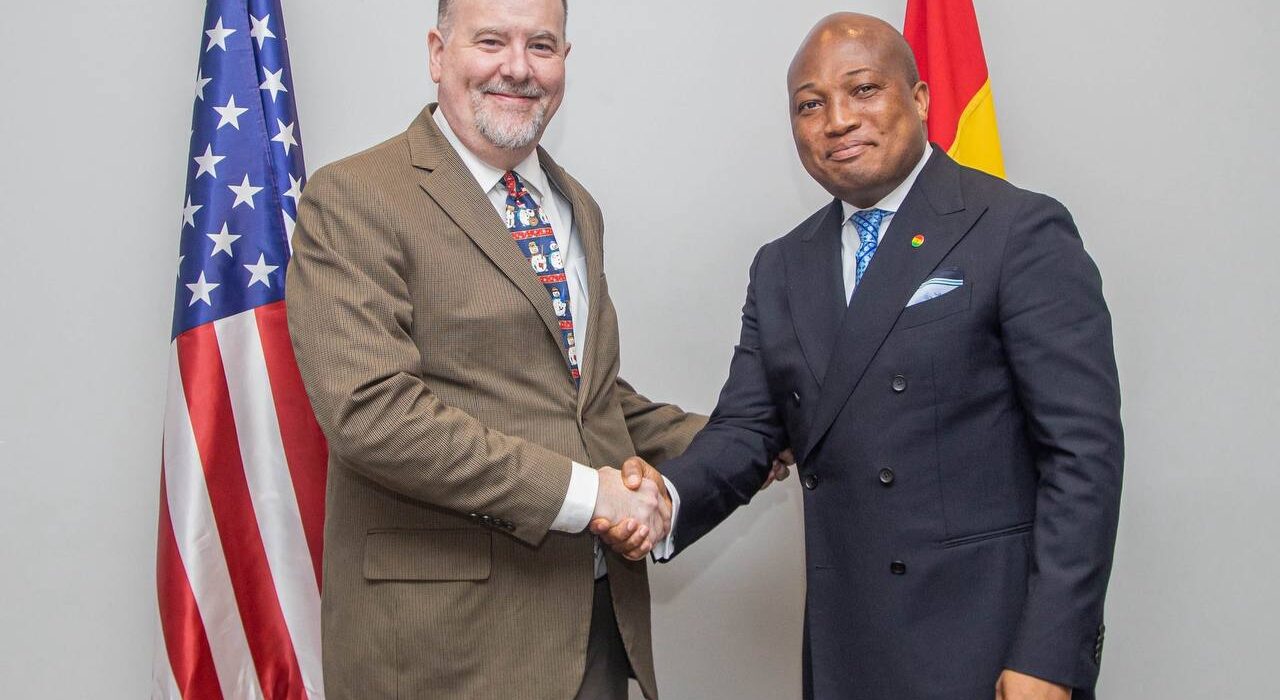
The Minister of Foreign Affairs, Sam Okudzeto Ablakwa, has reaffirmed Ghana’s commitment to strengthening its longstanding bilateral relations with the United States, emphasizing that cooperation between the two nations will continue to prioritize the best interests of their citizens.
This reaffirmation followed a successful meeting with the Acting U.S. Ambassador to Ghana, H.E. Rolf Olson. Their discussions focused on progress made in deepening diplomatic ties, enhancing trade, improving migration frameworks, expanding job creation avenues, and sustaining the mutual benefits derived from decades of partnership between Washington and Accra.
One of the notable achievements highlighted was the reversal of U.S. restrictions on the maximum validity period for all categories of non-immigrant visas for Ghanaians. In September, the Ministry announced that the validity of B1/B2 visitor visas had been restored to five years with multiple entry, while F1 student visas now carry a four-year multiple-entry validity. These reforms follow earlier U.S. restrictions that limited certain West African nationals, including Ghanaians, to single-entry three-month visas.
Ablakwa also pointed to the removal of the 15% tariff previously imposed by former President Donald Trump on cocoa and selected agricultural products. The tariff removal, which took effect on November 13, 2025, is expected to provide significant relief to Ghana’s export market and open up an estimated US$60 million in additional annual trade opportunities.
The minister further discussed preparations ahead of the 2026 FIFA World Cup, which will be co-hosted by the United States. Plans are underway to facilitate smooth travel, logistics, and support for Ghanaian football fans as the Black Stars prepare for their fifth appearance on the global stage.
Another key stride in bilateral engagement was Ghana’s exemption from the recent Trump Green Card Review and immigration suspension policy. The policy had raised concerns after former President Trump signaled intentions to halt immigration from developing countries and overturn the immigration measures implemented under former President Joe Biden. Ablakwa welcomed Ghana’s exemption, describing it as a major diplomatic victory.
“We assessed recent positive strides in our bilateral relations, including the restoration of five-year visas for Ghanaians, the removal of President Trump’s 15% tariffs on cocoa and other qualifying agricultural products, arrangements for World Cup soccer fans, and the exemption of Ghana from last week’s Trump Green Card Review and immigration suspension policy,” he stated.
The Foreign Affairs Minister also announced that Ghana has secured enhanced security cooperation with the United States. Under the existing Defence Cooperation Agreement, both countries have expanded intelligence-sharing initiatives, joint training activities, and coordinated access to advanced U.S. military aviation assets. He noted that these operations will be carried out in full compliance with Ghana’s regulatory frameworks and oversight systems.
He also mentioned that Ghana is also optimistic about securing a favourable outcome in the ongoing AGOA negotiations, as the programme remains a vital pillar of the country’s trade and industrial strategy. The African Growth and Opportunity Act enacted by the U.S Congress in 2000 to bolster economic transaction between the US and sub-Saharan countries with duty-free access to the US market for over 1,800 products.
Ablakwa stressed that Ghana’s national interests remain paramount in all bilateral negotiations, adding that the strengthening of U.S.–Ghana cooperation will continue to support the nation’s broader transformation agenda.
Acting Ambassador Rolf Olson, who now serves as Chargé d’Affaires ad interim, takes over leadership of the U.S. Mission following the departure of Ambassador Virginia E. Palmer in May 2025. Ambassador Palmer, who served in Ghana from April 2022, previously held ambassadorial and senior diplomatic roles including U.S. Ambassador to Malawi, Acting Assistant Secretary for Energy Resources, and Deputy Commandant of the National Defense University’s Eisenhower School.
By: Richmond Ampofo Fordjour
Related Posts