
The Deputy German Ambassador, Sivine Jansen, has engaged students at various levels of education in the Bono Region of Ghana, highlighting German language learning within the curriculum and related support programmes.
The engagement formed part of efforts to strengthen educational cooperation between Ghana and Germany, with a focus on skills development, language training and academic exchange opportunities for students.
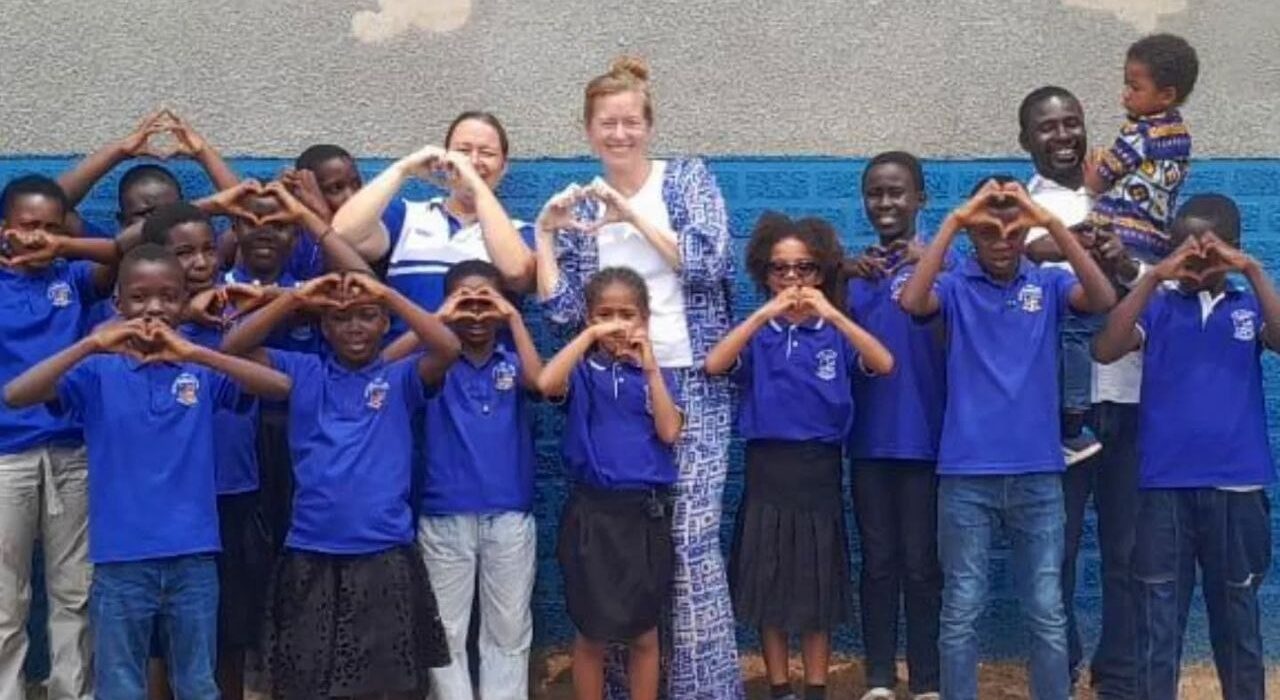
At the basic education level, she interacted with students at Bezaleel Educational Complex, which participates in the PASCH Initiative, a German-supported programme that promotes German language learning and intercultural exchange in partner schools worldwide.
She also visited the Don Bosco Technical Institute Sunyani, a technical and vocational training institution where students are being equipped with practical skills in areas such as carpentry, sewing and construction to improve employability.
At the tertiary level, she toured the Regional Centre for Energy and Environmental Sustainability at the University of Energy and Natural Resources, where research activities focus on energy, environment and sustainability issues across sub-Saharan Africa.
The visit underscored Germany’s continued support for education and skills development in Ghana through language programmes, vocational training and research partnerships aimed at improving youth opportunities.
Germany’s education cooperation with Ghana is implemented through a mix of bilateral government agreements, institutional partnerships, and development cooperation programmes focused on skills development, higher education exchange, and labour market alignment.
A key structure guiding this cooperation is the Ghana–Germany Technical Cooperation framework, implemented through the Federal Ministry for Economic Cooperation and Development (BMZ) and agencies such as GIZ.
This framework supports reforms in technical and vocational education and training (TVET), including competency-based training systems, apprenticeship models, and industry-aligned curriculum development to improve youth employability.
At the institutional level, cooperation is also driven by formal agreements between Ghanaian authorities such as the Commission for TVET and German vocational institutions like the Federal Institute for Vocational Education and Training (BIBB). These partnerships focus on policy development, vocational training research, dual training systems, and workforce development strategies to strengthen Ghana’s skills ecosystem.
In addition, Germany’s education support framework extends into labour-market-linked training programmes under broader EU–Ghana cooperation initiatives, which align skills development with private sector needs, green growth, and digital transformation in education delivery systems.
These collaborations focus on energy, environmental sustainability, and applied research, while linking Ghanaian institutions to global academic networks and development-oriented innovation systems.
Story by: Francis Sowah
Related Posts