
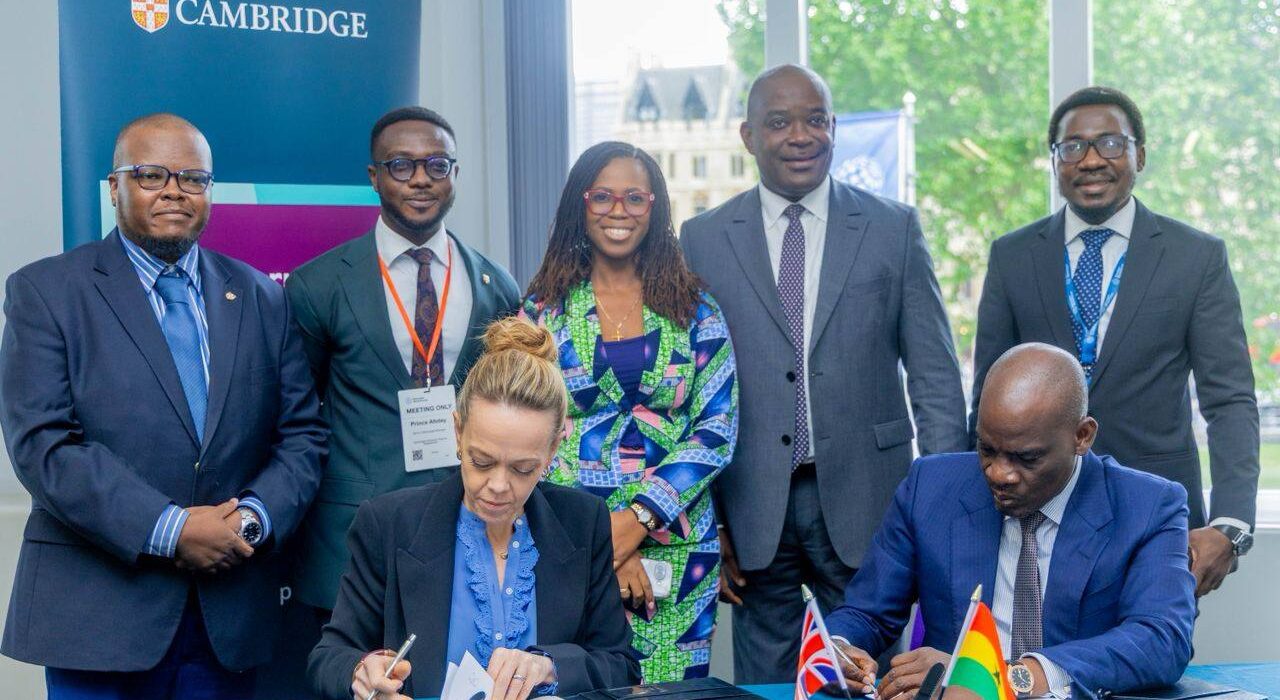
Ghana’s Ministry of Education has signed a Memorandum of Understanding with Cambridge Education to collaborate on key sector reforms aimed at strengthening the country’s education system and preparing learners for emerging global challenges.
The agreement, signed on the sidelines of the Education World Forum in the United Kingdom, seeks to advance a broad range of education reforms through technical cooperation and policy support.
The MoU targets reforms in system analysis, curriculum and assessment strengthening, teacher professional development, and the integration of crosscutting priorities such as climate education and artificial intelligence into Ghana’s education framework.
The partnership forms part of Ghana’s broader effort to modernise its education system and align learning outcomes with rapidly changing global economic and technological realities.
A key component of the agreement focuses on curriculum transformation, particularly the incorporation of climate literacy and digital competencies into classroom instruction. It puts Ghana’s education systems in a pace to the growing impact of climate change and the accelerating influence of artificial intelligence on labour markets and governance systems.
The collaboration is also expected to strengthen assessment frameworks and learning evaluation systems, areas that have become central to improving educational quality and accountability across developing economies.
Teacher professional development constitutes another major pillar of the partnership, with emphasis expected on digital pedagogy, competency-based instruction, and modern classroom delivery approaches. Ghana, like many African countries, continues to face challenges in teacher capacity and unequal access to learning resources between urban and rural communities.
The agreement comes at a time when governments globally are reassessing education systems in response to technological disruption, climate vulnerabilities, and evolving workforce demands. International institutions including UNESCO and the OECD have repeatedly called for stronger integration of AI literacy, digital innovation, and sustainability education into national curricula.
Cambridge Education, which has worked across Africa, Asia, and the Middle East on education reform programmes, is expected to provide technical expertise, research support, and implementation guidance under the partnership.
Ghana’s focus on climate education is particularly significant given the growing environmental pressures facing West Africa, including coastal erosion, flooding, food insecurity, and climate-linked migration, all of which increasingly require policy awareness and scientific literacy among younger populations.
The inclusion of artificial intelligence within the reform agenda also reflects a wider continental shift toward digital transformation. African governments and institutions are increasingly investing in AI-driven systems across education, healthcare, agriculture, and public administration amid concerns about future workforce competitiveness.
The MoU is a strategic step toward building a more resilient, future-oriented education system capable of equipping Ghanaian students with the analytical, technological, and adaptive skills required in a rapidly evolving global economy.
Related Posts