
The Ministry of Health has rejected as false claims by a South African state broadcaster alleging that Ghana has recorded 930 Ebola-related deaths and 2,300 confirmed cases.
In a statement, the ministry said Ghana has not recorded a single case of Ebola Virus Disease (EVD), describing the report as false, misleading and one that should be disregarded by the public.
“The Ministry wishes to state unequivocally that Ghana has not recorded any case of Ebola Virus Disease (EVD). The figures being circulated are false, misleading, and should be disregarded,” the statement said.
The false claim appeared in a news superimpose on the broadcaster’s channel reading, “Ghana’s Ebola cases rises to 2300 & 930 deaths,” despite Ghana not being among the countries affected by the current Ebola outbreak.
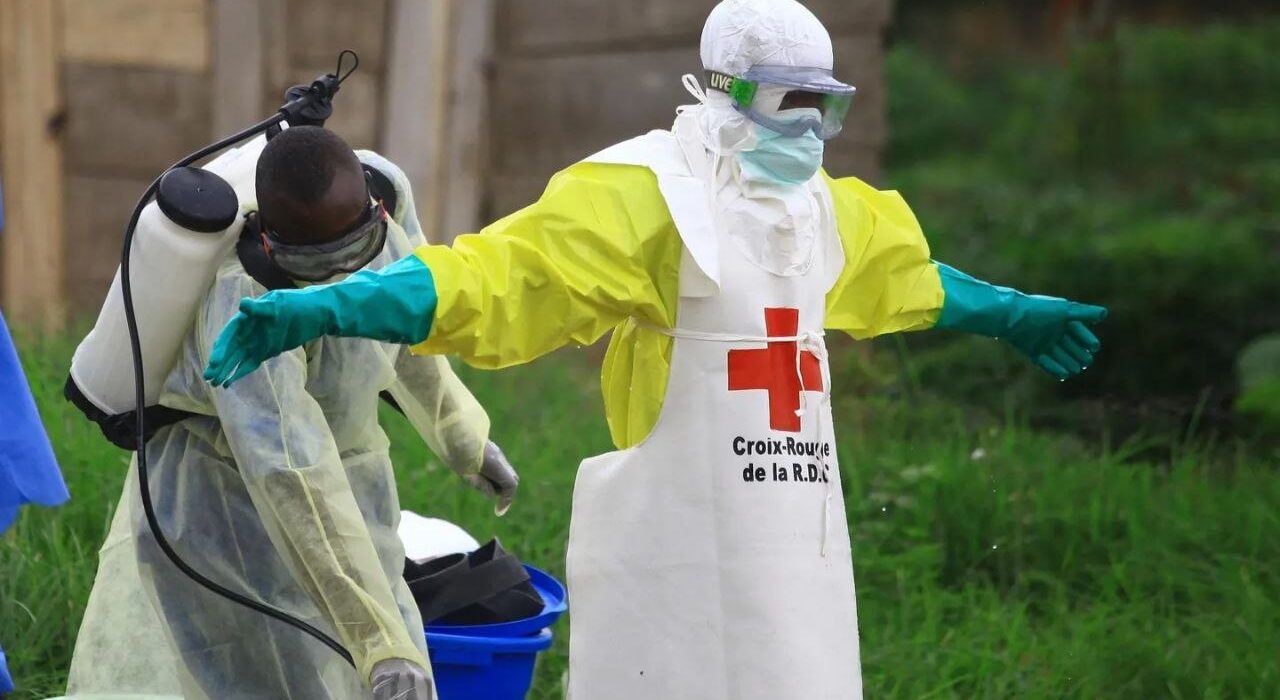
The figures, however, relate to the Democratic Republic of the Congo (DRC), which is battling an ongoing Ebola outbreak, and not Ghana. According to the DRC’s Ministry of Public Health, as of 19 July, the country had recorded 2,344 confirmed Ebola cases and 930 deaths. The figures were subsequently reported by the Associated Press.
The current outbreak was officially declared by Congolese health authorities in May 2026 and is caused by the Bundibugyo strain of the Ebola virus, a relatively rare species for which there is currently no licensed vaccine. The outbreak has spread across eastern parts of the country, particularly North Kivu and Ituri provinces, where insecurity, population displacement and attacks on health facilities have complicated surveillance, contact tracing and response efforts, raising concerns over the risk of cross-border transmission.
The Ghanaian ministry stated that recent inspections by Health Minister Kwabena Mintah Akandoh at points of entry, laboratories and designated treatment facilities form part of the country’s preparedness measures to prevent any potential importation of the disease and should not be interpreted as evidence of an outbreak.
It stressed that the preventive measures were precautionary and urged the public to rely only on official information from the Ministry of Health and the Ghana Health Service, warning against the circulation of unverified reports capable of causing unnecessary fear and panic.
The latest reassurance comes weeks after key stakeholders from Ghana’s aviation, health, security and border management sectors met at the Kotoka International Airport to review and strengthen measures aimed at preventing the importation and spread of Ebola Virus Disease through the country’s points of entry.
The meeting, organised by the Ghana Health Service, focused on finalising travel guidance for arriving passengers and strengthening public health measures following the Public Health Emergency of International Concern (PHEIC) declared over the Ebola outbreak caused by the Bundibugyo virus. It also sought to clarify the responsibilities of relevant agencies and improve coordination to ensure travellers are effectively screened and managed in accordance with established public health protocols.
Ebola Virus Disease was first identified in 1976 during simultaneous outbreaks in Nzara, South Sudan, and Yambuku in what is now the Democratic Republic of the Congo, where the disease takes its name from the nearby Ebola River. Since then, the virus has caused repeated outbreaks across Central and East Africa, although the 2014–2016 West Africa epidemic remains the deadliest in history, infecting more than 28,000 people and claiming over 11,000 lives across Guinea, Liberia and Sierra Leone.
Ebola is a fatal viral disease transmitted through direct contact with the blood or other bodily fluids of infected people or animals. While outbreaks are typically contained through surveillance, isolation and contact tracing, health experts warn that fragile health systems, insecurity and population movement continue to make Ebola one of Africa’s most serious public health threats.
Related Posts