
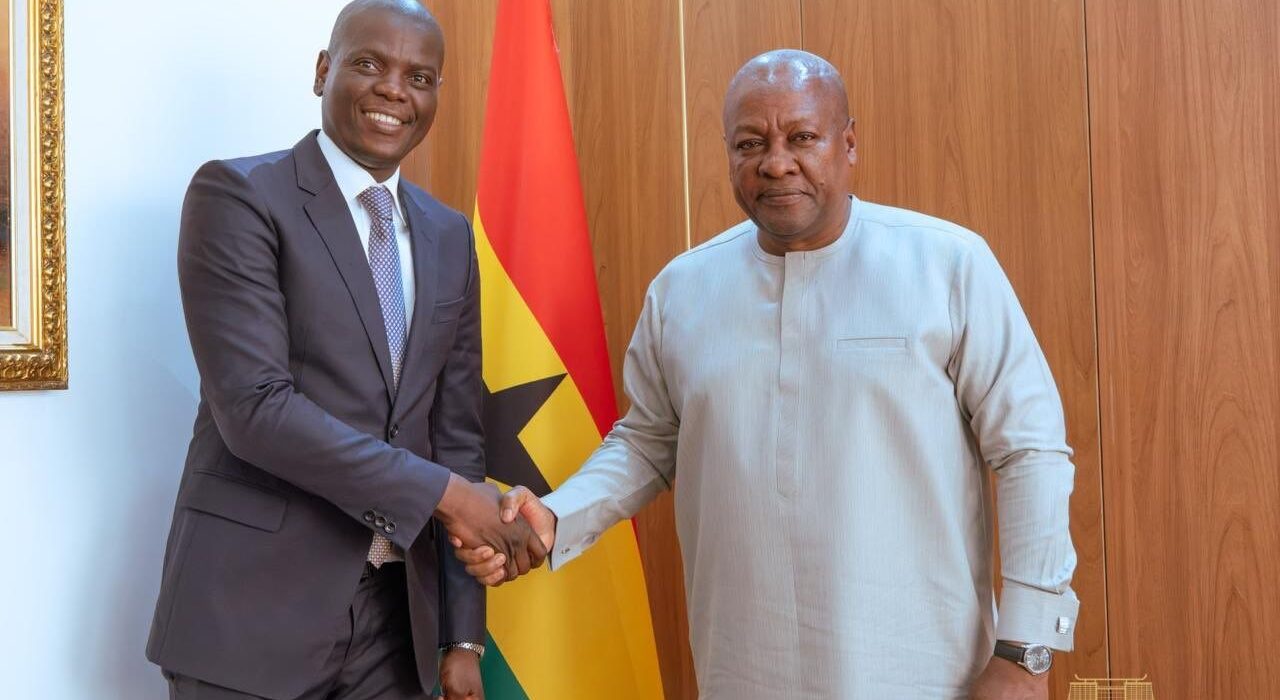
South Africa’s Minister of International Relations and Cooperation, Ronald Lamola, has met President John Dramani Mahama in Accra as President Cyril Ramaphosa’s Special Envoy, in a diplomatic effort to ease tensions following recent xenophobic attacks that have strained relations between South Africa and several African countries.
Lamola’s visit forms part of President Ramaphosa’s decision to dispatch Special Envoys to a number of African states as Pretoria seeks to reassure its continental partners of its commitment to combating xenophobia and preserving longstanding diplomatic ties. The outreach comes after renewed anti-immigrant violence in parts of South Africa drew widespread condemnation across the continent.
Speaking after his meeting with President Mahama, Lamola said Ghana and South Africa had reaffirmed their shared commitment to combating xenophobia and rejecting all forms of intolerance, discrimination and violence.
“We underscored our position against all forms of intolerance. We categorically reject xenophobia, racism, homophobia and violence in all its forms, and remain steadfast in upholding the rule of law,” he said.
The visit coincided with the African Union Extraordinary Summit on Universal Health Coverage and the Fight Against HIV/AIDS, Tuberculosis and Malaria, held in Accra, where several African leaders gathered to deliberate on the continent’s public health agenda.
Among the dignitaries in attendance was African Union Commission Chairperson Mahmoud Ali Youssouf, who also condemned the recent xenophobic attacks and called for greater protection of African citizens across the continent.
Against this backdrop, Lamola’s mission carried added diplomatic significance as South Africa sought to directly engage Ghana on concerns arising from the attacks.
He noted that discussions with President Mahama concluded with both countries reaffirming their commitment to the objectives of the African Union, including the promotion of safe, regular and orderly migration across Africa.
“We remain fully aligned with the objectives of the African Union. We advocate for safe, regular and orderly migration across the continent. To this end, the push and pull factors driving irregular migration must also be addressed,” Lamola stated.
The visit comes at a sensitive moment in bilateral relations. Ghana and South Africa had in recent years elevated their diplomatic engagement from the Permanent Joint Commission for Cooperation (PJCC) to a Bi-National Commission (BNC), reflecting the growing strategic partnership between the two countries. However, recent developments surrounding xenophobic violence have placed that relationship under strain.
South African authorities have accused Ghana and Nigeria of circulating misinformation that portrays South Africa as increasingly isolated on the continent following the xenophobic incidents. Pretoria has maintained that while criminal acts against foreign nationals have occurred, some reports and narratives circulating in the media have misrepresented the nature and extent of the violence.
One of the key diplomatic flashpoints involved the death of a Ghanaian national in South Africa. Ghana identified the deceased as Bashiru Isaka, a 40-year-old Ghanaian whose remains were later repatriated to Accra. South African authorities, however, disputed that account, stating that police records identified the victim as Kwabena Boahen, a 35-year-old Ghanaian who was allegedly murdered in Nyanga, Cape Town, in what investigators described as an extortion-related incident unrelated to the 30 June anti-immigrant protests.
Earlier, reports circulated in sections of the Ghanaian media claiming that President Ramaphosa had cancelled a planned visit to Ghana. Pretoria rejected those reports, insisting that no such visit had been scheduled.
Lamola’s visit represents one of several measures adopted by the South African government in response to the diplomatic fallout. Authorities have announced intensified enforcement against immigration violations while reiterating their commitment to protecting all persons within South Africa’s borders, regardless of nationality, and strengthening cooperation with African partners to address the root causes of irregular migration and cross-border insecurity.
Related Posts