
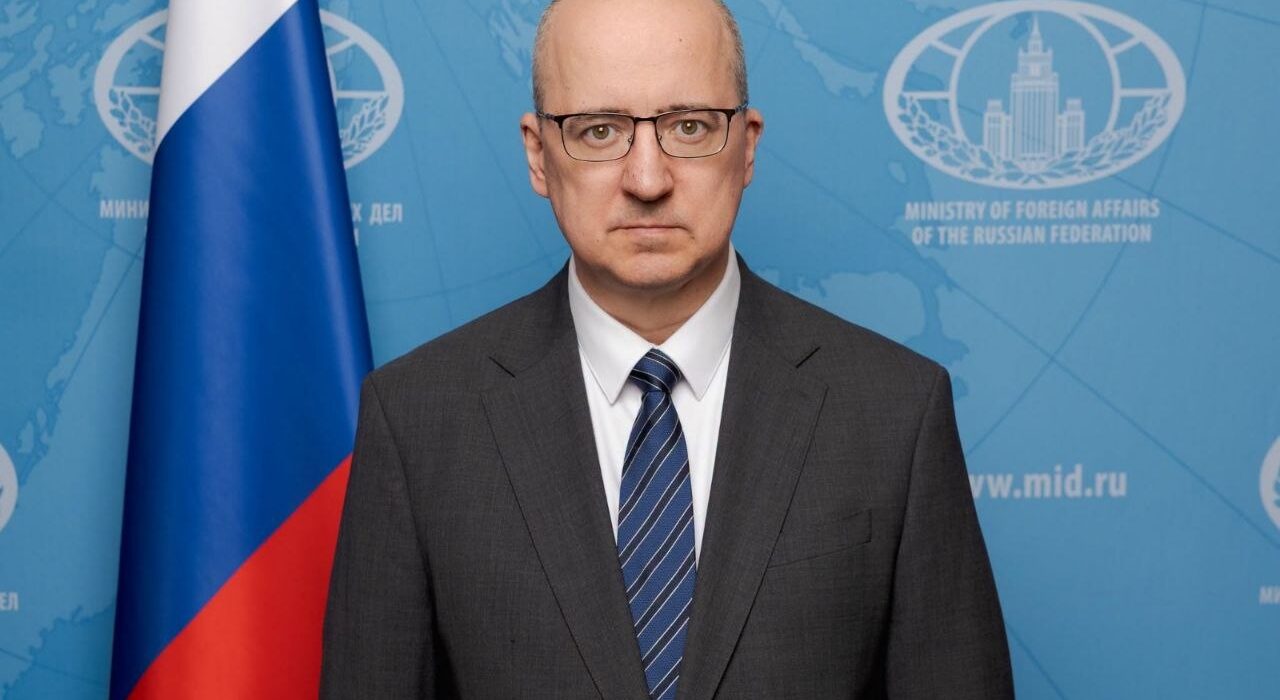
The Russian Ambassador to Ghana, Andrei Ordash, has pledged continued cooperation with Ghanaian authorities in efforts to apprehend a Russian national accused of secretly recording and distributing sexually explicit videos involving Ghanaian women.
In an exclusive interview with Diplomatic Times, Ambassador Ordash said the Russian Embassy remains engaged with the case surrounding the suspect, Vladislav Aleksandrovich Liulkov.
He reiterated the Embassy’s position on the alleged conduct had remained unequivocal from the outset, stressing that the nationality of the suspect would not shield him from condemnation.
“Yes, of course, this issue is under our close control. I would like to say honestly that we have always condemned such kinds of actions. No matter who was the author of such illegal acts, we declared our position openly from the very beginning. Of course, this incident remains a matter of our concern,” he said.
Liulko, 37, was publicly identified in February 2026 by the Minister of Communication, Digital Technology and Innovations, Sam George, as the individual allegedly operating online under the username “Yaytseslav.” The former Russian Ambassador to Ghana, Sergei Berdnikov subsequently described the name as a slur rather than an actual name.
The case triggered significant public concern over privacy, sexual exploitation and the challenges of pursuing justice across jurisdictions. Although the suspect has not been formally charged in Ghana, authorities previously indicated that international mechanisms, including cooperation with INTERPOL, could be explored in efforts to locate and apprehend him.
However, the absence of a formal extradition treaty between Ghana and Russia has presented a significant legal obstacle to any potential transfer of the suspect to Ghana to face prosecution.
Ambassador Ordash noted that the case had exposed a broader gap in the legal framework governing relations between the two countries and could provide impetus for Ghana and Russia to strengthen cooperation in criminal justice and extradition matters.
“Another thing is that this incident also showed us that we have to broaden the legal basis of cooperation between Russia and Ghana because we don’t have documents on cooperation in criminal affairs, on extradition, etc. This is something that this incident can constitute, a momentum for us to broaden our cooperation in this sphere in order to sign appropriate documents,” he said.
The alleged recordings, which were shared online, sparked condemnation from Ghana’s Ministry of Gender, Children and Social Protection over the violation of the rights and privacy of the women involved.
The Ministry of Foreign Affairs also summoned the then Russian Ambassador to Ghana over the matter, as pressure mounted for authorities to pursue justice despite the jurisdictional challenges.
The alleged conduct also raised questions about the application of Ghana’s Cybersecurity Act, 2020 (Act 1038), particularly provisions relating to the non-consensual sharing of intimate images. The controversy extended beyond Ghana, with the alleged content reportedly circulating across other African countries, including Kenya, while online platforms were used to host or distribute material linked to the case.
Related Posts