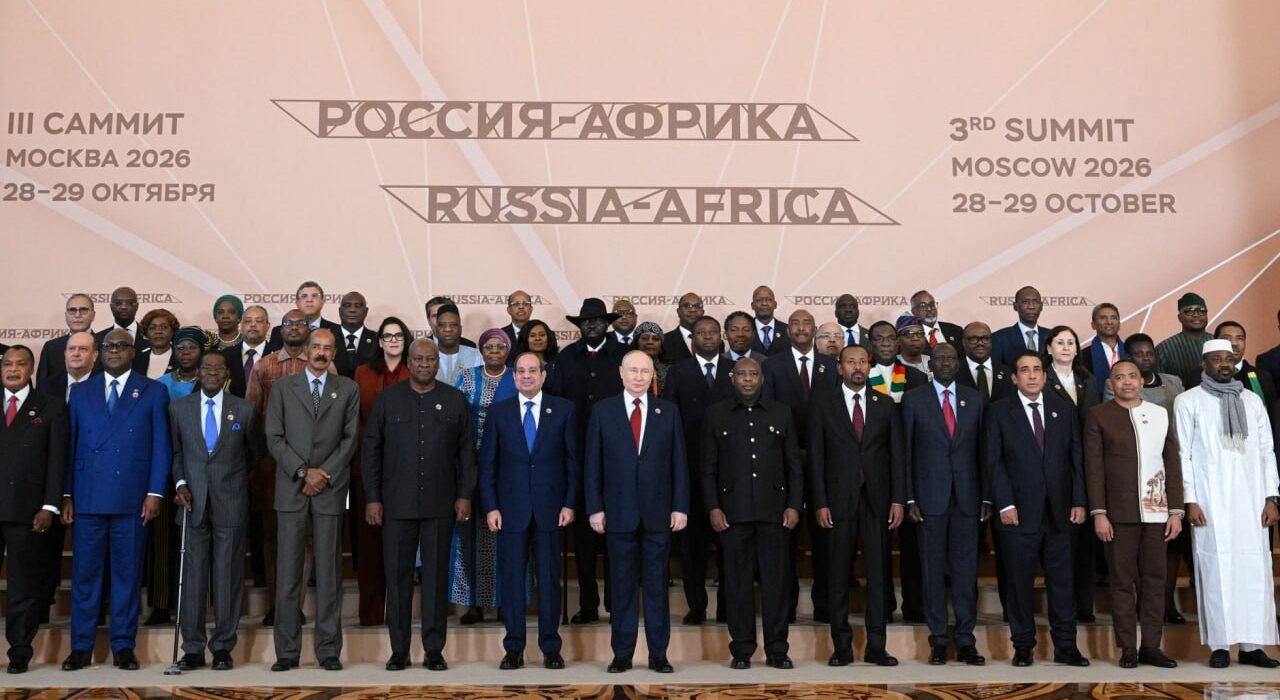
The Action Plan of the Russia-Africa Partnership Forum (hereinafter referred to as the Action Plan) is aimed at strengthening multifaceted mutually beneficial cooperation between the Russian Federation and African states recognized by the United Nations (UN), the African Union and leading African integration associations in 2027–2029.
This Action Plan has been prepared as a follow-up to the Russia–Africa Partnership Forum Action Plan for 2023–2026 and includes goals and objectives that remain relevant, as well as new promising areas of cooperation between Russia and Africa that are of mutual interest.
The Action Plan specifies and complements the provisions of the Declaration of the Third Russia-Africa Summit and the Declaration on Cooperation in the Field of Civil Applications of Artificial Intelligence Technologies.
The Action Plan takes into account the provisions of the African Union’s Agenda 2063 “The Africa We Want,” the first and second ten-year plans for its implementation, the Foreign Policy Concept of the Russian Federation, and other strategic documents of Russia and Africa.
As part of the Action Plan, Russia and Africa agreed to strengthen the strategic nature of their partnership across a wide range of areas, including cooperation in the areas of politics and security, economics, and the social, cultural, and humanitarian spheres.
In accordance with international obligations and national legislation, Russia and Africa intend to:
In the field of politics and security
Policy
1. To promote the strengthening of the role of the Russia–Africa Partnership Forum as the main institutional platform and coordinating mechanism for the development of the entire range of Russian–African relations.
2. Strengthen the institutional structure of the Russia–Africa Partnership Forum by developing existing and launching new sectoral initiatives in the Russia–Africa format, as well as holding specialized events on a regular basis.
3. Maintain intensive contacts at the highest and high levels and further constructive dialogue on a wide range of issues of mutual interest, both within the framework of bilateral and multilateral Russian-African formats, as well as at international and regional platforms, including BRICS and the G20.
4. In the period between Russian-African summits, hold annual ministerial conferences of the Russia-Africa Partnership Forum on a rotating basis in the Russian Federation and African states, within the framework of which provision shall be made for the organization of congress and exhibition events on the most pressing issues of cooperation.
5. Strengthen cooperation at the UN, including through consultations to coordinate the positions of Russia and Africa and provide mutual support within the UN. To this end, enhance interaction between the permanent missions of the Russian Federation and African states to the UN, including with African states that are non-permanent members of the UN Security Council.
6. Expand the regular practice of inter-MFA consultations with states and regional integration associations in Africa to exchange views on key issues on the international, regional and bilateral agendas.
7. Continue work to deepen inter-parliamentary cooperation between the Federation Council of the Federal Assembly of the Russian Federation and the State Duma of the Federal Assembly of the Russian Federation with the parliaments of African states, including through friendship groups, the Pan-African Parliament and the African Parliamentary Union, during bilateral contacts, at multilateral forums and conferences held in Russia and on the African continent, on the basis of regular exchanges of delegations, mutual internship programs for parliamentarians and staff of parliamentary structures, as well as by organizing joint events.
8. Develop cooperation in strengthening the sovereignty of electoral systems, and increase the exchange of best practices in the field of election organization and international observation between the electoral bodies of the Russian Federation and African countries, as well as with African associations of election organizers and specialized units within leading regional organizations.
9. Continue work to further simplify travel conditions for citizens of the Russian Federation and African countries, including through the conclusion of relevant bilateral agreements, in order to increase business contacts and tourism flows between Russia and Africa.
Safety
10. Conduct regular consultations within the framework of the Russia-Africa Partnership Forum on counter-terrorism issues, including with the participation of the African Union Counter-Terrorism Centre.
11. Support measures to build the capacity of relevant structures in Russia and Africa in the area of combating terrorism, illegal maritime activities, violent extremism and radicalization leading to terrorism.
12. Expand the practice of cooperation between the relevant agencies of Russia and Africa, including with the African Police Cooperation Mechanism (Afripol), in the area of strengthening the capacity of police and counter-terrorism structures.
13. To increase the exchange of information and cooperation in law enforcement between Russia and Africa in order to prevent, detect, suppress and investigate crimes and other offences, as well as to protect citizens from unlawful criminal prosecution by third parties.
14. Strengthen law enforcement cooperation by training personnel for Africa in Russian specialized higher education institutions and organizing advanced training courses for law enforcement officers on issues of mutual interest.
15. Continue efforts to enhance the effectiveness of cooperation between Russia and Africa in combating transnational organized crime based on the UN Convention against Transnational Organized Crime, illegal migration, and the illicit trade in small arms, as well as with the aim of eliminating arms supply chains, including by consistently expanding the exchange of information and experience in these areas and creating the necessary legal framework for cooperation. Strengthen practical cooperation between Russia and Africa in combating the illicit cultivation, production, manufacture, and trafficking of narcotic drugs, psychotropic substances, and their precursors, as well as drug-related crimes, including through information exchange, coordination of efforts in this area, and strengthening counter-narcotics capacity.
16. Develop cooperation between Russia and Africa in the field of ensuring international information security, including the fight against crime, online fraud and other challenges and threats in the field of information and communications technology (hereinafter referred to as ICT), in particular by expanding the legal framework, holding joint events, including regular consultations, and exchanging best practices in order to build the capacity of relevant bodies in this area.
17. Expand information exchange and law enforcement cooperation to prevent, detect, combat, and investigate crimes and other offences related to the use of ICTs for terrorist, extremist, and other criminal purposes, taking into account that information exchange must be carried out in accordance with national legislation, data protection requirements, and national sovereignty, while simultaneously building technical capacity. Facilitate the early entry into force of the UN Convention against Cybercrime, with a view to expanding its scope through the development of an additional protocol.
18. Strengthen coordination at international forums, primarily at the UN, on international information security and ICT development, including the civilian use of artificial intelligence (hereinafter referred to as AI), as well as issues of internet development and security, in order to advance shared priorities and guidelines in this area. Combine efforts to bridge the digital divide, strengthen national capacity, and ensure the equal participation of developing countries in international processes for digital policymaking and standards development.
19. Establish cooperation through the UN Global Intergovernmental Registry of Contact Points for the exchange of information on cyber attacks and incidents for the purposes of operational communication, early warning, and capacity building between Russia and African states.
20. Develop and adopt joint confidence-building measures to support international information security, including in areas such as data protection, for the civilian use of AI, to develop common principles for the responsible use of technology, to minimize digital risks, and to foster a culture of secure digital interaction that takes into account the specificities and needs of Russia and Africa.
21. Enhance cooperation in the areas of personal data protection, including biometric data, online banking and money transfer systems, blockchain technologies, big data, digital government services, platform solutions for smart cities and telemedicine, satellite and telephone communications.
22. Develop and implement an African-Russian AI Capacity Building and Innovation Program, including joint postgraduate training, professional development, and short-term courses in AI, machine learning, data science, cloud computing, high-performance computing, and responsible AI for civil purposes, targeting young researchers, women, and aspiring innovators.
23. Expand cooperation in the field of combating money laundering and the financing of terrorism, including taking into account the provisions of the African Union Convention on Preventing and Combating Corruption, both bilaterally and at the level of international organizations, exchange best practices, promote capacity building, and provide the necessary support and technical assistance.
24. Strengthen coordination with African partners on issues related to the purview of the Financial Action Task Force (FATF) and FATF-style regional bodies, including the Middle East and North Africa Financial Action Task Force, the Eastern and Southern Africa Financial Action Task Force, the West African Intergovernmental Action Task Force on Money Laundering, and the Central African Anti-Money Laundering Task Force.
25. Develop cooperation in training personnel in the field of combating money laundering and the financing of terrorism, including by engaging specialists, scientists and students from African countries in the International Forum on Financial Security, the International Olympiad on Financial Security and the activities of the International Network Institute in the field of combating the legalization (laundering) of proceeds from crime and the financing of terrorism.
26. Develop cooperation to prevent and combat corruption based on the UN Convention against Corruption as the universal international legal basis for partnership in this area. Strengthen relevant cooperation, including in the context of efforts to combat the legalization (laundering) of proceeds from crime, as well as in matters of identifying, seizing, confiscating, and returning assets of criminal origin.
27. Strengthen cooperation between relevant agencies in Russia and Africa in the area of combating maritime piracy and other crimes at sea, including within the framework of the Global Programme against Maritime Crime, supervised by the United Nations Office on Drugs and Crime.
28. Strengthen the legal framework for cooperation in the field of justice, including on issues of mutual legal assistance (in particular, in criminal cases), mutual protection of citizens from abuses in the field of international justice, and the extradition and transfer of persons sentenced to imprisonment or serving a sentence.
29. Strengthen cooperation between the penitentiary services of Russia and Africa, including between the Federal Bailiff Service and the African Union of Bailiffs.
30. Coordinate approaches and enhance cooperation, including at international venues, to counter the practice of unjustified detentions, seizures and arrests of civilian vessels and to ensure strict compliance with the principle of freedom of navigation.
31. Strengthen contacts in the areas of civil defense, prevention, and response to natural and man-made emergencies, including through the exchange of experience, best practices, and personnel training. Continue efforts to build the relevant capacity of national services in African countries and the African Humanitarian Agency in accordance with the provisions of the African Regional Strategy for Disaster Risk Reduction.
32. Facilitate the establishment of crisis management centres in African countries with the assistance of specialized Russian institutions, as well as the implementation of modern systems for monitoring and forecasting emergency situations, early warning systems for multiple hazardous phenomena, telecommunications support in emergency situations, sustainable digital infrastructure, and ensuring the continuity of provision of public digital and telecommunications services during disasters and emergencies.
33. Support women’s greater participation in political and socio-economic processes, including conflict prevention and resolution, peacebuilding, post-conflict reconstruction and development, and peacekeeping.
Cooperation with the African Union and regional integration associations
34. Take active steps to further develop the legal framework for cooperation between the Russian Federation and the African Union and regional associations, including by signing action plans with them, taking into account Agenda 2063 “The Africa We Want” and other continental and regional strategic documents.
35. Support the practice of holding political consultations with the African Union Commission and regional associations of the African continent in order to coordinate joint efforts for the practical implementation of cooperation projects set out in the action plans adopted by Russia jointly with the African Union and regional associations.
36. Enhance cooperation with the African Union on the topic of historical responsibility for colonialism, the slave trade, and other crimes against the peoples of Africa, paying particular attention to the African Union’s emerging reparations dossier for the period 2026–2035. Form a Russian-African working group to study and preserve African historical heritage, with the participation of relevant agencies and academic institutions from Russia and Africa.
37. Develop cooperation between the UN and the African Union within the framework of the Ten-Year Agenda for Africa “Justice for Africans and people of African descent through reparations”.
38. Strengthen cooperation and coordination with the African Union and South Africa in the G20, including through the emerging market consultations. Facilitate the implementation of the agreements reached by successive BRICS G20 presidencies in 2022–2025, including the outcomes of the first-ever G20 summit in Africa (Johannesburg, 22–23 November 2025), with a focus on development and inequality, as well as strengthening the voice of the global South.
39. To promote the development of comprehensive cooperation between the African Union, interested regional integration associations and the Collective Security Treaty Organization on issues of maintaining regional security and stability, including in the areas of combating terrorism and extremism, illicit trafficking of narcotic drugs, psychotropic substances and their precursors, combating illegal migration, in the field of information security and in other areas of mutual interest.
40. Promote the establishment of dialogue between the Pan-African Parliament and the Parliamentary Assembly of the Collective Security Treaty Organization.
41. Promote cooperation to support the functioning of the African Continental Free Trade Area (ACFTA), including with a view to developing measures to diversify economic ties, simplify trade procedures, and develop connectivity between the infrastructure of Russia and Africa.
42. Strengthen cooperation in the field of education between the African Union Commission, its specialized agencies, relevant government bodies and educational organizations of Russia on issues of mutual interest, including through the development of an appropriate legal framework.
43. Establish collaborative research and innovation centres, centres of excellence and technology transfer mechanisms across the African university ecosystem to support sustainable and inclusive industrialisation, entrepreneurship and commercialisation of research outputs in Africa, taking into account the priorities of the Science, Technology and Innovation Strategy for Africa (hereinafter referred to as STISA 2034).
44. Facilitate the training of diplomatic personnel from African countries at Russian educational institutions, including employees of the African Union Commission, specialized bodies and agencies of the African Union, as well as employees of the executive bodies of regional integration associations in Africa.
45. Develop cooperation between the African Union and the Eurasian Economic Union (EAEU), including through the conclusion of a new memorandum of understanding between the Eurasian Economic Commission (EEC) and the African Union, as well as the development of a cooperation programme between them, with the aim of creating conditions for intensifying dialogue on issues of mutual interest and strengthening the potential of the AfCFTA.
46. Promote the strengthening of interaction between the EAEU and regional integration associations in Africa, including the AfCFTA, the African Export-Import Bank, the EAC, IGAD, COMESA, SADC, CAM, ECOWAS, ECCAS, the Southern African Customs Union, and the West African Economic and Monetary Union, including through regular consultations between the leadership of the EEC, the executive bodies of the African Union, and regional integration associations in Africa, with the possible involvement of the business community of member countries.
47. Enhance Russia’s cooperation with the African Export-Import Bank and the African Development Bank, as well as through Russian and African development institutions, through the exchange of experience and expertise in order to facilitate the implementation of investment projects aimed at accelerating socio-economic development, taking into account the readiness of financial institutions to build and develop sustainable payment mechanisms, as well as to deepen cooperation in terms of credit guarantee services, investment and insurance support.
48. To promote the establishment of relations between the Commonwealth of Independent States and leading African integration associations in areas of mutual interest.
Cooperation in the field of economics
Multilateral organizations
49. Continue to work together to achieve equitable reform of the institutions of the global financial architecture, with a focus on enhancing Africa’s political and economic role in decision-making, including within multilateral organizations, including relevant UN organizations, the G20, the World Trade Organization, the International Monetary Fund and the World Bank.
50. Coordinate actions to strengthen the positions and rights of Russia and Africa within the framework of multilateral organizations for sectoral cooperation, and jointly counteract the artificial politicization of the activities of these structures.
51. Continue work on concluding free trade agreements between the EAEU and interested African states, as well as relevant integration associations of the African continent.
52. Establish cooperation between Russia and Africa, including with the African Credit Rating Agency, with the aim of creating a fair, transparent and objective credit rating system for African countries.
53. Promote stronger BRICS-Africa dialogue in areas of mutual practical interest. Support the strengthening of the New Development Bank’s potential, in particular by expanding its shareholder base to include African countries and implementing infrastructure projects on the African continent.
Trade and investment
54. Continue systematic work to strengthen institutional dialogue between relevant ministries and agencies responsible for economic development, trade, investment and finance, in particular with a view to sharing experience and best practices on trade and investment policy, regulatory framework, including information on tariff and non-tariff measures.
55. Increase the number of mechanisms and dialogue platforms for coordinating trade and economic cooperation, including specialized intergovernmental commissions, working groups, business councils and associations, chambers of commerce and industry, industry forums and conferences, and business missions, and facilitate their ongoing activities and enrichment of their agendas.
56. Expand the legal framework in the area of promotion and mutual protection of investments with African countries, taking into account mutual expediency.
57. Support Russian-African cooperation aimed at implementing investment projects in key strategic sectors that can contribute to Africa’s regional integration and the development of regional value chains within the framework of the African Union’s Agenda 2063 “The Africa We Want.” Priority areas include the beneficiation of critical minerals, investments in the metallurgical industry and the introduction of low-emission and renewable energy sources in this sector, partnerships in the pharmaceutical and diagnostics value chain, as well as in the medical technology sector, enhancing the sustainability and viability of pharmaceutical value chains (including the production of active pharmaceutical ingredients and the joint production of pharmaceutical products and vaccines) and the medical technology value chain (including in vitro diagnostics) on the continent, investments in mineral fertilizers, the development of transport and logistics networks, road and rail infrastructure, aviation, refrigeration facilities for perishable goods, and the modernization of ports and airports. Strengthening cooperation in these areas will promote greater connectivity, facilitate intra-African trade, improve the movement of goods and people, and support the development of more integrated regional value chains. Such cooperation will also contribute to the deepening of economic relations between Russia and Africa, creating opportunities for investment, technology transfer, infrastructure development, and sustainable economic growth.
58. Provide support, through public-private partnerships, to interested economic operators from Russia and African countries in developing new areas of foreign economic activity. To this end, increase the exchange of information on best practices in investment, production, and trade activities, including information on relevant changes to the regulatory framework, tariffs, and non-tariff measures.
59. Ensure an increase in the number of new trade missions of the Russian Federation in African countries and African countries in Russia, as well as trade and economic sections at Russian and African diplomatic missions.
60. Enhance regular business dialogues, investment presentations, and mutual business missions between Russia and Africa, including with the participation of constituent entities of the Russian Federation and the administrative-territorial entities of African states. Continue efforts to organize regular contacts between economic operators to expand the range of export-import transactions, including through the use of convention and exhibition venues held in Russia and Africa.
61. Work to create permanent exhibitions of export product samples in Russia and African countries in order to expand opportunities for mutual trade.
62. Promote Russian and African brands on trade and exhibition platforms, including electronic ones.
63. Organize Days of African States in Russian cities with the involvement of African diplomatic missions, as well as the Russian Export Center, chambers of commerce and industry of Russia’s regions, and Russian business circles interested in cooperation with African partners.
64. Strive for a wider use of co-financing mechanisms in the implementation of projects in Russia and African countries, including with the involvement of international and national banking institutions.
65. Expand the use of national currencies in mutual settlements between the Russian Federation and African states, including through the mutual opening of correspondent accounts in national currencies by commercial financial institutions of Russia and Africa with the assistance of central banks.
66. Continue work on linking the financial and settlement infrastructure of Russia and Africa, including Russian payment systems and the Pan-African Payments and Settlements System.
67. Strengthen the partnership between Russian banks and regional development banks in Africa, including the African Export-Import Bank, the African Development Bank, and the African Finance Corporation.
68. Expand cooperation on issues of placing companies and enterprises in special economic zones of Russia and Africa in order to expand Russian-African trade and economic cooperation.
69. More actively involve small and medium-sized enterprises in the development of trade and economic cooperation between Russia and Africa.
70. Conduct a regular exchange of best practices between Russia and Africa, including with the participation of the African Organization of Supreme Audit Institutions (AFROSAI), in the field of public audit in bilateral and multilateral formats, and expand the relevant legal framework.
71. Organize, based on the established legal framework, events to improve the professional skills of representatives of African supreme audit institutions in order to increase the potential of external audit as a guarantor of the effectiveness of public administration.
72. Strengthen cooperation between Russian and African antitrust authorities, as well as the relevant departments of regional integration associations whose responsibilities include antitrust regulation, with the aim of expanding the geography of partnership, building and maintaining interaction on issues of competition development, including interaction in the area of developing global standards for international cooperation in considering cases of violation of antitrust legislation that have a cross-border effect, including those related to cross-border cartels, and in considering global economic concentration transactions.
73. Conduct joint events in the field of antimonopoly policy, including through the annual International Scientific and Practical Conference “Antimonopoly Policy: Science, Practice, Education” and the African Competition Forum conference, and expand the legal framework for cooperation between competition authorities of Russia and Africa.
74. Establish contacts, exchange experiences, and expand the legal framework between Russian and African organizations, including the African Centre for Land Policy, operating in the areas of registration of rights, cadastral registration of real estate, geodesy, cartography, and spatial data infrastructure, including on digitalization issues.
75. Develop the human resources potential of African countries in the field of geodesy, cartography, spatial data and geoinformation technologies for the creation and implementation of international educational programs and information technology projects.
76. Deepen cooperation in the field of construction and housing and public utilities, including through training personnel and exchanging experience in this area, and expand the relevant legal framework.
77. Strengthen cooperation between the constituent entities of the Russian Federation and regional and municipal authorities of African states, including through the conclusion of agreements in trade, economic, scientific, technical, cultural, humanitarian, and other areas. Facilitate the establishment of sister city relations between cities and towns in Russia and Africa to develop cooperation and achieve mutual economic benefit.
78. Build contacts between the All-Russian Association for the Development of Local Self-Government and African associations of municipalities.
79. Support the holding of international conferences and seminars on issues of interregional and intermunicipal cooperation between Russia and Africa with the involvement of representatives of government bodies of the constituent entities of the Russian Federation and administrative-territorial entities of African countries.
80. Organize visits for representatives of the Russian and African diplomatic corps to subjects of the Russian Federation and administrative-territorial entities of African countries interested in interregional cooperation in order to become familiar with their economic, tourist and cultural potential.
81. Strengthen cooperation in the area of sustainable urban development, including improving the quality of the urban environment and municipal infrastructure, affordable and high-quality housing, renovation of the housing stock, and waste management, taking into account the need to reduce the negative impact of urbanization on the environment.
82. Enhance cooperation between tax authorities of Russia and African countries, as well as with the African Tax Authorities Forum, through training programs and the exchange of best practices in development and digital transformation to improve the efficiency of tax administration, increase government revenues, and strengthen financial security. Expand the legal framework in this area, including on issues of double taxation avoidance and tax administration.
83. Strengthen cooperation between the customs authorities of Russia and Africa in order to further create favorable conditions for mutual trade in terms of customs administration, including expanding the necessary regulatory framework and implementing joint initiatives in the area of simplifying and accelerating customs procedures, administrative assistance within the framework of tariff preferences, providing technical assistance, combating customs violations, and training personnel.
84. Develop cooperation in standardization and metrology, including with the African Organization for Standardization, to reduce technical barriers to mutual trade. Mutually support initiatives to develop international standards. Facilitate the harmonization and convergence of Russian and African standard requirements, as well as the results of relevant laboratory tests and certificates.
Agriculture, forestry, aquaculture and fisheries
85. Stimulate the exchange of agricultural technologies adapted to the climatic conditions of the African continent and experience in the field of land reclamation, the development of drought-resistant varieties of agricultural plants and hybrids, including taking into account the priorities of the Comprehensive Africa Agriculture Development Programme and the corresponding action plan for 2026–2035.
86. Work on mutual expansion of supplies of agricultural products, livestock and fishery products, and mineral fertilizers, introduce modern technologies in these sectors, and implement projects to develop breeding and seed stock, as well as replacement and breeding stock.
87. Conduct expert consultations, field trials and exchange effective practices and competencies in the areas of crop production, livestock production and health, aquaculture, agricultural technology and agricultural processing in order to strengthen food security in African countries.
88. Establish contacts between Russian and African research centres engaged in developments in the fields of agriculture, forestry, aquaculture and fisheries.
89. Strengthen cooperation in the field of training and advanced training of African representatives in the fields of agriculture, forestry, aquaculture and fisheries in educational and scientific institutions of the Russian Federation.
90. Work together to implement responsible fishing practices and combat illegal, unreported and unregulated fishing.
91. Develop cooperation in fisheries, facilitate the exchange of experts in the field of new aquaculture species, marine aquaculture, and fish farming technologies, and conduct regular consultations on various fisheries issues. Encourage entrepreneurship, innovation, and the development of small and medium-sized enterprises (hereinafter referred to as SMEs) in the blue/ocean-based economy through business incubation, technology transfer, research partnerships, innovation challenges, investment promotion, skills development, and access to financing.
92. Strengthen scientific, technical and practical cooperation between the competent authorities of Russia and Africa in the area of ensuring phytosanitary and veterinary safety of agricultural products, including with a view to eliminating existing barriers and restrictions.
93. Explore the possibility of supplying Russian vaccines for veterinary use in African countries in order to develop cooperation in the field of animal disease control.
94. Develop a dialogue between the forestry services of Russia and Africa, including taking into account the priorities of the Fundamentals of State Policy in the Field of Use, Conservation, Protection and Reproduction of Forests in the Russian Federation until 2030 and the Concept of Sustainable Forestry Development in Africa for 2020–2030, including the exchange of experience in forest monitoring and forest fire management, the organization of regular training programs and internships for African specialists in Russian forestry higher education institutions and research institutes in the relevant fields, and the holding of annual expert consultations on the prevention of illegal logging and timber trafficking, including the exchange of methods for tracking supply chains of forest products.
95. Facilitate the creation of joint Russian-African competence centers in the field of remote sensing of the Earth and digital mapping of forest resources based on satellite technologies of the Russian Federation.
96. Provide assistance to African partners in the development of deep wood processing and biofuel production using Russian technological solutions.
Energy
97. Expand efforts to develop Russian-African energy cooperation, taking into account national conditions, development priorities, and the relevant African Union continental energy framework. Strengthen cooperation in renewable energy, energy efficiency, energy storage, and sustainable and reliable energy systems, as well as in a wide range of energy technologies, including low-emission and renewable technologies.
98. Promote the implementation of programmes aimed at ensuring energy security, the productive use of energy, in particular by improving energy efficiency, as well as building institutional capacity and more active involvement of the private sector.
99. Expand trade and investment in the energy sector, including in energy infrastructure and oil and gas projects, and in battery production in Africa, and identify investment opportunities in large energy infrastructure projects, including renewable energy and energy efficiency technologies, and promote cooperation in project preparation, development, financing and risk mitigation.
100. Facilitate the implementation of joint programs aimed at ensuring equitable global energy transitions and combating energy poverty in Africa, including by expanding the use of peaceful nuclear energy, natural gas, and renewable energy sources. Develop a unified research base between Russia and Africa to assess the potential for a just energy transition.
101. Develop cooperation in the implementation of joint projects related to environmental protection, including the reduction of greenhouse gas emissions and the development of low-emission energy.
102. Enhance cooperation between Russia and Africa, as well as with the African Atomic Energy Commission and the African Energy Commission, in the field of peaceful uses of nuclear energy, including uranium mining and processing, the construction of nuclear power plants of varying capacities, and support for the life cycle of existing nuclear installations in Africa, including through the training of personnel for the nuclear and related industries.
103. Provide support for the development of nuclear technologies for non-energy applications on the African continent, including in the medical, agricultural and geological fields, taking into account the national plans of African states to ensure energy and food security and the African Union’s Agenda 2063 “The Africa We Want”.
104. Expand cooperation in the field of hydropower, including in the area of responsible water use.
105. Develop joint methodological standards for the collection and processing of statistical data in the energy sector to ensure comparability of sustainable development indicators.
106. Strengthen Russian-African cooperation in the field of digitalization of the energy sector, including with the aim of conducting a joint comprehensive assessment of the resilience of its critical infrastructure to cyber threats, through interaction between relevant government organizations and the involvement of the private sector.
107. Develop educational cooperation in the energy sector, including the implementation of academic exchange programs, advanced training, and professional training for specialists in the fuel and energy sector at specialized Russian and African higher education institutions, including in the field of energy diplomacy.
108. Strengthen industrial and educational partnerships between advanced Russian engineering schools and African countries in various fields of energy technology applications, including oil and gas, low-emission renewable energy sources, nuclear energy, power grids, energy efficiency and other innovative technologies.
109. Develop youth cooperation in the energy sector, including the organization of specialized youth forums, competitions, internships, and joint project initiatives aimed at involving young professionals and students in the scientific, technical, innovative, and diplomatic agenda of energy partnership.
Industry
110. Develop industrial cooperation between Russia and Africa on issues of mutual interest, including through the use of the infrastructure of Russian and African industrial parks, industrial zones, technology clusters, and special economic zones, and taking into account the priorities of the Concept for Technological Development of the Russian Federation through 2030, the Program for Infrastructure Development in Africa, and the ten-year plan for its implementation. Ensure regular joint events are held by the relevant relevant agencies.
111. Facilitate the implementation of projects to modernize industrial infrastructure in African countries using Russian equipment and technologies.
112. Make coordinated efforts to increase the volume of mutual supplies of industrial products and develop industrial cooperation.
113. Provide professional training and advanced training to technical specialists from African countries at industrial sites in Russia.
114. Increase efforts to create Russian industrial zones in Africa with a mechanism for localizing production.
115. Promote the development of sustainable value chains with localized production in Africa, taking into account the African Union’s Made in Africa initiative.
116. Promote joint projects for the production of mineral fertilizers.
117. Facilitate the creation of production capacities for vaccines and pharmaceutical substances in Africa, including through public-private partnership mechanisms.
118. Develop cooperation in the field of unmanned technologies for civilian use by organizing joint production of agricultural, geological exploration and logistics unmanned aerial vehicles, taking into account national legislation in the field of export control.
Natural resources
119. Develop mutually beneficial cooperation between Russia and Africa in the geological and mining sectors, as well as in the processing of minerals, through the exchange of information and experience, including with the aim of creating conditions for more effective participation of business circles in the implementation of projects, taking into account the objectives of the Strategy for the Development of the Mineral Resource Base of the Russian Federation until 2050 and the Plan for the Development of the Mining Industry in Africa.
120. Facilitate the implementation of joint programs and projects in the field of geology and subsoil use, including to improve the geological exploration of African countries.
121. Strengthen contacts between relevant departments, in particular by regularly organizing the Russian-African Raw Materials Dialogue at the Empress Catherine II St. Petersburg Mining University.
122. Provide assistance to African states in organizing systematic work on the digitalization of natural territories, including the implementation of modern geoinformation mechanisms, appropriate data exchange mechanisms and monitoring solutions aimed at improving the efficiency of natural resource management in accordance with national legislation.
123. Create conditions for ensuring technological sovereignty and development of the national economies of Russia and African states, including through maximum localization of the processing of extracted mineral raw materials.
124. Strengthen practical cooperation in the field of critical raw materials on an equal, mutually beneficial and non-discriminatory market basis that does not infringe on the sovereignty of the countries of origin of the resources.
125. Coordinate actions bilaterally and at international forums to prevent individual countries or groups from gaining control over global supply chain regulation for critical raw materials.
126. Expand cooperation in the field of geological research, innovation and implementation of advanced technologies, in the area of using critical raw materials to create products with high added value, including through the development of human resources, training of specialists, and the exchange of best practices and knowledge.
127. Exchange experiences and technologies in the field of integrated water resources management, including through joint projects. Promote dialogue between relevant agencies and the holding of thematic events.
128. Promote stronger cooperation between Russia and the African Diamond Producers Association, representing leading African diamond-producing countries, to facilitate free trade in rough diamonds and the sustainable development of the global diamond industry. Promote increased sales of rough diamonds, including by separating the markets for rough natural diamonds and synthetic diamonds.
Transport
129. Strengthen the legal framework in the field of transport, including by concluding agreements on air traffic, civil aviation, airworthiness, and maritime transport.
130. To facilitate the implementation of joint projects to modernize and develop maritime, river, road, rail, and airport infrastructure, create sustainable multimodal routes, establish intra- and interregional transportation, and develop cooperation in the use of unmanned technologies and digital solutions in the field of transport, including taking into account the objectives of the Transport Strategy of the Russian Federation and pan-African projects in this area, including the Single African Air Transport Market, the Integrated African Maritime Strategy 2050, the Pan-African Railway Network, and the Trans-African Highway.
131. Strengthen cooperation in transport governance and the development of safe, efficient and sustainable transport, including through policy and regulatory dialogue, institutional capacity-building and the exchange of experiences and best practices.
132. Enhance cooperation in the field of road safety and safe mobility, including through the exchange of experiences and technologies, capacity building, improved road safety management, enhanced vehicle and infrastructure safety, and measures to reduce road traffic fatalities and serious injuries.
133. Develop international transport and logistics corridors that provide access for Russian products to African markets and for African products to the Russian market.
134. Use existing trade routes more effectively by improving their connectivity and implementing additional opportunities, and explore additional raw material corridors between Russia and African countries in light of the development of local trade and logistics networks, including the dry port concept.
135. Work to establish new direct air routes between Russia and Africa in order to expand business opportunities and increase tourist flows.
136. Promote cooperation on the development of education in the field of transport and training of personnel for the transport industry, including using the potential of the Russian-African Network Transport University.
Information, communication and digital technologies
137. Strengthen comprehensive cooperation in the field of the digital economy, taking into account the objectives of the National Project of the Russian Federation “Data Economy and Digital Transformation of the State” and the Digital Transformation Strategy for Africa for 2020–2030, including the exchange of experience, the development of digital products that support the expansion of digital transformation, the development of digital infrastructure, the exchange of advanced technologies, the implementation of joint innovation projects, as well as coordination at relevant international platforms in matters of promoting common approaches to global norms, rules, and standards in the digital environment.
138. Develop cooperation in the ICT sector, taking into account new technological trends aimed at developing a sustainable digital infrastructure, increasing the availability of digital services for the population, and creating favorable conditions for the implementation of solutions that contribute to the socio-economic development of Russia and African countries.
139. Establish cooperation between relevant Russian and African agencies and organizations in the field of ICT development, respecting the digital sovereignty of each state. Improve and expand the regulatory framework and practical mechanisms for cooperation in this area.
140. Encourage cooperation between educational institutions in the field of ICT training, focusing on the creation of long-term partnership programs, the development of joint educational trajectories, the development and implementation of advanced intelligent digital laboratories, virtual learning laboratories and the latest technological solutions to support educational programs, as well as the exchange of teaching methods that will help develop a new generation of highly qualified specialists.
141. Support regular exchange of experience and best practices in digital solutions between Russian and African specialists, creating platforms for open dialogue, joint analysis of successful initiatives, and identification of promising areas of digital transformation.
142. Promote the development of human resources and technological potential in the field of ICT development, including AI and secure software development, including through the exchange of experience, the organization of thematic events with the involvement of the expert community, and the training and advanced training of personnel.
143. Develop partnerships between information and communications companies in Russia and Africa to mutually increase the export of telecommunications services, promote investment in ICT development, and implement joint projects aimed at creating innovative products and services, strengthening the digital economy and increasing the competitiveness of businesses in the global market, as well as developing local content and improving skills at the local level.
144. Support joint initiatives to implement digital technologies, respecting the digital sovereignty of each State, in key areas such as distance education, telemedicine, information security, software development, digital content, e-government, digital economy, e-commerce, spectrum management, satellite technologies, as well as in the field of climate change mitigation and disaster risk management.
145. Exchange experience in the field of implementing AI technologies, as well as the creation of accompanying technological infrastructure, including computing power, data processing centers and other infrastructure solutions that ensure the functioning of AI systems, while respecting the digital sovereignty of each state.
146. Implement joint projects to develop, advance, and implement AI technology models jointly with African states and relevant structures of the African Union, including taking into account the objectives of the Continental Strategy on Artificial Intelligence.
147. Promote the development of sovereign solutions in the field of digital communications, as well as the expansion of the geographic presence of existing Russian and African communications platforms and messengers.
148. Develop cooperation between relevant bodies to exchange experience in the area of regulating access to Internet resources that violate national legislation.
Science, technology and innovation
149. Conduct joint research and development activities between the scientific community of Russia and Africa, as well as with relevant experts from the African Union and regional integration associations, on topics of mutual interest and aimed at solving current development problems in Russia and Africa, including taking into account the provisions of the Strategy for Scientific and Technological Development of the Russian Federation and the African Strategy for Science, Technology and Innovation.
150. Conduct joint analytical research on current issues, areas and practical mechanisms of cooperation between Russia and Africa.
151. Provide assistance to interested African states and regional integration associations through Russian scientific organizations in the development of programs, plans and roadmaps for their development.
152. Encourage the participation of representatives from Russia and Africa in joint project activities, scientific and technological exhibitions, conferences, seminars and other international events on science and technology issues.
153. Promote Russian-African cooperation within the framework of the Decade of Science and Technology in Russia (2022–2031) in order to implement joint applied projects in the fields of agriculture, marine biotechnology, geology, and ecology.
154. Develop youth scientific ties, including through councils of young scientists, student scientific communities and youth scientific associations.
155. Explore the possibility of organizing annual Russian-African exchange programs for young scientists.
156. Promote the use of Russian digital solutions for the translation of scientific materials and documents from Russian into African languages, and from African languages into Russian.
157. Support joint scientific research to assess the impact of colonial and neocolonial policies on the African continent, including through educational events and exhibitions.
158. Develop cooperation in the space sector, including in the development and launch of satellites for African States, the development of ground-based space infrastructure, the provision of satellite communications and navigation services, and Earth remote sensing, with priority given to satellite communications in rural and remote areas, communications in emergency situations and natural disasters, and practical training for national experts. Strengthen and expand cooperation between Russia and Africa, as well as with the African Space Agency, in the areas of fundamental space research, the peaceful uses of outer space, and human spaceflight, including through the implementation of the provisions of existing cooperation documents and the development of a legal framework, as well as in cooperation with the African Space Agency, including the use of space technologies for sustainable development, telecommunications, disaster management, and Earth remote sensing, along with building national capacity.
159. Develop space science and technology as one of the most promising areas for expanding cooperation between Africa and Russia, taking into account that the establishment of the African Space Council and the development of the African space ecosystem provide a strategic basis for cooperation, including in areas such as the production and launch of satellites into orbit for African states, the provision of satellite communications and navigation services, as well as remote sensing of the Earth, the development of ground-based space infrastructure and assistance in the training of specialists from national space agencies.
Tourism and handicraft industry
160. Develop mechanisms for deepening systemic cooperation between Russia and Africa on issues of increasing mutual tourist flows, developing eco- and nature tourism focused on the sustainable use of natural potential and the conservation of biological diversity, taking into account the priorities of the Strategy for Tourism Development in the Russian Federation for the period up to 2035 and the Framework Strategy for African Tourism for 2019–2028.
161. To promote the participation of relevant departments and organizations in tourism events held in Russia and African countries.
162. Establish direct contacts between tourism associations of Russia and African countries to organize mutual advertising and information campaigns, presentation events, and press tours, including for Russian and African journalists and bloggers, in order to promote Russian and African tourism products.
163. Promote programs and joint projects in the field of tourism and handicraft industry, in particular in the area of development of relevant infrastructure.
164. To promote professional training of guides and tour guides with knowledge of Russian and African languages.
Cooperation in the social, cultural and humanitarian spheres
Healthcare
165. Expand the legal framework for cooperation in the field of healthcare.
166. Provide assistance to African countries in improving their national healthcare systems, including those in countries that have experienced war, as well as in digitalization, training and retraining of personnel, and advanced training of medical specialists at Russian educational institutions.
167. Organize regular mutual visits between Russian and African medical specialists on the prevention and treatment of non-communicable diseases in order to become familiar with national healthcare systems and exchange experiences.
168. Develop cooperation in the field of mental health, occupational health and well-being in the workplace, including the training and further education of psychologists and occupational health professionals, the exchange of best practices and the consideration of establishing and equipping specialized facilities, by mutual agreement and subject to available resources, to promote the health, resilience and well-being of workers.
169. Establish links to strengthen cooperation in the field of motherhood and childhood through national research centers in obstetrics, gynecology and perinatology, including holding international scientific and practical seminars using simulation and training technologies.
170. Expand cooperation with the African Centres for Disease Control and Prevention, the African Medicines Agency and other relevant organizations on issues of mutual interest in order to strengthen the continental regulatory system in the area of circulation of medicines and medical devices, converge regulatory mechanisms, ensure reliability, harmonization and recognition, and transfer of safe and effective medical technologies.
171. Ensure mutual increases in the supply of medical products and medicines. Develop cooperation in the production of medicines and medical devices through public-private partnerships.
172. Closely cooperate in the area of promoting medical tourism in order to ensure treatment for citizens of African countries in Russian medical institutions.
Ensuring sanitary and epidemiological well-being and combating infectious diseases
173. Develop dialogue between relevant agencies responsible for the prevention of infectious diseases and the sanitary and epidemiological well-being of the population, in particular the Africa Centres for Disease Control and Prevention, in order to enhance pandemic preparedness and response to infectious disease challenges, as well as to ensure food safety.
174. Strengthen cooperation between relevant agencies responsible for the prevention and control of infectious diseases, including by providing assistance in strengthening Africa’s technical and human resources capacity to combat infectious diseases, including through the supply of Russian mobile anti-epidemic solutions, laboratory equipment and test systems, as well as by conducting advanced training courses for African specialists.
175. Develop cooperation in the field of epidemiological, microbiological and virological research, development and production of new means for the prevention and diagnosis of infectious diseases in order to strengthen pandemic preparedness and response to infections.
176. Continue regular Russian-African international exercises of rapid response teams for sanitary and epidemiological emergencies with the involvement of Russian anti-epidemic mobile laboratories.
177. Hold regular Russian-African international conferences on combating infectious diseases to exchange experience and modern knowledge in the field of responding to biological threats.
178. Encourage the creation by Russia and Africa of joint centers for the study and counteraction of dangerous infectious diseases, as well as the transfer of modern mobile laboratories for monitoring infectious diseases.
Environment, climate change and biodiversity
179. Strengthen cooperation in environmental protection, biodiversity conservation, and the sustainable use of natural resources. Deepen contacts between relevant agencies to exchange experiences and implement joint projects, particularly through conferences, seminars, and roundtables, including at major conventions and exhibitions.
180. Promote joint projects in the areas of environmental protection, rational and sustainable water and forest management, reforestation, combating desertification and depletion of agricultural lands, sustainable land use and waste management, and biodiversity conservation, drawing on existing Russian and African competencies.
181. Develop cooperation in the implementation of joint climate projects, including activities to increase the absorption and reduction of greenhouse gas emissions, as well as in the area of adaptation and increasing resilience to climate change.
182. Develop cooperation between the national meteorological and hydrometeorological services of Russia and Africa, including joint analysis of climate data, including that obtained through Earth remote sensing systems, the exchange of best practices in the field of weather forecasting and climate change, and the training of relevant personnel.
Education
183. Develop a legal framework in the areas of science and higher education, including continuing joint work on the preparation of intergovernmental agreements on the mutual recognition of education, qualifications and academic degrees with African countries.
184. Continue to provide government scholarships to African citizens for study in Russian higher education institutions, expand cooperation between African countries and Russia so that both sides benefit mutually from the scholarships offered by these countries, ensuring African students have equal, merit-based and continent-wide access to study in the Russian Federation with a strategic focus on science, technology, engineering, arts and mathematics, technical and vocational education and training, AI and other priority sectors identified by the African Union Decade of Education and Skills Development.
185. Expand cooperation in the field of higher education by establishing partnerships between specialized organizations and educational institutions, including through the Russian-African Network University, the Pan-African University, and the entire university ecosystem of Africa and regional university networks, taking into account the objectives of the Concept of Humanitarian Policy of the Russian Federation Abroad and the Continental Education Strategy for Africa for 2026–2035.
186. Support the regular holding of joint events in the field of education, including within the framework of specialized international conferences, seminars, exhibitions and forums in Russia and Africa.
187. Consider, together with interested African states, the possibility of opening branches of Russian educational organizations in African states.
188. Explore the possibility of developing joint educational programs between leading Russian and African universities in the field of cooperation in higher education by providing joint diplomas/double degrees between prestigious universities in Africa and Russia for undergraduate and postgraduate studies with the aim of implementing a bilateral student exchange that will be beneficial to students from both African countries and Russia.
189. Facilitate the inclusion of African countries in the continuing professional education programs of the Russian Presidential Academy of National Economy and Public Administration for senior and mid-level civil servants in public administration. Consider opening appropriate educational centers.
190. Develop a system of professional internships and short-term exchanges for young specialists in the fields of public administration, international relations, international law and economics.
191. Strengthen the joint legal framework in the field of general, secondary vocational, additional education, vocational training and in other areas.
192. Continue organizing educational and awareness-raising events that promote the development of relations between Russia and African countries.
193. Expand cooperation programs in the field of secondary vocational education by establishing direct interaction between Russian and African colleges and schools and developing joint educational programs.
194. Promote the introduction of the Russian language as a studied foreign language in general education institutions of African states, and African languages in educational institutions of the Russian Federation.
195. Provide support for the functioning and expand the network of Russian open education centers operating in African countries.
196. Expand cooperation within the framework of the humanitarian project “Russian Teacher Abroad” by sending teachers to national educational organizations in African countries.
197. Develop cooperation in the field of child rearing and children’s recreation.
Sport
198. Promote equal international sports cooperation based on Olympic values and principles. Strengthen cooperation between Russian and African sports federations, Olympic and Paralympic Committees, and the African Union Sports Council.
199. Expand the practice of holding joint competitions, training events, and friendly matches.
200. Promote the strengthening of cooperation in the field of sports education and science, as well as the fight against doping in sports.
201. Continue to coordinate approaches within multilateral organizations and associations, such as the UN and UNESCO, as well as through the International Olympic Committee, the World Anti-Doping Agency and international sports federations.
202. To facilitate the participation of athletes and coaches from Russia and African countries in competitions and training events held in Russia and African countries.
203. Provide for the holding of joint youth sports events.
Youth connections
204. Encourage the participation of young representatives of African countries in international youth forums, festivals, rallies and other youth events held in Russia and African countries, especially within the framework of the World Youth Festival, with an emphasis on advanced training, innovation, entrepreneurship, leadership, peace and sustainable development.
205. Improve access to reliable information and provide young people with concrete opportunities in education, employment, entrepreneurship, technology and exchange programmes.
206. Expand mutual youth exchanges, programs for the development of leadership qualities and in-demand professional skills, including internships, internships, digital and technical skills, entrepreneurship, innovation, start-up development, technology transfer and volunteering, as well as other areas of youth policy of mutual interest.
207. Strengthen links between youth associations and relevant historical, cultural and civic institutions in Russia and African countries, including veterans’ organizations where appropriate, with the aim of preserving common historical memory and promoting civic responsibility, patriotism, peace, mutual respect and understanding among people, while respecting their national history and values.
208. Promote the exchange of knowledge and experience among officials involved in youth policy through workshops and capacity building.
209. Promote the creation, within the framework of the Russia-Africa Partnership Forum, of a joint umbrella platform for youth cooperation with the support of the Moscow State Institute of International Relations and authorized African institutions with equal representation and events held on a rotating basis in Russia and African countries, with the aim of facilitating the regular exchange of experience and the implementation of joint programs and projects in the areas of advanced training, innovation, entrepreneurship, technology, youth leadership, peace, culture and other priority areas of youth development with the achievement of tangible results.
210. Strengthen institutional ties in the field of youth diplomacy and intercultural dialogue by holding regular Russian-African diplomatic forums and exchange programs, including organizing the forum “Russia – Africa: What Next?”, as well as the annual Russian-African Forum of Young Diplomats with a focus on peacebuilding, conflict prevention and mediation, economic diplomacy, intercultural competence and meaningful youth participation.
211. Promote joint programs to expand economic opportunities for youth, entrepreneurship, and innovation between Russia and African countries, including support for start-ups and youth enterprises, access to finance and markets, the digital economy and emerging technologies, technology transfer, skills development, and the commercialization of youth innovations, with the aim of ensuring productive and decent employment and sustainable livelihoods for youth in priority areas such as agriculture and agricultural processing, manufacturing, ICT, creative industries, and the blue economy.
Culture and history
212. Promote the deepening of cooperation between specialized cultural institutions of Russia and African countries (museums, libraries, cultural and art history institutes, creative educational institutions and organizations for the protection and restoration of cultural values), including through exchanges, holding international educational events and scientific conferences, taking into account the objectives of the Russian Strategy for State Cultural Policy for the Period up to 2030 and the Charter for African Cultural Renaissance.
213. Promote the expansion of mutual participation of representatives of Russia and Africa in international film festivals, music and theatre festivals, forums, events in the field of creative education, library and museum affairs and other cultural and humanitarian events, including the St. Petersburg International Forum of United Cultures.
214. Develop the regulatory framework for Russian-African cultural cooperation.
215. Consider the possibility of organizing cross-cultural years on a bilateral basis between Russia and African states.
216. Strengthen museum partnerships to preserve the history of Russia and Africa, including facilitating the opening, development, and formation of the collection of the Museum of African Culture in Moscow.
217. Ensure the development of interaction between educational cultural institutions of Russia and Africa through the implementation of student exchanges and the holding of international educational events.
218. To promote the strengthening of mutual understanding between peoples and states in the field of preserving and popularizing the cultural heritage and common values of Russia and Africa through the organization of art exhibitions, concerts, and educational and awareness-raising programs.
219. Establish and develop contacts between the archival services of Russia and African countries, exchange experience on current issues of archival affairs, and provide assistance in conducting information events on each other’s territory, primarily by providing copies of archival documents.
220. Continue consultations between Russia and African states on the issue of creating favorable conditions for expanding the network of state and non-state cultural centers in Russia and Africa.
221. Encourage the creation of joint artistic and documentary projects (films, photo exhibitions, theatrical productions) with the aim of maintaining a positive image of Russia and Africa in the global cultural space, as well as the practice of translating literary works and dubbing Russian and African films to increase mutual awareness of the culture, traditions, and way of life of the states.
222. Encourage the creation and promotion of thematic information materials about the rich historical heritage and cultural diversity of Russia and Africa.
223. Promote joint initiatives to preserve historical memory at various universal and regional multilateral platforms.
224. Popularize memorable dates and significant events, ensure the protection of historical and memorial sites symbolizing milestones in the development of relations between Russia and Africa.
225. Develop cooperation between Russian and African historians and archaeologists, search teams, the Global Centre for Black History, Heritage and Education, and other relevant bilateral and multilateral formats, including joint archaeological research.
226. Develop cooperation in the creative industries, including the production of films, cartoons and computer games, the fashion industry, handicrafts and design, through the organization of conferences, exhibitions, presentations, business networking sessions and other events, including taking into account the objectives of the State Program of the Russian Federation “Development of Culture” and the Updated Action Plan of the African Union in the Sphere of Culture and Creative Industries.
227. Promote the development of mutually respectful interfaith dialogue between representatives of religious communities in Russia and Africa. Combine efforts to counter destructive and extremist ideologies.
Media
228. Strengthen the legal framework for cooperation in the field of communications and mass media, including for the purpose of combating disinformation.
229. Build mutual information presence by opening representative offices, expanding correspondent networks of Russian and African mass media (hereinafter referred to as mass media), radio broadcasting, and working on social networks, including in local languages.
230. Promote increased Russian-African media cooperation, including the production of joint digital content that creates a positive image of the cultural and historical diversity of Russia and Africa.
231. Facilitate the organization of press tours for African journalists and media workers, and the holding of specialized training seminars and conferences. Encourage the exchange of experience in television and radio broadcasting, editing and preparation of materials, and the use of professional equipment.
232. Build partnerships between Russian and African media and professional journalistic associations, organize exchanges and professional internships, and ensure joint participation in expert events.
233. To facilitate mutual access of Russian and African media to the media markets of Russia and African countries, and to assist with the accreditation of journalists.
Mechanism for implementing the Action Plan
234. This Action Plan is being implemented by relevant ministries, departments, organizations and structures of Russia and Africa.
235. The implementation of this Action Plan shall be regularly reviewed within the framework of the annual ministerial conferences of the Russia-Africa Partnership Forum.
236. The implementation of the provisions of this Action Plan shall be coordinated by the Secretariat of the Russia-Africa Partnership Forum, which is part of the Department of Partnership with Africa of the Ministry of Foreign Affairs of the Russian Federation.
Related Posts