
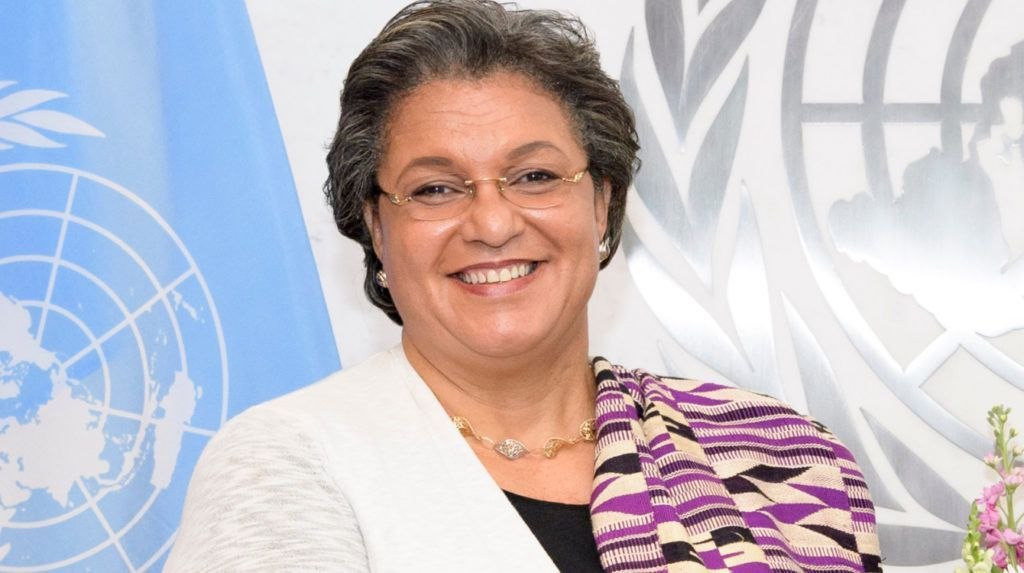
Former Minister for Foreign Affairs and Head of the United Nations Support Mission in Libya (UNSMIL), Hannah Tetteh, has urged African Ministries of Foreign Affairs, Finance to negotiate strategically under China’s expanded zero-tariff policy, arguing that the initiative presents significant opportunities but also requires coordinated diplomacy to secure long-term benefits for the continent.
Speaking at the 21st Kronti ne Akwamu Public Lecture organised by the Centre for Democratic Development (CDD-Ghana) at the British Council on the theme “The Changing Global and Multilateral Rules-Based Order,” Ms. Tetteh said Africa must position itself to extract maximum value from growing global competition for the continent’s resources and markets.
Her remarks come after China announced that it would grant 100% zero-tariff treatment to products from all African countries with which it maintains diplomatic relations, expanding preferential market access to cover all 53 African states that recognise Beijing.
Eswatini remains the only exception because it maintains diplomatic ties with Taiwan rather than the People’s Republic of China. The policy is expected to deepen China-Africa trade and investment ties while creating new export opportunities for African economies.
Ms. Tetteh observed that intensifying geopolitical competition has placed Africa at the centre of global economic and strategic interests, particularly as demand rises for the continent’s critical minerals, energy resources, agricultural products and rapidly expanding consumer market.
“One could say that competition for access to Africa’s resources is heating up, and this is going to be the next arena in which our Ministries of Foreign Affairs, Trade and Industry and Finance are going to have to pay attention to how well they negotiate,” she said.
She contrasted China’s expanding economic engagement with Africa against the uncertainty surrounding the United States’ trade policy, pointing to the disruption caused when the African Growth and Opportunity Act (AGOA) lapsed before its renewal.
The programme remained expired for 126 days before U.S.passed the legislation extending AGOA. However, the renewal fell short of African expectations after it was extended only until December 2026, rather than through a long-term multi-year reauthorisation sought by African governments and businesses.
In view of that, the United States Trade Representative Jamieson Greer had indicated that any future extension of AGOA would likely be tied to reciprocal trade arrangements designed to advance American commercial interests under the Administration’s “America First” trade policy.
According to Ms. Tetteh, these developments underscore the need for African governments to negotiate from a position of strength as global powers increasingly compete for influence on the continent.
She warned that Africa stands to bear disproportionate consequences from the ongoing fragmentation of the global rules-based order, particularly as official development assistance and donor financing continue to decline. She argued that the continent must increasingly pursue greater economic sovereignty by strengthening domestic industries, improving fiscal resilience and securing mutually beneficial investment partnerships.
She therefore called on African governments to develop a coordinated continental response that preserves the multilateral trading system while protecting Africa’s strategic interests. She stressed that negotiations with global partners must extend beyond market access to include industrialisation, value addition, technology transfer, infrastructure development and local job creation, ensuring that Africa derives lasting benefits from the growing global demand for its food resources, energy reserves and critical minerals that are increasingly driving the global transition to clean energy and artificial intelligence technologies.
Related Posts