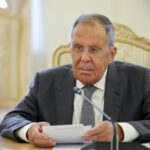

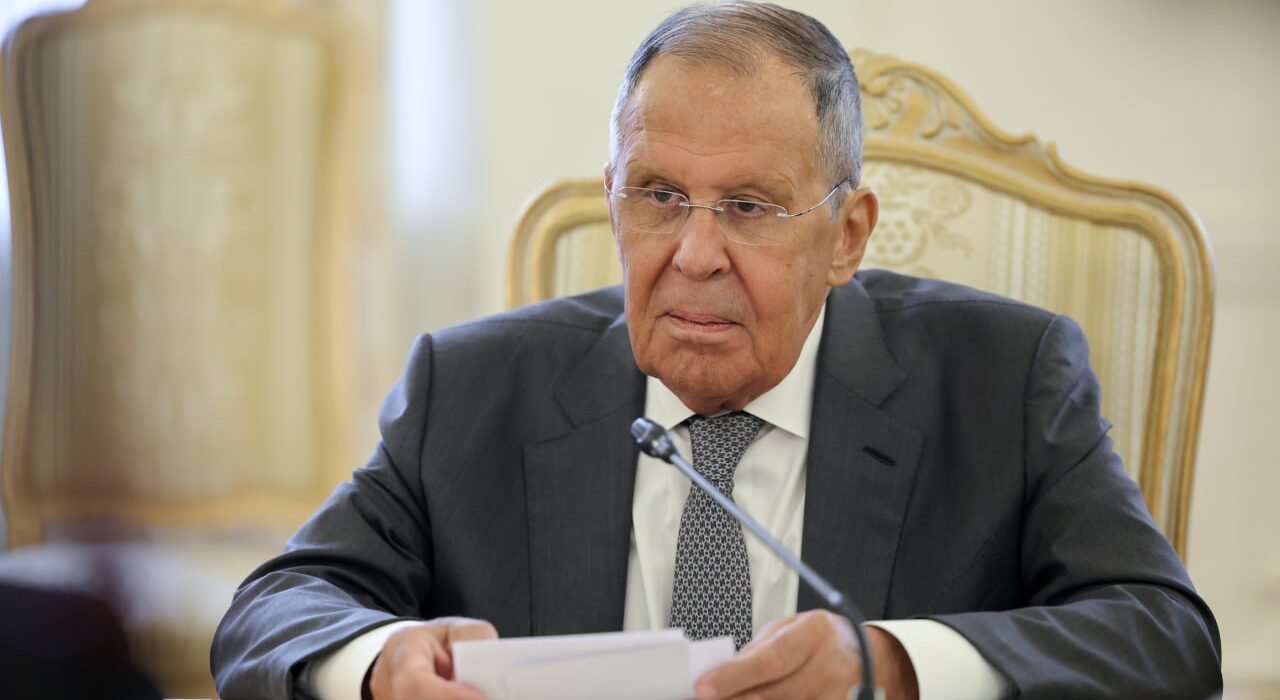
Russian Foreign Minister Sergei Lavrov has paid tribute to the leadership and legacy of Ghana’s first President, Kwame Nkrumah, particularly his role in advancing the decolonisation of Africa and his enduring popularity in Russia.
Lavrov described Nkrumah as one of the outstanding political figures who led the African decolonisation movement, noting that his contribution to the struggle against colonialism remains deeply remembered in Russia.
“We always remember your first president, Kwame Nkrumah, who was very popular in my country, and he is one of the outstanding politicians leading the decolonisation movement,” Lavrov said.
He made the remarks in his opening statement during bilateral talks with Ghana’s Foreign Affairs Minister, Samuel Okudzeto Ablakwa, who is on a three-day high-level visit to Moscow aimed at strengthening political, economic and strategic cooperation between Ghana and Russia.
Nkrumah’s relationship with the Soviet Union dates back to the early years of Ghana’s independence. Ghana and the Soviet Union established diplomatic relations in January 1958, shortly after Ghana became independent, and the relationship expanded into trade, economic, cultural and educational cooperation. A Soviet delegation led by Leonid Brezhnev visited Ghana in February 1961, while Nkrumah undertook an extensive visit to the Soviet Union later that year.
Nkrumah arrived in Moscow in July 1961 at the invitation of Soviet leader Nikita Khrushchev and toured several parts of the Soviet Union, including industrial and agricultural sites. The visit exposed him to Soviet economic and social development and further deepened his engagement with socialist ideas. Historical records show that Nkrumah remained committed to non-alignment, but increasingly viewed socialism as a framework for Ghana’s economic transformation and Africa’s liberation from colonial and imperial influence.
The relationship also had a strong human-capital dimension. During the Nkrumah era, Ghanaian students were sent to the Soviet Union for education and technical training, while Soviet assistance contributed to Ghana’s economic and institutional development. U.S. diplomatic records from the period acknowledge the scale of Soviet economic assistance and the training of Ghanaians in the Soviet Union.
Ghana and Russia have maintained diplomatic relations for more than six decades, with contemporary cooperation extending to education, energy, trade, investment, technology and multilateral affairs. Ghana’s Foreign Ministry has described the relationship as longstanding and has identified education, energy and multilateral cooperation as key areas for further engagement, while both sides have expressed interest in expanding trade, investment and technological cooperation.
The current high-level engagement is therefore seeking to build on that historical foundation. The talks have resulted in commitments in several areas, including a visa-waiver arrangement for holders of diplomatic and service passports, intended to facilitate official travel and strengthen people-to-people, trade and investment ties.
The visit also comes against the backdrop of Ghana’s growing security concerns over instability in the Sahel and the potential southward spread of violent extremism. Both Ghana and Russia have indicated an interest in supporting efforts to improve security in the Sahel and coastal West Africa, while Ghana has continued to emphasise dialogue and diplomatic engagement as part of its response to regional insecurity.
Another emerging concern in Ghana-Russia relations is the recruitment of young Ghanaians into the Russia-Ukraine war. Ghanaian authorities have raised concerns about Ghanaians being lured to Russia under misleading circumstances and subsequently finding themselves involved in the conflict. The government has been engaging Russian authorities over the welfare and release of affected Ghanaian nationals, including those reported to have been captured in Ukraine.
The latest engagement between Accra and Moscow thus combines the historical legacy of Nkrumah-era cooperation with a renewed focus on practical areas of mutual interest, including education, economic development, security, technology and people-to-people relations.
Related Posts