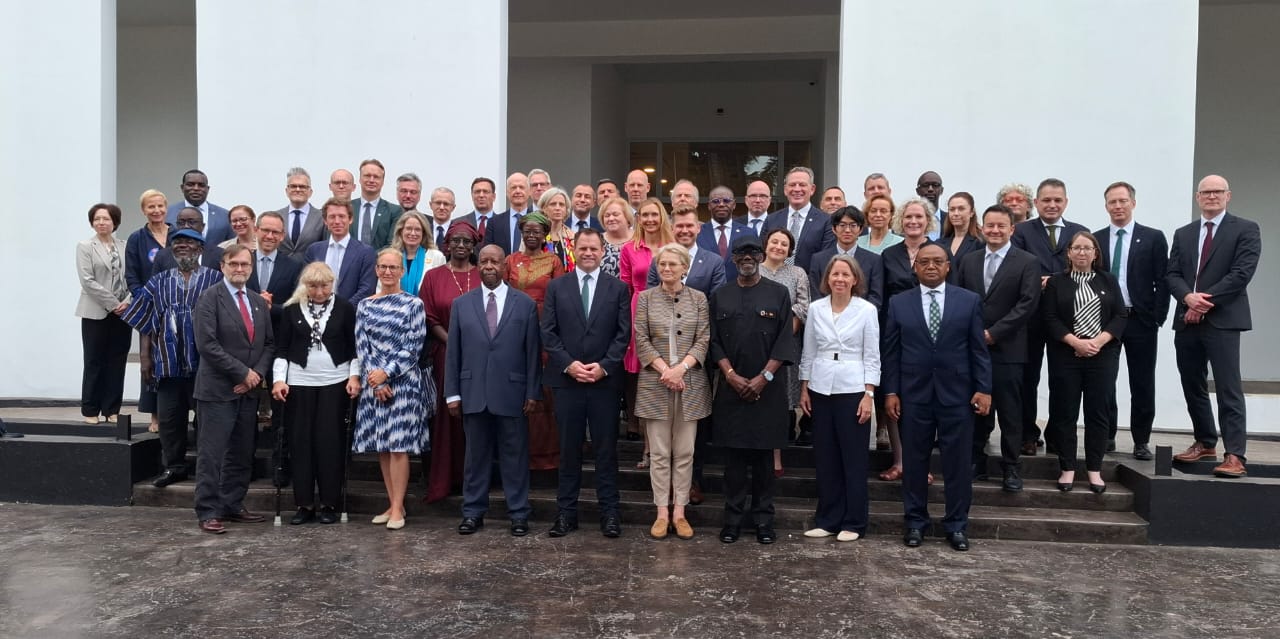
The United Nations has called for renewed cooperation between the European Union (EU) and Sahelian states, warning that stronger collaboration is essential to addressing terrorism and violent extremism threatening peace and stability across West Africa.
Guterres’ Special Representative for West Africa and the Sahel, Leonardo Santos Simão made the call at the opening of a two-day informal dinner hosted by the European Union Special Representative for the Sahel, Brigette Markussen, bringing together representatives of EU member states, EU institutions and Ghana’s Special Envoy to the Alliance of Sahelian States (AES), Gbevlo Lartey.
He stressed that restoring cooperation between the two sides would advance the UN’s founding objectives of maintaining international peace and security.
“The main objective of the United Nations is peace and cooperation. And we want to see peace and cooperation between the European Union and the Sahelian States to resume, because this is an important contribution for peace and stability in the region,” he stated.
He identified terrorism and violent extremism as major challenges confronting the Sahel, warning that continued insecurity could have wider consequences for neighbouring countries, particularly coastal West African states.
He urged governments and international partners to move beyond political differences and identify practical areas of cooperation, arguing that terrorism was a shared security threat that required coordinated responses.
“There is, as we know, the issue of terrorism, but when countries come together, then they can unite their efforts in fighting terrorism. Our role as the United Nations is to encourage all parties to find practical ways to work together for mutual benefit,” he added.
The appeal comes amid strained relations between the EU and the AES, comprising Burkina Faso, Mali and Niger, whose military-led governments have pursued a more independent regional and international policy following their withdrawal from the Economic Community of West African States (ECOWAS).
Relations have also been complicated by the withdrawal of French forces from the three countries, disagreements over Western security partnerships and the AES countries’ closer military cooperation with Russia.
However, recent diplomatic engagements suggest that opportunities for dialogue remain. On October 17, ECOWAS and the AES held their first ministerial meeting dedicated to dialogue on cooperation in Dakar, Senegal, opening a channel for engagement between the two blocs despite their political differences.
The United States has also maintained diplomatic engagement with the AES. In July 2026, senior American officials met representatives of Burkina Faso, Mali and Niger in Washington and reaffirmed their willingness to work with the three countries while respecting their sovereignty and pursuing mutual interests.
These engagements illustrate that political disagreements have not entirely closed avenues for cooperation, particularly where security and economic interests overlap.
For coastal West African countries, the stakes are significant. Insecurity across the Sahel has raised concerns about the southward spread of extremist violence, placing pressure on border communities and exposing weaknesses in regional intelligence-sharing and prevention systems.
Ghana has been part of wider efforts to address these risks through regional security cooperation. One example is the Coastal States Stability Mechanism (CSSM), a multi-donor initiative involving the United States and Germany, with the International Organization for Migration as an implementing partner.
The initiative has supported efforts to strengthen state presence, improve public service delivery and build community resilience in vulnerable areas of Ghana and other coastal states.
At a national strategic dialogue convened under the mechanism in Accra in April 2026, Interior Minister Muntaka Mohammed-Mubarak warned that Ghana was not immune to terrorist threats and emphasised the need for coordinated, long-term measures to prevent violent extremism from spreading southwards.
The mechanism highlights the importance of combining security cooperation with measures that address local vulnerabilities, including exclusion, limited economic opportunities and weak access to public services.
The UN representative’s call for renewed EU–Sahel cooperation therefore comes at a time when regional governments and international partners face the challenge of reconciling political differences with the need to respond collectively to a threat that crosses national borders.
He urged both sides to sustain dialogue, overcome their differences and identify common interests that could provide a basis for practical cooperation in support of peace and stability across the region.
Related Posts