
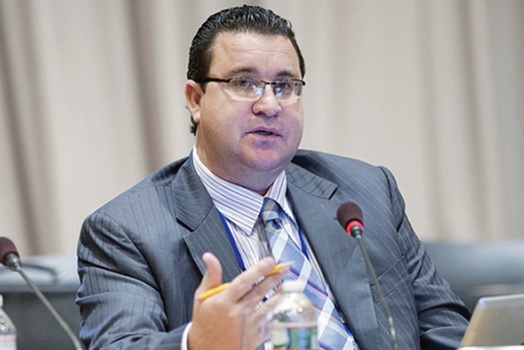
The Country Director of the World Bank (WB) in Ghana, Mr. Pierre Frank Laporte, has highlighted the significant role played by Ghana’s energy sector debt in exacerbating the country’s overall debt challenges.
In an interview monitored by the Ghana News Agency (GNA), Mr. Laporte outlined the factors identified by the WB that are driving Ghana’s debt situation.
Mr. Laporte emphasized that deficiencies within the energy sector, including issues related to tariff systems, management, costly power purchases, and transmission losses, were major problems contributing to Ghana’s mounting debts.
He pointed out that the mismatch between the production cost of Independent Power Producers (IPPs) and the amount consumers paid for electricity led to a surge in debts, as the government was unable to meet its financial obligations to the IPPs.
Moreover, Mr. Laporte criticized the Power Purchasing Agreements (PPAs) signed by the government, stating that they were expensive and burdened the country with paying for unused energy due to “take or pay contracts.”
He noted that Ghana had entered into agreements at unfavorable rates and prices in recent years, which had further impacted the debt situation.
To address this issue, Mr. Laporte urged the government to pursue reforms in tariff adjustments, tackle transmission losses through improved infrastructure, and restructure power purchasing agreements to align with the country’s energy demands.
He highlighted the recent tariff increment and approval by the Public Utility Regulatory Commission (PURC) as a positive step, emphasizing that substantial progress could be achieved through the implementation of intended energy sector reforms.
Additionally, Mr. Laporte advised the government to leverage the West African Power Pool to provide affordable electricity to both the population and industries.
According to Fitch Ratings, the energy sector represents the largest driver of Ghana’s national debt, with the country owing independent power producers a staggering $1.58 billion.
Fitch Ratings also revealed that while Ghana initially approached the IPPs to restructure their debts as part of the External and Domestic Debt Restructuring, the companies objected to the proposal.
Source: GraphicOnline
Related Posts