
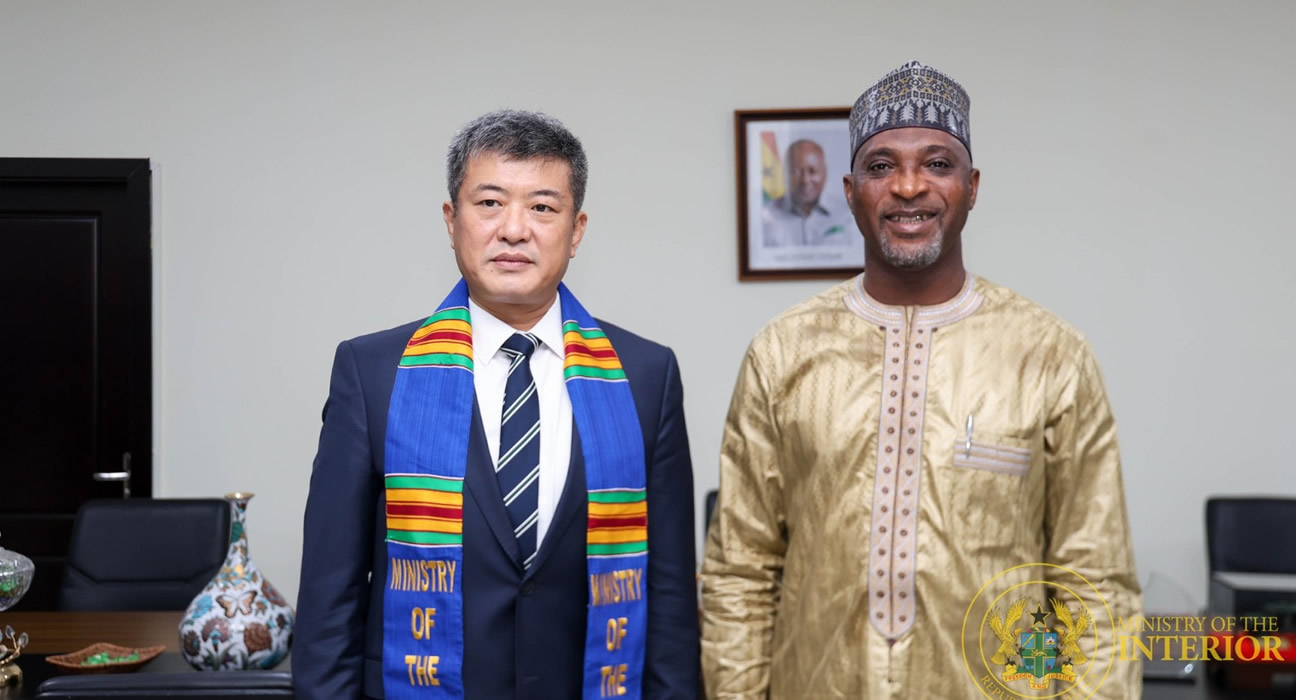
The newly appointed Chinese Ambassador to Ghana, Cong Song, has pledged China’s commitment to supporting Ghana in its fight against illegal mining, commonly known as galamsey.
Ambassador Cong Song made the pledge during an engagement with the Minister for the Interior, Muntaka Mohammed-Mubarak, where he emphasised that responsible business practices are essential for sustainable development and mutual benefit between both countries.
He noted that China remains committed to ensuring that its nationals and businesses operating in Ghana comply with local laws and environmental standards.
Ambassador Cong Song underscored the need for stricter adherence to lawful and environmentally responsible practices by all stakeholders, stressing that China does not condone illegal mining activities. He further highlighted the importance of the Ministry of the Interior (Ghana), describing it as a vital institution within Ghana’s governance and security architecture with a central role in maintaining peace and stability.
He added that the Chinese Embassy remains committed to strengthening diplomatic and economic relations between Ghana and China and expressed readiness to work closely with the ministry to advance shared interests.
Illegal mining continues to pose a significant threat to Ghana’s environment and public health, particularly affecting major water bodies such as the Pra, Ankobra, and Birim rivers. Reports from the Ghana Water Company Limited indicate that over 60% of Ghana’s surface water sources are polluted to varying degrees due to galamsey activities. The contamination, largely caused by chemicals such as mercury and cyanide, has rendered water treatment increasingly costly and, in some areas, unsafe for consumption.
The environmental degradation has also triggered serious health concerns. Exposure to polluted water has been linked to diseases such as skin infections, diarrhoea, cholera, and long-term conditions including kidney damage and neurological disorders due to heavy metal toxicity. Health experts warn that communities along heavily affected river bodies face elevated risks, particularly where untreated water is consumed.
The issue of foreign involvement in illegal mining has remained a sensitive aspect of the galamsey crisis, with some cases involving Chinese nationals. One of the most prominent cases is that of Aisha Huang, a Chinese national widely described as a key figure in illegal mining operations. She was first arrested in 2017 and faced multiple charges related to illegal mining and immigration offences before being deported.
However, her re-arrest in 2022 reignited national debate after she reportedly returned to Ghana and allegedly resumed illegal mining activities. She was subsequently prosecuted, and in December 2023, an Accra High Court sentenced her to four and a half years in prison along with a fine, marking one of the most high-profile convictions in Ghana’s fight against galamsey.
Minister Muntaka Mohammed-Mubarak, in response, commended the positive working relationship between the ministry, the Chinese government, and the Chinese community in Ghana. He stressed the importance of continued cooperation in addressing key national challenges and assured the ambassador of the ministry’s readiness to deepen collaboration.
The meeting concluded with both parties expressing optimism about the future of Ghana–China relations, reaffirming their shared commitment to promoting peace, security, and sustainable development.
Story by: Francis Sowah
Related Posts