
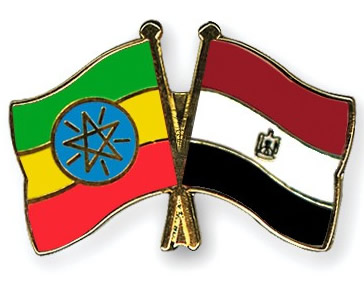
Ethiopia and Egypt said the latest round of talks over a huge, highly contentious hydroelectric dam Ethiopia has built on the Nile’s main tributary again ended with no deal.
The countries blamed each other after three days of discussions in Addis Ababa concluded on Tuesday.
Egypt’s Ministry of Water Resources and Irrigation said the talks were unsuccessful due to Ethiopia’s “persistent refusal” to accept any compromise. The Ethiopian Foreign Ministry accused Egypt of putting up “roadblocks” in the discussions that prevented any consensus.
Sudan was also a part of the negotiations.
The countries have been trying to find an agreement for years over the $4 billion Grand Ethiopian Renaissance Dam, which Ethiopia began building in 2011. The dam is on the Blue Nile near the Sudan border and Egypt fears it will have a devastating effect on its water and irrigation supply downstream unless Ethiopia takes its needs into account.
The Blue Nile meets the White Nile in the Sudanese capital, Khartoum, and then flows onwards through Egypt.
Egypt has referred to Ethiopia’s dam as an existential threat as the Arab world’s most populous country relies almost entirely on the Nile to supply water for agriculture and its more than 100 million people.
Egypt is deeply concerned over how much water Ethiopia will release downstream from the dam and wants a deal to regulate that. Ethiopia is using the dam to generate electricity.
Egyptian President Abdel Fattah el-Sissi and Ethiopian President Abiy Ahmed resolved in July to come to an agreement on the dam within four months. Another round of talks between the three countries in September also ended acrimoniously.
The dam began producing power last year and Ethiopia said it had completed the final phase of filling the dam’s reservoir in September.
The project is expected to ultimately produce over 6,000 megawatts of electricity, which is double Ethiopia’s current output and enough to make the East African nation of 120 million a net energy exporter.
Ethiopia has said it will continue to exploit the river with or without an agreement.
Source: africanews.com
Related Posts