

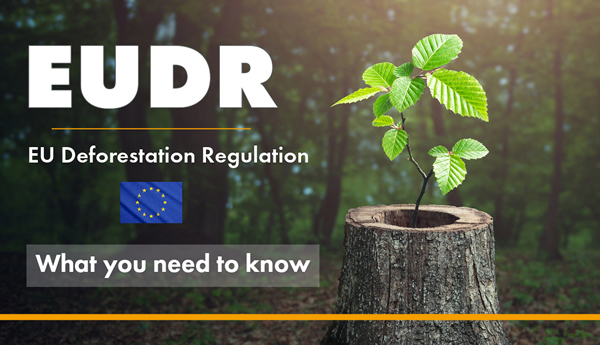
The European Deforestation Regulation (EUDR) law, set to take effect in December 2024, poses significant challenges to Ghana’s forest commodities industry, participants attending a workshop for women in the forest sector have learnt.
The commodities to be affected are cocoa, coffee, palm oil, soybeans, wood, rubber and cattle. The law requires industries to show that their products are deforestation-free, and Ghana, as a major exporter of these commodities, must comply to maintain access to the EU market.
Training women in forest
This came to light at the workshop organised by the Rights and Advocacy Initiative Network (RAIN), a non- governmental organisation focused on inclusive forest governance. It was organised in collaboration with the Taylor Crabbe Initiative and Client Earth which discussed the effects of the law on industries in Ghana and the need to create a sustainable industry that leaves no one behind.
Challenges
A legal practitioner at Taylor Crabbe Initiative, Albert M. Agyeapong, said the EUDR law imposed strict conditions on operators, including traceability, due diligence and compliance with local laws.
He said the challenge was also due to Ghana’s definition of deforestation which differed from EU’s while the country’s scattered the laws and lack of robust traceability systems posed significant challenges.
Under the law, he said, the EU would collect data and conduct risk assessments on countries and commodities, and Ghana must meet the requirements to avoid trade barriers.
Although Ghana faces challenges in meeting the EUDR requirements, he said with a methodical approach, the country could be a bright spot in the region, providing effective models for other countries to meet the regulations.
He said putting in place the necessary measures would help protect existing forest areas, effectively manage land and support small-scale farming. Also crucial to meeting the EU’s requirements is maintaining environmental balance.
The President of the Women in Timber Ghana, Ernestina Owusu Bannahene, expressed worry that the implementation deadline for the EUDR was fast approaching and that Ghana faced challenges in meeting the regulation.
She was of the view that the underlying issue that needed to be tackled was illegal mining in forest reserves which was having a devastating impact on communities and people to address the issue of deforestation.
She, therefore, called for attitudinal change among all stakeholders. The Director of RAIN, Doreen Asumang -Yehoah, said the workshop was to build the capacity of women in the natural resource and forest sector.
“We want them to be updated on legal issues relating to the natural resource sector”. The workshop attracted participants from academia, research, non-governmental organisations, state institutions and the media.
Source: graphic.com.gh
Related Posts