
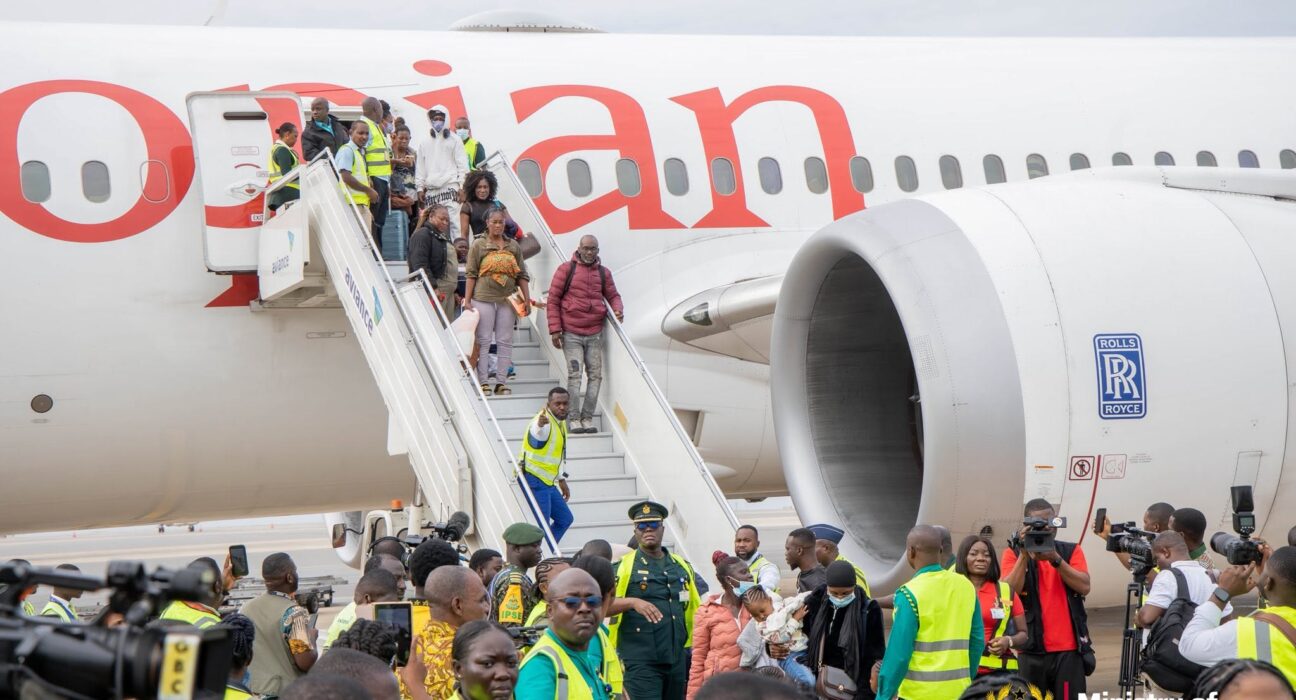
The Ministry of Foreign Affairs has clarified that Ghana does not owe the South African government any money for the evacuation of Ghanaian nationals from South Africa, saying the exercise was fully financed by the Government of Ghana and Ghanaian partners.
The clarification follows reports that South Africa is seeking reimbursement from some African governments for costs incurred in repatriating foreign nationals amid a surge in deportations and voluntary returns.
The South African government has disclosed that it has spent nearly US$18 million on repatriation-related operations, including transportation, temporary accommodation and staffing. According to reports, written requests for reimbursement have been sent to Malawi, Ethiopia and Nigeria. Ghana is not among the countries identified as being asked to reimburse South Africa.
In a statement, the Ministry of Foreign Affairs said Ghana’s evacuation exercise was undertaken independently and without financial assistance from the South African government.
“The Ministry of Foreign Affairs wishes to state for the record, in unequivocal terms, that the evacuation of all our compatriots was fully funded by the Government of Ghana and our Ghanaian partners,” the Ministry stated.
The Ministry said Ghana conducted four coordinated evacuation exercises between May and July 2026 in response to renewed anti-foreigner violence and growing concerns over the safety of Ghanaian nationals in South Africa.
The government stated that the number of Ghanaians evacuated from South Africa stands at 1,600 over the three-month coordinated evacuation exercise with the South African government, without the latter bearing any of the associated costs.
The clarification comes against the backdrop of South Africa’s broader assisted-repatriation programme. In a July 12 statement, the South African government said that, under the arrangements then in place, various government departments, municipalities and state entities were funding most repatriation and deportation operations, including transportation, security and accommodation. It added that financial and humanitarian assistance could be provided on a case-by-case basis.
Ghana’s evacuation programme, however, was separately funded by the Ghanaian government. Ahead of the first evacuation in May, the Foreign Affairs Ministry announced that the chartered flight would be fully paid for by the Government of Ghana and would come at no cost to the evacuees.
Beyond transporting the nationals home, the government has also introduced a reintegration package for the returnees. The package includes financial assistance, transportation to their destinations across Ghana, reintegration support, psychological counselling and access to employment and business opportunities.
The government has also secured about 200 employment opportunities for some of the returnees through partnerships with Ghanaian businesses and private-sector organisations. Engineers and Planners, owned by businessman Ibrahim Mahama, committed 100 jobs, while other companies, including telecommunications firms, also expressed readiness to support the reintegration effort.
The Ministry has assured Ghanaians that the country will not be included among the governments being asked by South Africa to reimburse costs associated with repatriating foreign nationals, because Ghana independently financed the evacuation of its citizens.
“The Ministry reiterates the Government’s commitment to protecting the lives and welfare of our citizens wherever they may be, and will continue to take timely and decisive action whenever the safety and security of Ghanaians abroad are at risk, regardless of the cost required,” it stated.
Related Posts