
President John Dramani Mahama has identified Africa’s growing debt burden as one of the major obstacles hindering development across the continent.
He said rising debt servicing obligations continue to deprive critical sectors such as healthcare, education and agriculture of the funding needed to drive growth and improve livelihoods.
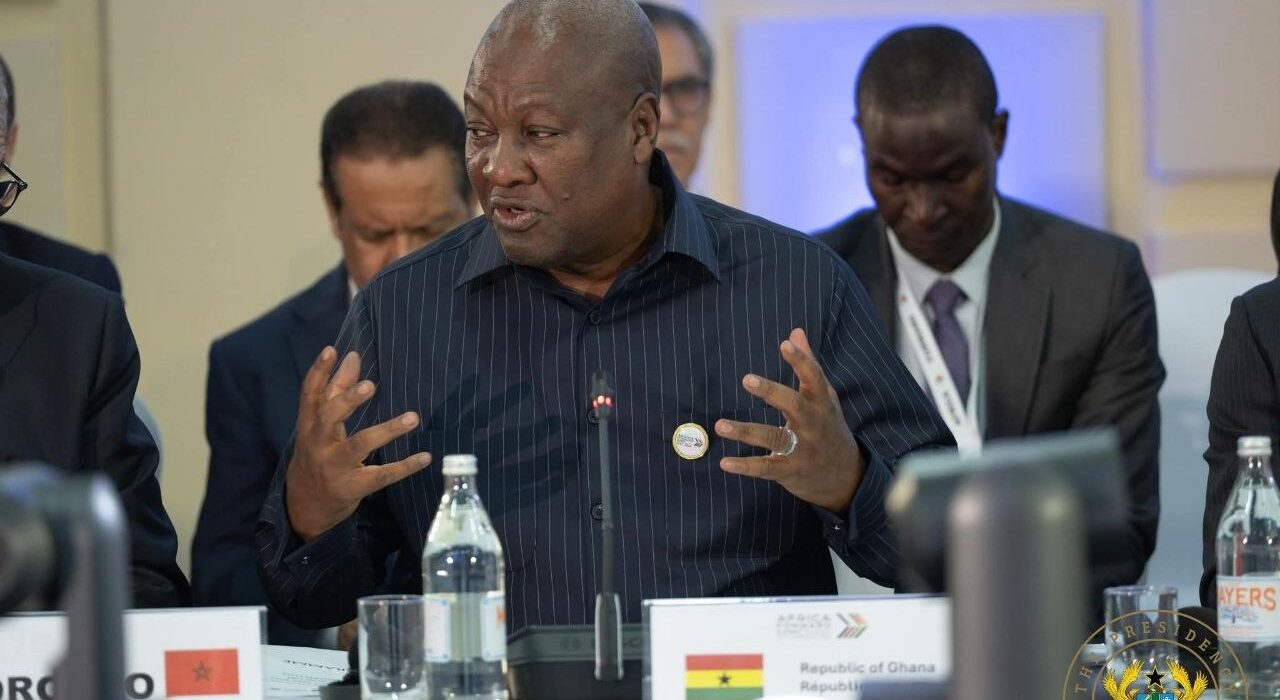
Mahama made the remarks while co-chairing the “Rethinking Health” roundtable at the Africa Forward Summit in Nairobi, Kenya. The summit was co-hosted by Emmanuel Macron and William Ruto.
According to the Ghanaian leader, ballooning sovereign debt remains a major challenge for many African countries, as governments are forced to spend a significant portion of their revenues on debt repayment instead of investing in key sectors of the economy.
“One of the difficulties in leveraging domestic financing is the debt burden. If you are spending 50 percent of your revenue to service debt, how much is left for you to invest in education, health, agriculture and all the things that create a decent life for your people?” he stated.
Africa’s debt burden, estimated over $1 trillion, includes external debts such as Eurobonds, multilateral financing, coupled with domestic debt such as Treasury bills and domestic bonds. Economists have warned that increasing debt servicing costs are limiting investment in infrastructure, healthcare and industrialisation across the continent.
President Mahama also pointed to declining donor support and cuts in official development assistance as additional pressures facing African economies.
He said these challenges informed the establishment of the Accra Reset Initiative, which seeks to mobilise domestic support and strengthen Africa’s bargaining power within multilateral institutions, using healthcare as a key entry point for broader economic transformation.
He further lamented Africa’s overdependence on imported pharmaceutical products and vaccines despite the continent’s large population and healthcare needs. Mahama noted that Africa imports about 70 percent of its pharmaceutical products and nearly 90 percent of its vaccines, while producing less than three percent of global pharmaceutical output.
According to him, the continent’s weak pharmaceutical manufacturing capacity highlights the urgent need for African countries to pool resources together to strengthen local production and improve health security.
“We should not be fragmented in the work that we are going to do. All of us need to pull together to achieve the outcomes that we want. Funding is available, but we need to bring the private sector, state parties, development partners and all stakeholders into the same boat,” Mahama added.
The Africa Forward Summit brought together African leaders, policymakers, investors, development institutions and private sector players to discuss sustainable financing, innovation, healthcare systems and economic transformation on the continent. The summit also focused on strengthening partnerships between Africa and global stakeholders to accelerate inclusive growth and long-term development.
Related Posts