
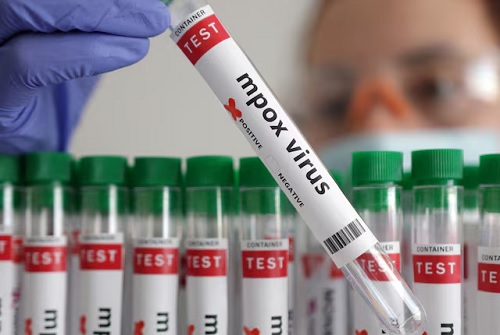
The spread of mpox has slowed down slightly across Africa, but the epidemic is not over, the African Union’s health watchdog said Thursday.
Fifteen countries across Africa recorded 11,453 mpox cases in the last four weeks, compared with 12,802 in the four weeks prior, the Africa Centers for Disease Control and Prevention said during an online briefing.
But the head of the Africa CDC, Jean Kaseya, warned the epidemic was not over.
“We are still in the acute phase of the outbreak that is pushing us to double our effort to control mpox in Africa,” Kaseya said.
“Unfortunately, we are still losing a number of people,” he said.
Since the start of the year, authorities have recorded 50,840 mpox cases and 1,083 deaths across Africa.
Central Africa accounts for more than 85% of cases and almost all deaths.
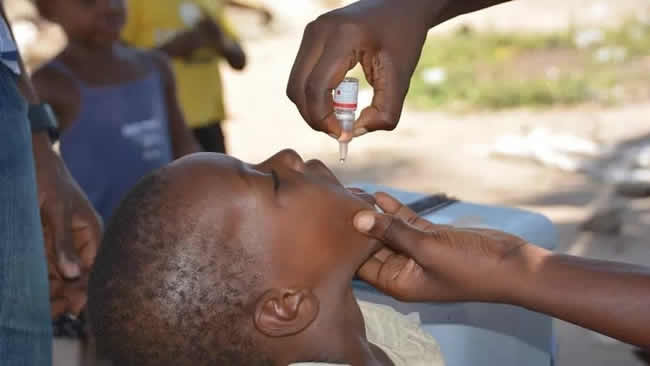
The Democratic Republic of Congo, which has recorded more than 39,000 cases and more than 1,000 deaths since the start of the year, launched a vaccination campaign last month that is still “limited,” according to the Africa CDC.
Some 51,649 people have been vaccinated in six provinces, the Africa CDC said.
“We hope that with these vaccines we can continue to support countries to stop this outbreak,” Kaseya said.
Health agencies across the world have allocated just under 900,000 vaccine doses for nine African countries “hard hit by the current mpox surge,” the Africa CDC said in a statement Tuesday.
The countries include the DRC, Kenya and Uganda.
“The largest number of doses — 85% of the allocation — will go to the Democratic Republic of the Congo as the most affected country, reporting four out of every five laboratory confirmed cases in Africa this year,” the statement said.
Mpox, previously known as monkeypox, is caused by a virus transmitted to humans by infected animals but can also be passed from human to human through close physical contact.
It causes fever, muscular aches and large boil-like skin lesions, and can be deadly.
Source: voanews.com
Related Posts