
A new report by the United Nations has warned that more than 100 million “extremely poor” people across Africa are threatened by accelerating climate change that could also melt away the continent’s few glaciers within two decades.
The report released on Tuesday by the World Meteorological Organization presented a grim reminder that Africa’s 1.3 billion people remain “extremely vulnerable” as the continent warms more and at a faster rate than the global average – when the continent’s 54 countries are responsible for less than 4 percent of greenhouse gas emissions worldwide.
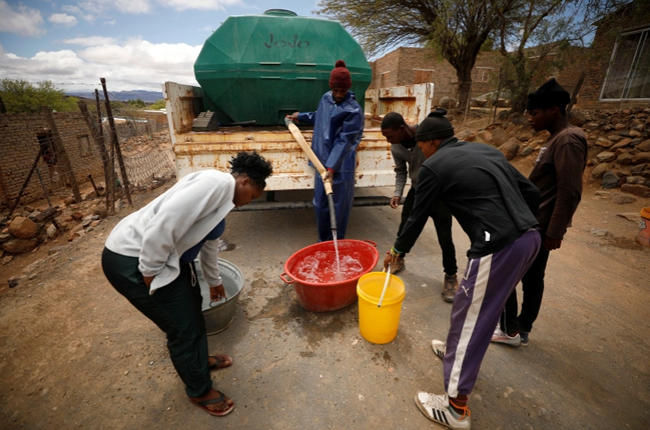
“By 2030, it is estimated that up to 118 million extremely poor people will be exposed to drought, floods and extreme heat in Africa, if adequate response measures are not put in place,” said Josefa Leonel Correia Sacko, commissioner for rural economy and agriculture at the African Union Commission.
The extremely poor were defined by the WMO as those who live on less than $1.90 per day.
“In sub-Saharan Africa, climate change could further lower gross domestic product by up to 3 percent by 2050,” Sacko said.
“Not only are physical conditions getting worse, but also the number of people being affected is increasing,” she said in the report’s foreword.
WMO Secretary-General Petteri Taalas said that last year temperatures continued to rise across Africa, “accelerating sea-level rise” as well as extreme weather events like floods, landslides and droughts – all indicators of climate change.
Last year, Africa’s land mass and waters warmed more rapidly than the world average, the report said.
The 30-year warming trend from 1991-2020 was above that of the 1961-1990 period in all of Africa’s regions.
The rate of sea-level rise along the tropical coasts and the South Atlantic, as well as along the Indian Ocean, was higher than the world average.
The report also highlighted the shrinking glaciers of Mount Kilimanjaro, Mount Kenya and the Rwenzori Mountains in Uganda as symbols of the rapid and widespread changes to come.
“Their current retreat rates are higher than the global average. If this continues, it will lead to total deglaciation by the 2040s,” it warned.
“Mount Kenya is expected to be deglaciated a decade sooner, which will make it one of the first entire mountain ranges to lose glaciers due to human-induced climate change.”
Though too small to serve as significant water reserves, Africa’s glaciers have high tourism and scientific value.
On Tuesday, African countries also demanded a new system to track funding from wealthy nations that are failing to meet a $100bn annual target to help the developing world tackle climate change.
SOURCE: NEWS AGENCIES
Related Posts