

The Embassy of the Russian Federation in Ghana has held a public lecture at the University of Media Arts and Communication to commemorate the 81st anniversary of the Victory in the Great Patriotic War.
The lecture was delivered by Counsellor of the Embassy, Natalya Muzhennikova, who recounted the events leading to the Soviet Union’s victory in the Great Patriotic War fought between the Soviet Union and Nazi Germany alongside its Axis allies. The war lasted 1,418 days, beginning with the German invasion on June 22, 1941 and ending with Soviet victory on May 9, 1945.
During the lecture, the Counsellor highlighted the heroic resistance of the Podolsk cadets on the Ilyinsky defensive line, major battles that shaped the outcome of the war, and the importance of preserving historical memory in contemporary society. The event climaxed with a screening of the historical war film Podolsk Cadets, which portrays the bravery and sacrifice of Soviet military cadets during the German advance toward Moscow.
The commemoration, held on May 14, 2026, also featured a “St. George’s Ribbon” event on the sidelines, symbolising remembrance, patriotism, and the shared reflection on Russian wartime history and sacrifice.
The Great Patriotic War remains one of the most defining events in Russian history, commemorating the Soviet Union’s resistance against Nazi Germany during the Second World War. Russia marks Victory Day annually on May 9 to honour the millions of soldiers and civilians who lost their lives during the conflict, which is regarded as one of the deadliest wars in human history.
According to historical records, the Soviet Union suffered an estimated 27 million deaths during the war, including both military personnel and civilians. The conflict reshaped global geopolitics and significantly contributed to the eventual defeat of Nazi Germany in Europe, with the Soviet Red Army playing a central role in major battles including Stalingrad, Kursk, and the capture of Berlin.
Victory Day commemorations continue to hold strong national significance in Russia and across several former Soviet states, serving both as a remembrance of wartime sacrifice and as a symbol of national resilience, unity, and patriotism.
The St. George’s Ribbon, widely distributed during commemorative events, has become one of the most recognised symbols associated with the remembrance of Soviet victory during World War II.
This year’s Victory Day commemoration in Moscow was marked by a scaled-down military parade at Red Square under heightened security amid the ongoing Russia-Ukraine conflict. Russian President Vladimir Putin presided over the May 9 parade commemorating the 81st anniversary of the Soviet Union’s victory over Nazi Germany during World War II.
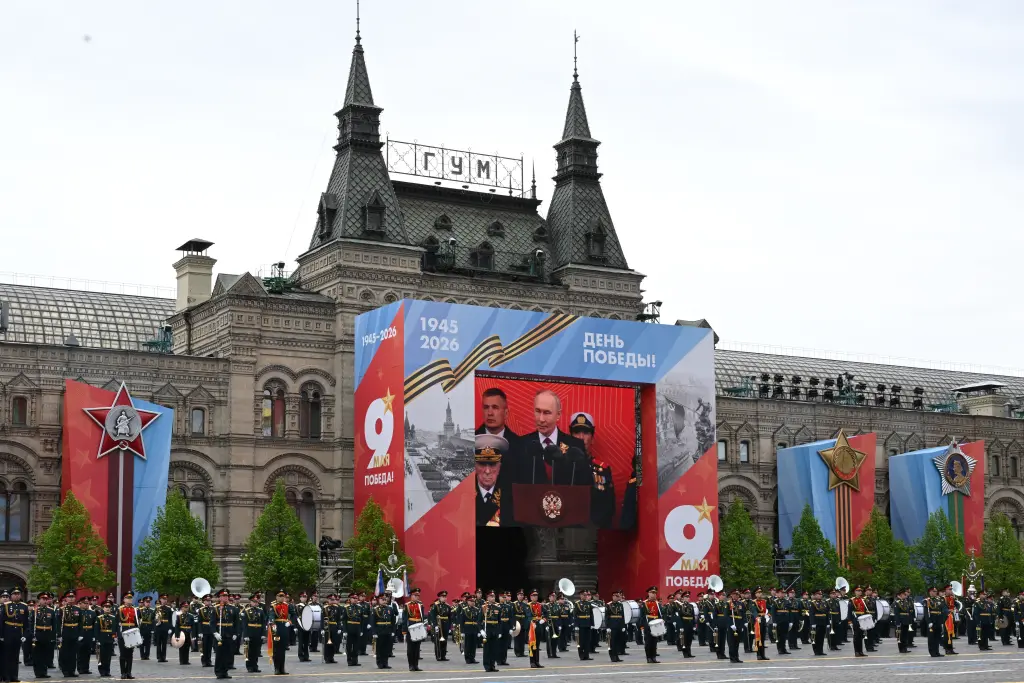
Unlike previous years, the event did not feature tanks, missiles, or heavy military hardware for the first time in nearly two decades, with authorities citing security concerns and the ongoing war situation
Related Posts