
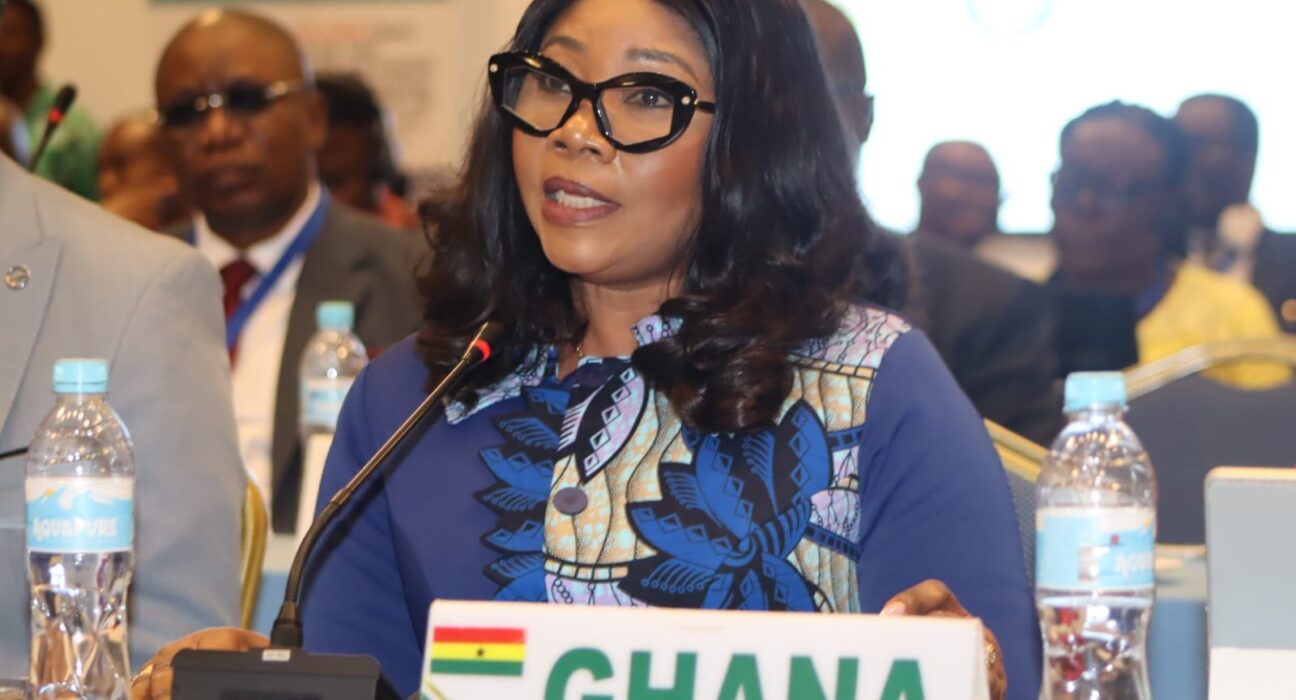
The Second Deputy Governor of the Bank of Ghana, Dr. Matilda Asante‑Asiedu, has reinforced the central bank’s commitment to regional coordination and macroeconomic stability as she represented Governor Johnson Asiama at the 67th Meeting of the Committee of Governors of Central Banks of ECOWAS held in Monrovia, Liberia, from 12–13 February 2026.
Dr. Asante‑Asiedu’s participation underscored Ghana’s proactive engagement in advancing collective efforts to address emerging macroeconomic and financial sector challenges, while steadily working toward the long‑standing objective of establishing a credible and resilient ECOWAS Monetary Union.
She noted that strengthening financial sector resilience, policy alignment and shared regulatory frameworks will support sustainable growth and prosperity for ECOWAS member states. Her remarks echoed a broader regional call for unified action as the bloc moves toward its planned introduction of a single currency by 2027.
“Regional coordination remains essential as we work toward a stable, credible, and resilient monetary union that supports sustainable growth and shared prosperity across our sub-region. Deputy Governor of the Bank of Ghana” she said.
The two‑day meeting brought together central bank governors and senior financial officials to review convergence criteria and enhance policy coherence toward a unified regional currency.
In Monrovia, she also chaired the 50th Board of Governors Meeting of the West African Institute for Financial and Economic Management (WAIFEM), held alongside engagements with sister institutions including the West African Monetary Agency (WAMA) and the West African Monetary Institute (WAMI).
These institutions play a central role in technical capacity building, monetary policy research, and the harmonisation of financial regulation across the sub‑region, all regarded as pillars for a stable monetary integration framework.
Ghana’s own macroeconomic and financial achievements have positioned it as a central voice in these discussions. Over the past year, the Bank of Ghana has overseen a marked improvement in inflation outcomes, with annual headline inflation easing to 5.4 percent in December 2025, down sharply from levels exceeding 20 percent in preceding years, a key milestone in restoring price stability. This disinflation has contributed to stronger market confidence and supported gradual normalisation of monetary conditions.
Simultaneously, Ghana’s external financial buffers have strengthened significantly. Gross international reserves have grown to approximately US$13.8 billion, offering over 5.5 months of import cover, a level that enhances the economy’s ability to absorb external shocks and bolsters confidence in the currency. These reserve levels stand in contrast to more constrained balances in previous cycles, illustrating progress in external stability.
On the financial sector front, regulatory reforms championed by the Bank of Ghana have yielded tangible results. Following the expiry of regulatory forbearance linked to the domestic debt exchange programme, a majority of commercial banks in the country met capital adequacy thresholds, reflecting improved balance sheet strength. Asset quality has also shown improvement, with the non‑performing loan ratio trending downward, an indicator of increasing financial system resilience.
Dr. Asante‑Asiedu’s leadership at these regional forums signals Ghana’s readiness to contribute more substantially to collective monetary governance in West Africa.
As member states intensify efforts to meet convergence benchmarks ahead of the proposed 2027 timetable for the new currency, Ghana’s active engagement and demonstrated macroeconomic progress provide momentum and credibility to the integration agenda. Collective action, strengthened policy frameworks and sustained regional dialogue continue to animate the vision of a unified economic future for West Africa.
Related Posts