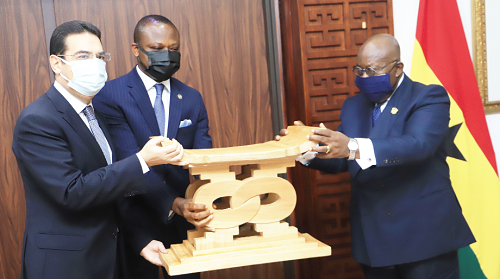

 Switzerland and Ghana have signed Hydropower Sustainability Assessment Protocol, to enhance the sustainable assessment tool used to measure and guide performance in the hydropower sector.
Switzerland is facilitating the Hydropower Sustainability Assessment Council and the International Hydropower Association to drive application and learning around the Early Stage tool of the Hydropower Sustainability Assessment Protocol.
A copy of the protocol made available by Ras Liberty Amewode, Deputy, Head of Communications, Ministry of Energy in Accra, and copied to Ghana News Agency, said Ghana has indicated its support for the programme and its drive to ensure the sustainability of its hydropower development.
Government has therefore agreed to implement the first stage of the programme in the country.
The Protocol is the result of intensive work from 2008 to 2010 by the Hydropower Sustainability Assessment Forum, a multi-stakeholder body with representatives from social and environmental NGOs, governments, banks and the hydropower sector.
It is a framework for assessing the sustainability of hydropower projects, distilling sustainability into more than 20 clearly-defined topics.
The Protocol, which provides a consistent, globally-applicable methodology, is governed by a multi-stakeholder Council and is regulated by a charter and terms and conditions that govern its use.
Since the Forum concluded its work in late 2010, the Protocol has been applied in all continents except Africa with growing support from stakeholders within the sector.
Ghana will be the first country worldwide to test the Early Stage tool within the Protocol. The Early Stage tool is applied, before any final decision on a particular hydro-site is taken in order to cater for an economically viable, environmentally sound and socially acceptable solution.
Recognising the importance of ensuring sustainability is addressed early in hydropower planning and the Swiss government is working with other partners to ensure that the Early Stage tool is applied, especially in emerging and developing economies.
The Swiss funded programme will work with Ghana to provide a comprehensive training and application of the Early Stage tool in Ghana.
Government as part of its commitment to develop its hydropower resources in a sustainable manner agreed that the first stage of the programme be rolled out in the country.
This will entail training around the Protocol for a broad group of stakeholders in the country and assessment of a number of potential hydropower projects.
Besides providing an internationally recognised framework to objectively measure the strengths of the various projects, the programme will facilitate learning on the application of the Early Stage tool of the Protocol to be brought back to the Council.
This will ensure the understanding of the tool, and to allow the Council to address any weaknesses and improvements in the future.
The Swiss government has provided $ 535,000 to develop the early stage planning in hydropower development in Ghana, recognising the importance of planning and the fact that the great majority of hydropower expected to be developed into the future will have to be properly planned to take care of the environment and the socio-economic needs of the people living along hydro resources.
Source: GNA
Related Posts