Tunisian Women March Against Gender-Based Violence Under The #EnaZeda Movement
BY Admin
December 3, 2019
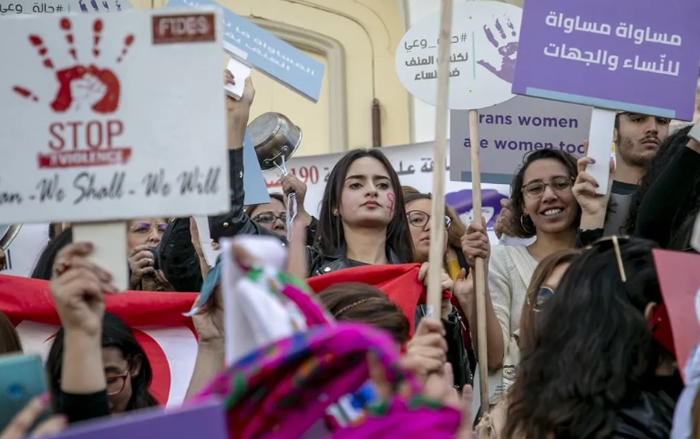
Photo by Yassine Gaidi/Anadolu Agency via Getty Images
The march comes after a newly-elected politician was allegedly seen on video masturbating outside of a school.
This past Saturday, hundreds of Tunisian women took to the streets of Tunis in protest against gender-based violence in the country, according to the BBC. Under the banner of #EnaZeda, the Arabic translation of the #MeToo movement, the women urged the government to exercise political will in ending violence against women and carried brooms to symbolize the “sweeping away” of gender-based violence. The march comes after a video and images emerged which allegedly showed the newly-elected member of parliament, Zouheir Makhlouf, masturbating outside of a school in October.
Saturday’s march was reportedly organized by at least 50 local NGOs including the Tunisian Association of Democratic Women (ATFD). Although Makhlouf has since denied the allegations against him citing that he was urinating in a bottle as a result of his diabetic condition, the #EnaZeda movement has grown in numbers and allowed Tunisian women to share their personal experiences and accounts of having survived being abused while challenging so-called taboos online.
In July of 2017, Tunisia passed its first national law to end violence against women—a historic moment for Tunisian women. Naziha Labidi, the Minister of Women, Family and Childhood commented on the law saying that, “As a Tunisian woman, I am very proud that this law has been adopted. This is the climax of the steps that began through the adoption of the Code of Personal Status in 1956.”
Additionally, numerous accounts of children being sexually harassed by family members continue to emerge. The Jerusalem Post reports that lawyer Fadoua Brahem points out that the country’s nonchalant culture with regards to addressing child abuse is part of the problem. “In Tunisia, the sanctity of a child’s body is not respected,” Brahem says. She adds that, “A victim needs to have the psychological and financial tools to seek justice–it’s not set up to be available to everyone.”