
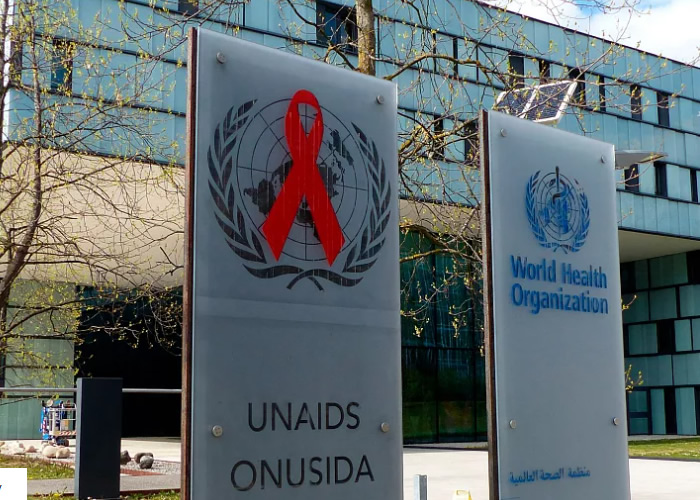
Amid continuing uncertainty about the impact of deep US funding cuts on humanitarian work worldwide, the head of the UN agency coordinating the fight against HIV-AIDS warned that an additional 6.3 million people will die in the next four years unless the support is reinstated.
“We will see a real surge in this disease. We will see it come back and we see people dying the way we saw them in the 90s and 2000s,” said Winnie Byanyima, UNAIDS Executive Director, pointing to a “tenfold increase” from the 600,000 AIDS-related deaths recorded globally in 2023.
Byanyima said Monday that the sudden loss of American money has been “devastating” for efforts to stop HIV and will cost many lives of the world’s most vulnerable people. But she also proposed an “amazing deal” for U.S. President Donald Trump that she said could result in “the end of AIDS.”
At a news briefing in Geneva, UNAIDS Executive Director Winnie Byanyima said that the deal would involve Trump enabling the U.S. company Gilead to produce and license its “magical” prevention drug Lenacapavir across the world to the millions of people who need it.
Lenacapavir, sold as Sunlenca, has been shown through twice-yearly injections to completely prevent HIV infection in women and works nearly as well in men.
“President Trump likes deals,” Byanyimasaid, acknowledging that it was President George W. Bush who first started paying for the widespread roll-out of HIV drugs more than two decades ago.
“It could be President Trump, another Republican president, who leads the prevention revolution towards the end of AIDS,” Byanyima said.
She added that the deal would result not only in profits for Gilead and create jobs for Americans, but save millions of lives in poorer countries.
Byanyima said that American money made up about 35% of UNAIDS’ core budget last year but it was unclear whether that might be restored for next year. She said the agency was in talks with the U.S. government but was also preparing for a worst-case scenario, in which there was no funding available from the U.S.
Byanyima said it was unlikely any other donors would be able to fill that vacuum, adding that European donors have told the agency they would be cutting back on their support in order to redirect their funds to defense and other priorities.
Byanyima said that unless support for HIV efforts is restored, there could be more than 6.3 million additional deaths in the next four years and an additional 2,000 people per day becoming infected.
She acknowledged that there has been some valid criticism regarding how HIV aid has been delivered, calling it “an opportunity to rethink and develop more efficient ways of delivering life-saving support.”
Byanyima also said African countries were trying to become more self-sufficient and that even some of the poorest nations were now “trying to stretch very weak, fragile health systems to absorb people living with HIV.”
Source: africanews.com
Related Posts