

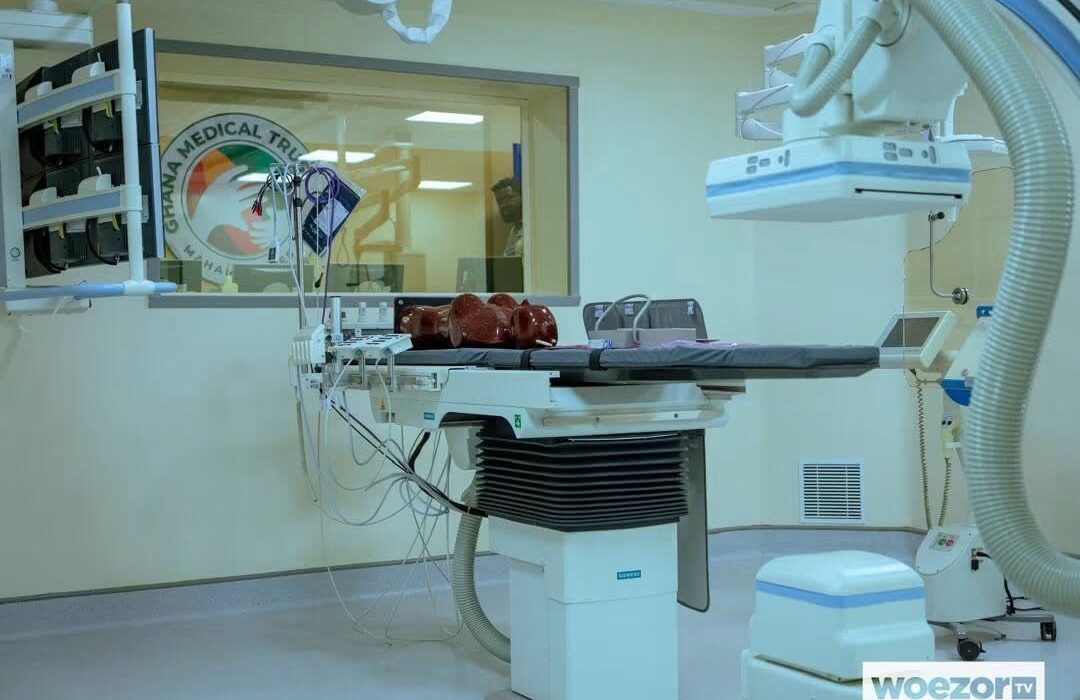
The World Health Organization (WHO) has welcomed the commissioning of a new Cardiac Catheterisation Laboratory at the National Cardiothoracic Centre of the Korle Bu Teaching Hospital, describing the facility as a significant investment in the fight against non-communicable diseases (NCDs) and a critical step towards saving lives.
President John Dramani Mahama officially inaugurated the state-of-the-art laboratory on 9 July 2026, sixteen months after a fire destroyed the country’s previous catheterisation laboratory, which had provided specialised cardiac diagnostic and interventional services since its commissioning in January 2017.
The new facility was reconstructed through the Ghana Medical Trust Fund (MahamaCares), a statutory fund established to finance specialised and high-cost treatment for chronic non-communicable diseases. The project aligns with the WHO’s strategy of strengthening countries’ capacity to prevent, detect and manage NCDs, particularly cardiovascular diseases.
WHO has noted that the recommissioning addresses a critical gap in Ghana’s healthcare system at a time when non-communicable diseases have become one of the country’s leading public health challenges. Globally, NCDs account for 41 million deaths every year, representing nearly three-quarters of all deaths worldwide. More than 85% of premature NCD deaths occur in low- and middle-income countries, according to the UN health agency.
“As Ghana faces a growing burden of #NCDs, particularly cardiovascular diseases, this laboratory will improve timely diagnosis, expand cardiac care, and save lives.” it stated.
The burden is similarly high in Ghana, where non-communicable diseases are estimated to account for about 45% of all deaths, driven largely by cardiovascular diseases, diabetes, cancers and chronic respiratory illnesses.
WHO has supported Ghana’s response through several initiatives, including the Ghana STEPS Survey 2023, a nationwide assessment of NCD risk factors co-funded by the governments of the United Kingdom and Norway, and the implementation of the WHO Package of Essential Noncommunicable Disease Interventions (PEN). The programme seeks to strengthen primary healthcare by improving early diagnosis, standardising treatment protocols and enhancing referrals for patients with chronic diseases.
The new catheterisation laboratory is expected to improve the diagnosis and treatment of cardiovascular diseases, addressing longstanding challenges including limited specialised equipment, delayed emergency cardiac care, inconsistent clinical management and inadequate monitoring of patients across different levels of the health system.
The commissioning marks a significant boost to Ghana’s capacity to deliver advanced cardiac care and reflects broader efforts to strengthen the country’s response to the growing burden of non-communicable diseases.
Related Posts