
The African Union Commission (AUC) has stepped up efforts to galvanize member states to ratify and implement the AU Free Movement of Persons Protocol.
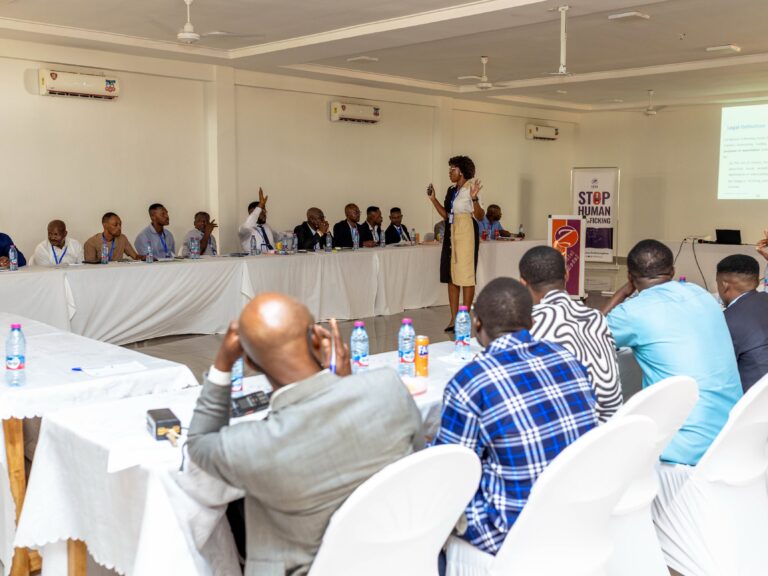
The call was made during a four-day strategic coordination meeting held in Accra from July 1 to July 4, 2025.
Hosted by the Government of Ghana, the meeting convened senior government officials from 13 African Union (AU) Member States, Regional Economic Communities (RECs), the Pan-African Parliament (PAP), and key development partners to address the slow ratification of the protocol.
It is central to achieving continental integration under Agenda 2063 and the Abuja Treaty.
The Protocol, adopted in 2018, is designed to guarantee the right of African citizens to enter, reside, and establish businesses in any AU Member State.
However, only four out of 55 Member States have ratified the Protocol, far below the 15 required for it to come into force.
Ambassador Amma A. Twum-Amoah, AU Commissioner for Health, Humanitarian Affairs and Social Development, described the meeting as a necessary push to make the Protocol a reality.
“We cannot have a true African Continental Free Trade Area if people cannot move with their goods,” she said.
“This meeting is about accelerating ratification by learning from one another and building trust across the continent,” Amb. Twum-Amoah said at the close of the coordination meeting.
As part of the experience-sharing agenda, participants visited Ghana’s Akanu Border Post at the Togo frontier and the Kotoka International Airport to observe the country’s border and immigration management systems.
Ambassador Twum-Amoah commended Ghana’s leadership in promoting Pan-Africanism and regional integration.
She stated, “Ghana exemplifies the practical application of the Protocol through its open visa policies and strong immigration systems.”
The African Union selected Ghana as host due to its strong track record in visa openness and its pivotal role in ECOWAS’s free movement framework.
Ghana is ranked among the top ten countries on the 2024 African Visa Openness Index, alongside Rwanda, The Gambia, Seychelles, and Mauritius, who were also represented at the meeting to share best practices.
Professor Margaret Kamar, a Kenyan Senator and Member of the Pan-African Parliament’s Committee on Trade, Customs, and Immigration, emphasized the link between mobility and trade.
She said, “It is illogical to promote intra-African trade without enabling the movement of people. Rwanda has shown that lifting visa restrictions can boost tourism and revenue.
“Our goal is to translate such examples into continental policy action,” she added.
Prof Kamar noted that while the African Continental Free Trade Area (AfCFTA) had been ratified by 48 countries, the Free Movement Protocol lagged far behind, a contradiction that undermined the broader vision of an integrated Africa.
Among the key concerns discussed were security, loss of revenue from visas, and fears of mass migration.
However, delegates, including representatives from Rwanda and The Gambia, countered that well-managed free movement could strengthen border control, enhance economic opportunity, and build mutual trust.
Rwanda’s testimony revealed an increase in tourism and service revenue after lifting visa requirements, dispelling myths of economic loss.
A major outcome of the Accra meeting was a resolution to establish a continent-wide platform for Heads of Immigration Services.
The platform will facilitate regular dialogue, cross-border cooperation, and data-sharing mechanisms essential for coordinated implementation.
The AU Commission also pledged to provide technical assistance to Member States needing support to ratify and domesticate the Protocol.
Sessions during the meeting highlighted the need for harmonized immigration, labour, and commercial laws across the continent.
Delegates agreed to adopt a phased implementation strategy as outlined in Strategy four of the AU Protocol’s Implementation Plan, which includes legal reviews, capacity-building, and pilot initiatives at border points.
The AU expects that by December 2025, the number of ratifications will reach the 15-country threshold required to bring the Protocol into legal force.
In preparation, Member States committed to taking legislative action and building public awareness to dispel misinformation surrounding the Protocol.
“This process is not about opening floodgates —it is about creating structured, safe, and beneficial pathways for movement,” Assistant Commissioner of Immigration, Samuel Bilson, who participated in the meetings, said.
He said, “Africa is already moving. Now, it’s time to make it official, coordinated, and sustainable.”
Source: GNA
Related Posts