
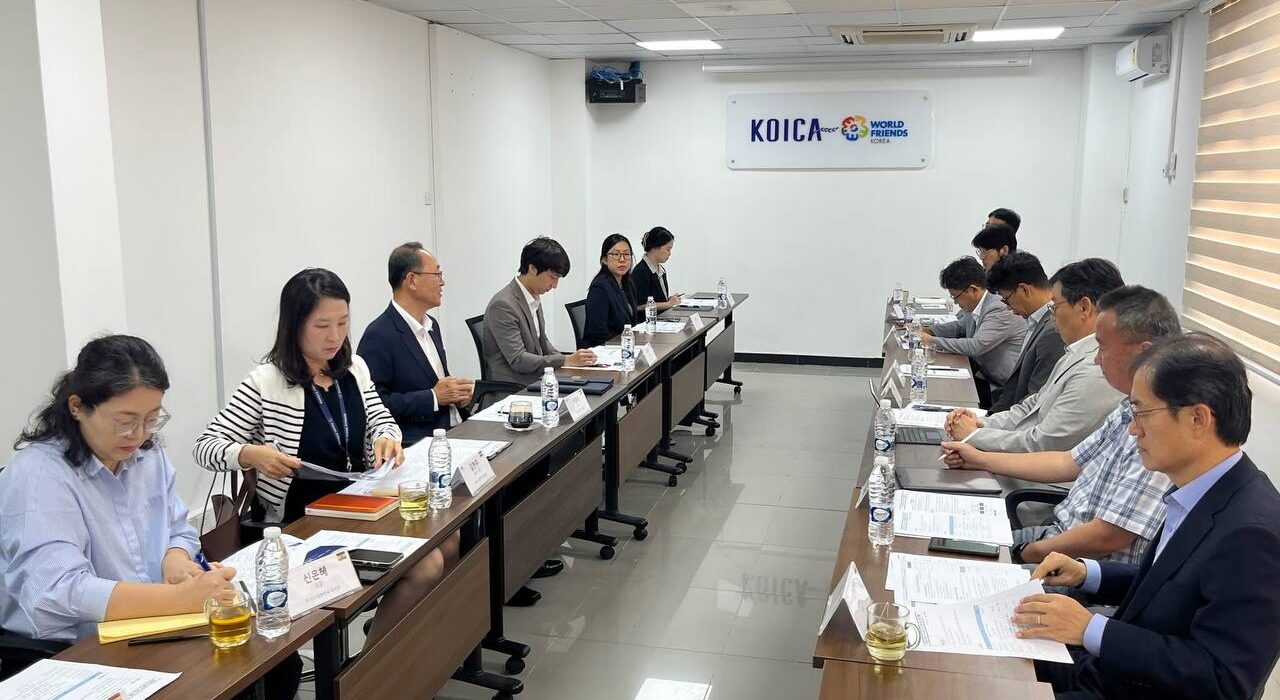
The Korean Mission in Ghana has reaffirmed its commitment to supporting the country’s development, with a particular focus on STEM education and results-driven development programs.
This was highlighted during the Ghana ODA Coordination Meeting, convened on 10th December 2025 by the Korea International Cooperation Agency (KOICA).
The meeting brought together representatives from the Embassy of the Republic of Korea and key Korean Official Development Assistance (ODA) institutions operating in Ghana, including Economic Development Cooperation Fund, Korea Foundation for International Healthcare, Korea Trade-Investment Promotion Agency, and Korea Rural Community Corporation. Participants discussed project alignment, collaboration opportunities, and the strategic direction of Korean ODA in Ghana.
During the event, Mr. Shinyoung Pyeon, Senior Deputy Country Director of KOICA, presented the STEM Education Program as a case study, sharing lessons on results-based management and the use of the country system. His presentation highlighted practical approaches to ensuring programs deliver measurable impact while aligning with Ghana’s national development priorities.
The coordination meeting emphasized the importance of close collaboration among Korean ODA stakeholders, fostering synergies to maximize the effectiveness of aid programs. Officials noted that sustained partnership in areas such as STEM, healthcare, ICT, and vocational training will continue to enhance Ghana’s capacity and development outcomes.
“The meeting reflects our shared commitment to strengthening development effectiveness in Ghana,” the Korean Mission stated, underlining the strategic importance of joint planning and coordination among ODA partners.
South Korea has, over the years, supported Ghana through initiatives in STEM education, IT training, and healthcare development, including plans to construct modern training facilities for students and teachers and expand health centres nationwide.
Programmes such as the Community-based Health Planning and Services (CHPS) initiative have helped strengthen primary healthcare by improving community medical and field facilities. A notable outcome of this collaboration is the Ghana–Korea Centre of Excellence (G-K Impact Centre) at the University of Ghana, which focuses on nurturing ICT start-ups.
Much of this support has been delivered through the Korea International Cooperation Agency (KOICA), covering areas such as infrastructure, energy, education, vocational training, scholarships, and healthcare delivery.
The renewed coordination also aligns with a major financing milestone reached in June 2024, when Ghana signed a US$2 billion framework agreement with South Korea’s Economic Development Cooperation Fund (EDCF) on the sidelines of the 2024 Korea–Africa Summit in Seoul.
The agreement, signed by Ghana’s Finance Minister Dr. Mohammed Amin Adam and Korea’s Foreign Minister Cho Tae-yeol, is expected to support priority programmes in infrastructure, agriculture, health, education, energy, transport, and ICT over a five-year period.
The combination of long-standing technical cooperation and large-scale financing reflects the deepening partnership between Ghana and South Korea, with both countries committed to advancing sustainable, inclusive, and results-oriented development.
Related Posts