
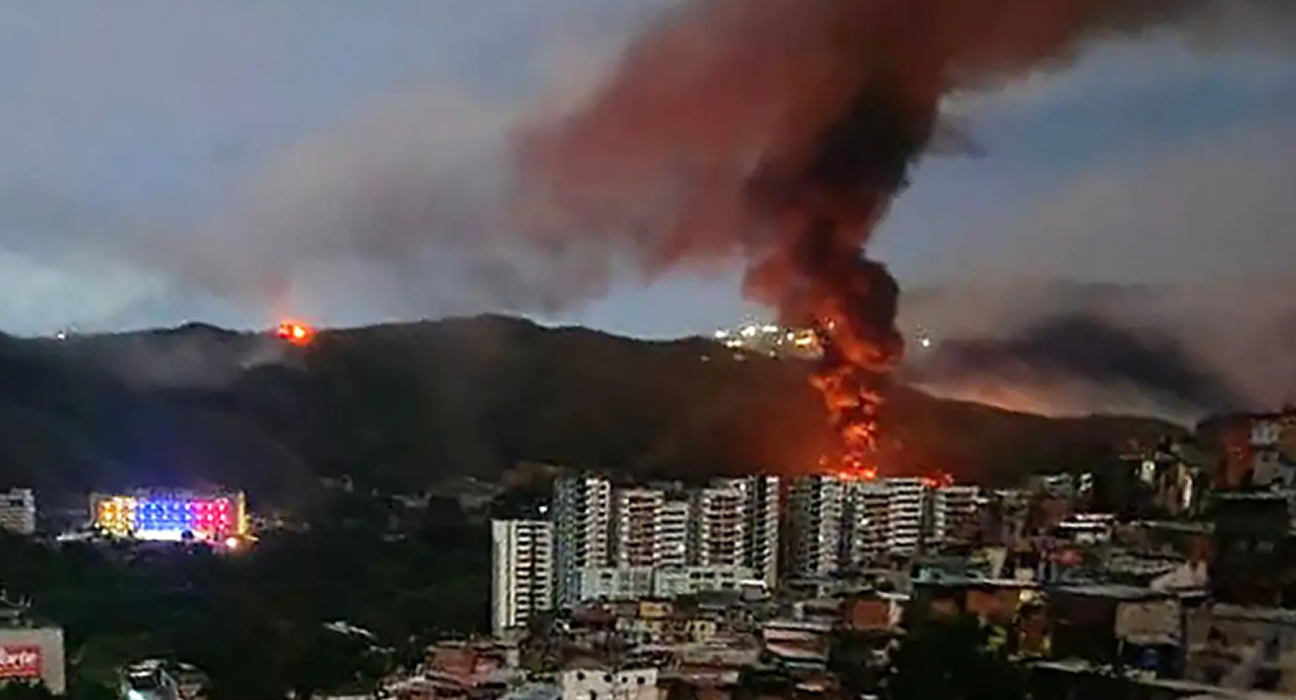
The United States carried out multiple overnight strikes in Venezuela, triggering explosions in Caracas and prompting the government to declare a national emergency amid rising uncertainty.
US president Donald Trump said the operation targeted Venezuela’s leadership, claiming President Nicolás Maduro had been captured and flown out of the country following what he described as a large-scale military action.
In a statement posted on his Truth Social platform, Trump said the strikes were conducted with the support of US law enforcement agencies.
He did not disclose how Maduro was apprehended or his current location, saying only that more details would be provided later.
Trump also announced that a news conference would take place at 11:00 EST (16:00 BST) at his Florida residence, Mar-a-Lago, where he is expected to address the operation and its outcome.
Venezuela’s government has not confirmed Trump’s claim about Maduro’s capture. However, authorities in Caracas announced a state of national emergency and strongly condemned what they called “military aggression” against the country.
Residents of the capital described a night of fear and confusion as explosions were heard across several districts.
“My heart was pumping and my legs were shaking,” an eyewitness in Caracas told the BBC, describing loud blasts and heavy security activity during the night.
Significant questions remain about the scope and impact of the strikes. It is unclear which military facilities were hit, how extensive the damage was, or how many casualties may have resulted from the operation.
Venezuela’s defence minister, Vladimir Padrino, said the government was still gathering information about those killed or injured.
He alleged that some of the strikes hit civilian areas and accused foreign forces of violating the country’s sovereignty.
“We are compiling information on the dead and injured,” Padrino said, adding that Venezuela would “resist” any presence of foreign troops on its soil.
The United States has long accused Nicolás Maduro of leading an international drug trafficking organisation, allegations he has consistently denied. Washington previously announced a reward of up to $50 million for information leading to his arrest, a move that increased tensions between the two countries.
That reward, together with a substantial US military build-up in the region over recent months, had been widely interpreted as pressure on Maduro’s inner circle and a warning of possible escalation.
So far, there has been no independent confirmation from Venezuelan officials regarding Maduro’s whereabouts, and the US government has not issued an official statement beyond Trump’s remarks.
International observers and regional governments are closely watching developments, as the situation raises concerns about broader instability in Latin America and the potential for further military confrontation.
By: Mitchell Asare Amoamah
[12:14, 03/01/2026] Richmond: Trump confirms US capture of Venezuela’s president
US President, Donald Trump says the United States has carried out strikes in Venezuela and captured President Nicolás Maduro, triggering explosions in Caracas and a national emergency declaration.
In a post on his Truth Social platform, Trump claimed US forces had executed a “large-scale strike” against Venezuela and its leadership, saying President Nicolás Maduro and his wife had been captured and flown out of the country. He said the operation was conducted in conjunction with US law enforcement agencies and promised further details later in the day.
Trump did not explain how Maduro was apprehended, where he has been taken, or which agencies were involved.
He added that a news conference would be held at 11:00 EST (16:00 BST) at his Florida residence, Mar-a-Lago.
The Venezuelan government has not confirmed Trump’s claims. However, authorities in Caracas announced a state of national emergency and issued a strong condemnation of what they described as “military aggression” against the country.
Residents in the capital reported a tense and chaotic atmosphere following explosions heard across several parts of the city. “My heart was pumping and my legs were shaking,” an eyewitness in Caracas told the BBC, describing loud blasts and heavy security movement in the early hours.
There remain major uncertainties about the scope and impact of the strikes. It is unclear which military installations were targeted, the extent of the damage, or how many people may have been affected.
Venezuela’s defence minister, Vladimir Padrino, said the government was still compiling information on those killed or injured. He alleged that some of the strikes hit civilian areas and accused foreign forces of violating Venezuela’s sovereignty. “We are gathering verified information on the dead and injured,” Padrino said, adding that the country would “resist” the presence of foreign troops.
The United States has for years accused Nicolás Maduro of leading an international drug trafficking organisation, allegations the Venezuelan leader has repeatedly denied. Washington previously announced a reward of up to $50 million for information leading to his arrest, a move widely seen in the region as an attempt to pressure insiders within Venezuela.
That reward, combined with a significant US military build-up around the region in recent months, had fuelled speculation about a possible escalation.
Analysts had suggested such steps could encourage defections or internal opposition, though no independent confirmation has emerged.
Regional governments and international bodies have so far reacted cautiously, with several calling for verified information amid fears of wider instability in Latin America.
Attention is now focused on the promised news conference, which may clarify what actually occurred and whether the claims mark a dramatic turning point in the long-running standoff between Washington and Caracas.
By Mitchell Asare Amoamah
Related Posts