
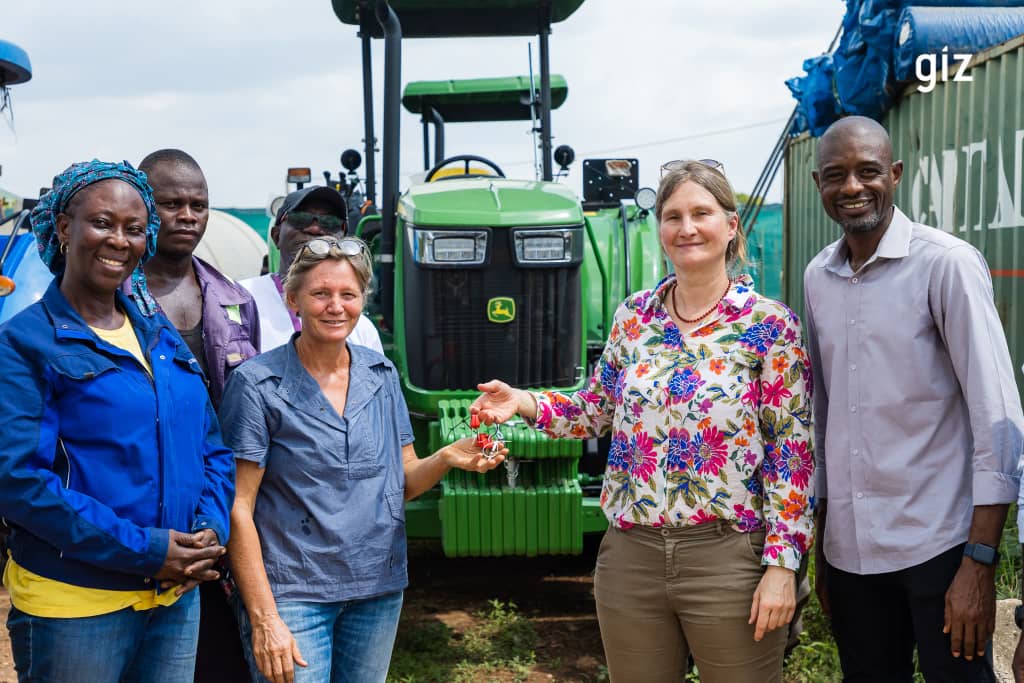
The Funding Programme of the German Federal Ministry for Economic Cooperation and Development (BMZ), develoPPP, has recently conducted a field visit to Volta River Estates (VREL) and HPW Fresh and Dry Limited, to ascertain the transformative impact of sustainable business practices on Ghana’s agricultural and energy sectors.
The initiative demonstrates how strategic collaboration between private enterprises, development agencies, and communities can drive climate-smart innovation, economic empowerment, and enhanced bilateral trade.
The field visit was led by Elisabeth Richter, Head of develoPPP for Jobs, who highlighted the strategic benefits for Ghanaian businesses through engagement with German development agencies. “This is how suustainable development works, when business, communities, and policy align for shared impact,” GIZ said, noting the tangible benefits of the develoPPP interventions.
At HPW Ghana, a wholly Ghanaian-owned dried fruit producer founded in 2011 and based in Adeiso, visitors witnessed innovations that link environmental sustainability with economic growth. The company, now Africa’s largest producer of dried mango, pineapple, and coconut, employs 1,500 people and processes over 25,000 tonnes of fresh fruit annually, sourcing from more than 1,600 smallholder farmers across Ghana.
Key achievements highlighted include: protecting power generation by converting invasive waterweed into organic compost, Enabling climate-smart farming and increasing farmers’ incomes, and connecting Ghanaian dried fruits to German markets
he HPW project underscores the broader objectives of develoPPP, which supports companies that aim to invest sustainably in developing and emerging economies, offering funding through develoPPP Classic for established businesses and develoPPP Ventures for start-ups. The programme is implemented jointly by DEG Impulse GmbH and Deutsche Gesellschaft für Internationale Zusammenarbeit (GIZ) GmbH, ensuring long-term developmental benefits for local communities.
Similarly, the delegation visited Volta River Estates (VREL), Ghana’s first commercial banana producer. Established in 1988, VREL operates five plantations across 400 hectares, employing 760 individuals, 21% of whom are women. Sustainability remains central to VREL’s operations, with solar energy facilities, zero-tillage methods, and a two-decade tradition of producing compost for its farms. The company maintains international certifications, including Fair Trade, Global GAP, Rainforest Alliance, LEAF, and SMETA, reinforcing its commitment to ethical business practices, environmental protection, and occupational health and safety.
The visits illustrate the multi-dimensional impact of the develoPPP programme: fostering economic growth, gender equality, environmental sustainability, and enhanced export value chains, while demonstrating how international cooperation can strengthen Ghana’s position in global markets. Richter lauded HPW and VREL as testaments to the benefits of aligning policy, business, and community objectives, noting the critical role these partnerships play in supporting Germany’s foreign policy and long-term engagement in Ghana.
The German Development Cooperation and the Volta River Estates Limited (VREL) in june, 2025 launched an innovative environmental and agricultural initiative to convert invasive waterweed from the Volta River into high-quality organic compost to support sustainable and climate-smart farming across local communities in the Volta Region.
The project titled “Waterweed to Value: Organic Compost Production from Invasive Waterweed in the Volta Region” was to tackle the dual challenges of aquatic weed infestation and declining soil fertility. This project is in partnership with the Volta River Estates Limited (VREL) and implemented by the Deutsche Gesellschaft für Internationale Zusammenarbeit (GIZ) GmbH, in collaboration with local authorities, farming cooperatives and environmental experts. It was co-funded by VREL and GIZ through the develoPPP programme on behalf of the German Federal Ministry for Economic Cooperation and Development (BMZ).
Related Posts